What It Is
Color blindness, more accurately described as color vision deficiency, is a condition in which a person has difficulty distinguishing between certain colors, most commonly shades of red and green.
How It Develops
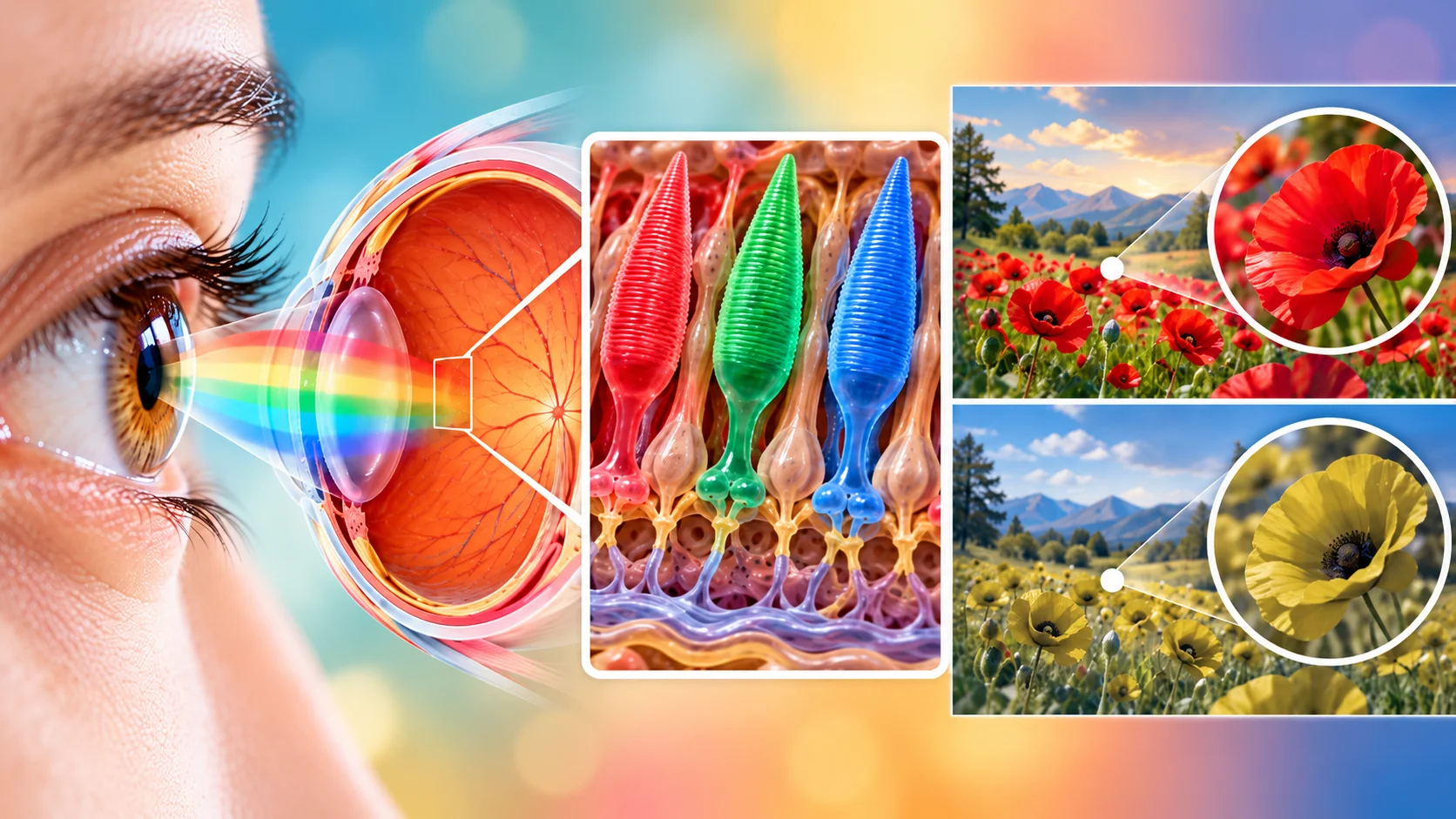
Normal color vision relies on specialized cells in the retina called cone cells, which come in three types, each most sensitive to a different range of light wavelengths corresponding roughly to red, green, and blue light. Color blindness most commonly results from an inherited genetic variation that affects the function of one or more of these cone cell types, most frequently affecting the cones responsible for red and green perception. It can also, less commonly, develop later in life due to certain eye diseases, injuries, or as a side effect of some medications.
General Symptoms
The main feature of color blindness is difficulty distinguishing between certain colors that appear clearly distinct to someone with typical color vision, most commonly certain shades of red and green, though other patterns exist as well. The severity varies considerably, from mild difficulty in low light to a more pronounced difficulty distinguishing certain color combinations in any lighting condition.
General Treatment Approaches
Inherited color blindness generally isn't correctable, since it stems from how the cone cells themselves are structured. Special tinted lenses are available that can help some people better distinguish between certain colors in specific situations, though they don't restore fully typical color vision. Most people with color blindness adapt well to daily life, often using cues other than color alone, such as position or pattern, to distinguish objects.
Background
Color blindness was first scientifically described in detail in the late 18th century by an English chemist who documented his own experience with the condition. Understanding of its genetic basis, and the specific role of the different cone cell types, developed considerably through the 19th and 20th centuries, and color blindness remains one of the most well-understood and common inherited visual conditions today.