What It Is
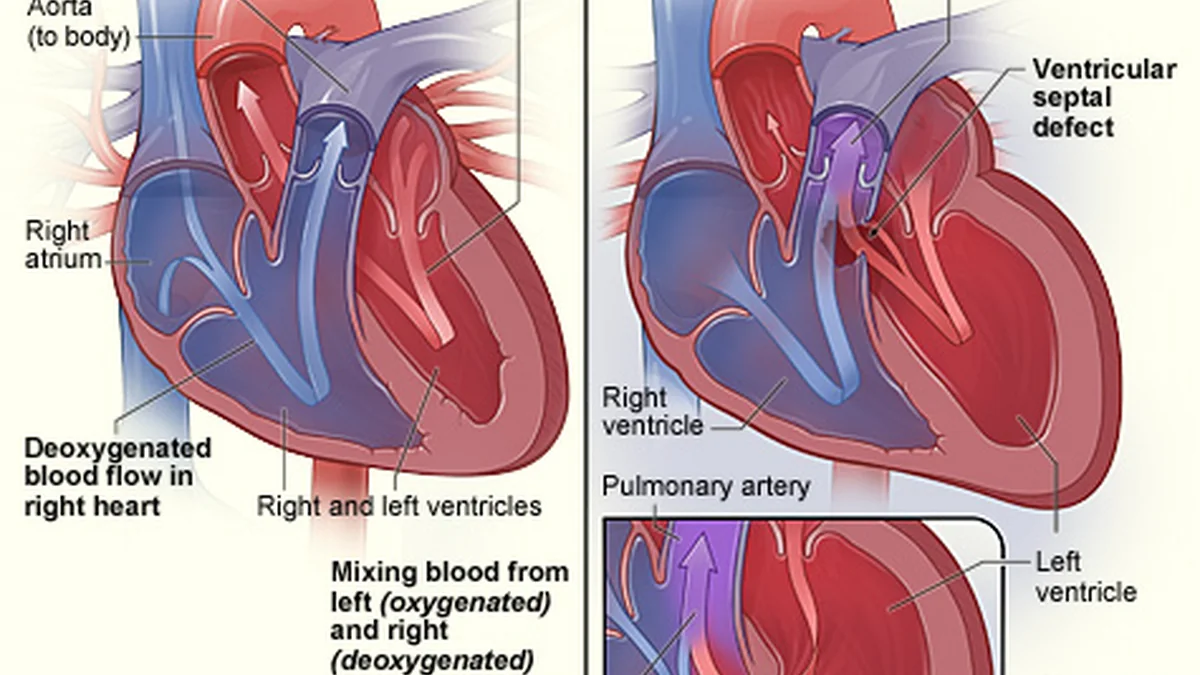
Congenital heart disease refers to structural differences in the heart that are present from birth, occurring as the heart develops during pregnancy.
How It Develops
The heart forms through a complex sequence of developmental steps early in pregnancy, and congenital heart disease results when this process doesn't proceed in the usual way, leading to differences in the heart's structure, such as its chambers, valves, or the major blood vessels connected to it. The exact cause often isn't identified in an individual case, though a combination of genetic factors and other influences during early development are understood to play a role in many cases.
General Symptoms
Symptoms of congenital heart disease vary widely depending on the specific structural difference involved and its impact on how blood flows through the heart. Some differences cause noticeable symptoms early in life, such as difficulty feeding, rapid breathing, or a bluish tint to the skin, while others may cause few or no symptoms and are only identified later, sometimes during a routine examination in adulthood.
General Treatment Approaches
Treatment for congenital heart disease depends heavily on the specific structural difference present and its effect on heart function. Some milder differences require only regular monitoring over time. Others may require medications to manage related symptoms, or procedures, including surgical repair, to correct the structural difference, often performed during infancy or childhood, though some conditions are addressed later in life depending on the individual case.
Background
Understanding of congenital heart disease expanded significantly during the 20th century, alongside major advances in cardiac surgery that made it possible to directly repair many structural heart differences that had previously been untreatable. These surgical advances, combined with improved diagnostic imaging, have considerably changed outcomes for people born with congenital heart differences over the past several decades.