What It Is
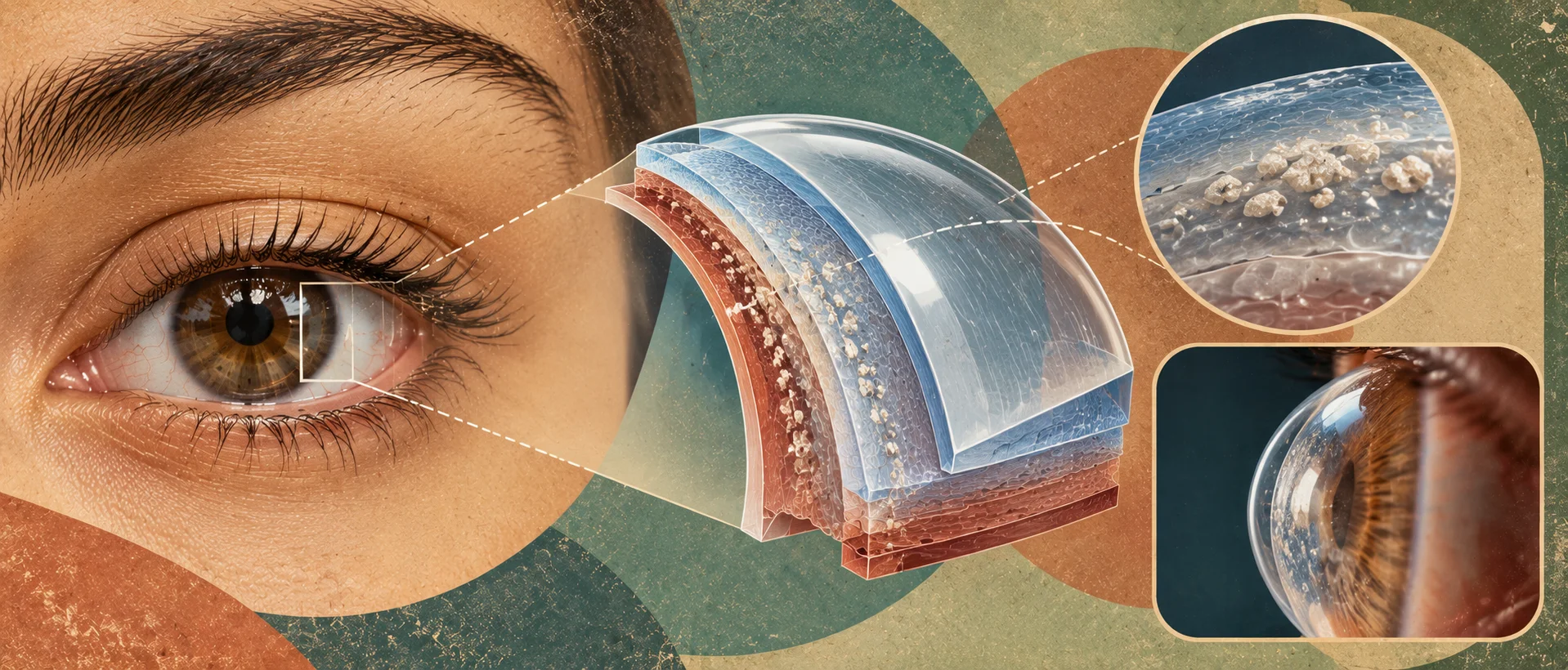
Corneal dystrophy refers to a group of inherited conditions in which abnormal material gradually builds up within one or more layers of the cornea, generally affecting both eyes.
How It Develops
Corneal dystrophies result from genetic changes that cause certain substances to accumulate abnormally within specific layers of the cornea over time. Because there are several distinct layers to the cornea, different types of corneal dystrophy affect different layers and follow somewhat different patterns of progression, though all share this common feature of gradual, genetically driven material buildup.
General Symptoms
Symptoms vary depending on the specific type of corneal dystrophy and which layer is affected, but can include gradually blurred vision, glare or light sensitivity, and, in some types, recurrent episodes of eye pain related to the corneal surface breaking down. Some forms of corneal dystrophy cause minimal or no symptoms for many years.
General Treatment Approaches
Treatment for corneal dystrophy depends on the specific type and severity involved. Milder cases may only require monitoring, while some types benefit from specific treatments aimed at managing recurrent surface breakdown. In more advanced cases significantly affecting vision, corneal transplant surgery may be considered to replace the affected corneal tissue.
Background
Corneal dystrophies were first classified and distinguished from one another over the 19th and 20th centuries, as ophthalmologists used increasingly detailed microscopic examination to identify the specific patterns of material buildup characteristic of each type. More recently, advances in genetics have identified the specific genetic changes responsible for many forms of corneal dystrophy, deepening understanding of these conditions considerably and supporting more precise diagnosis today.