What It Is
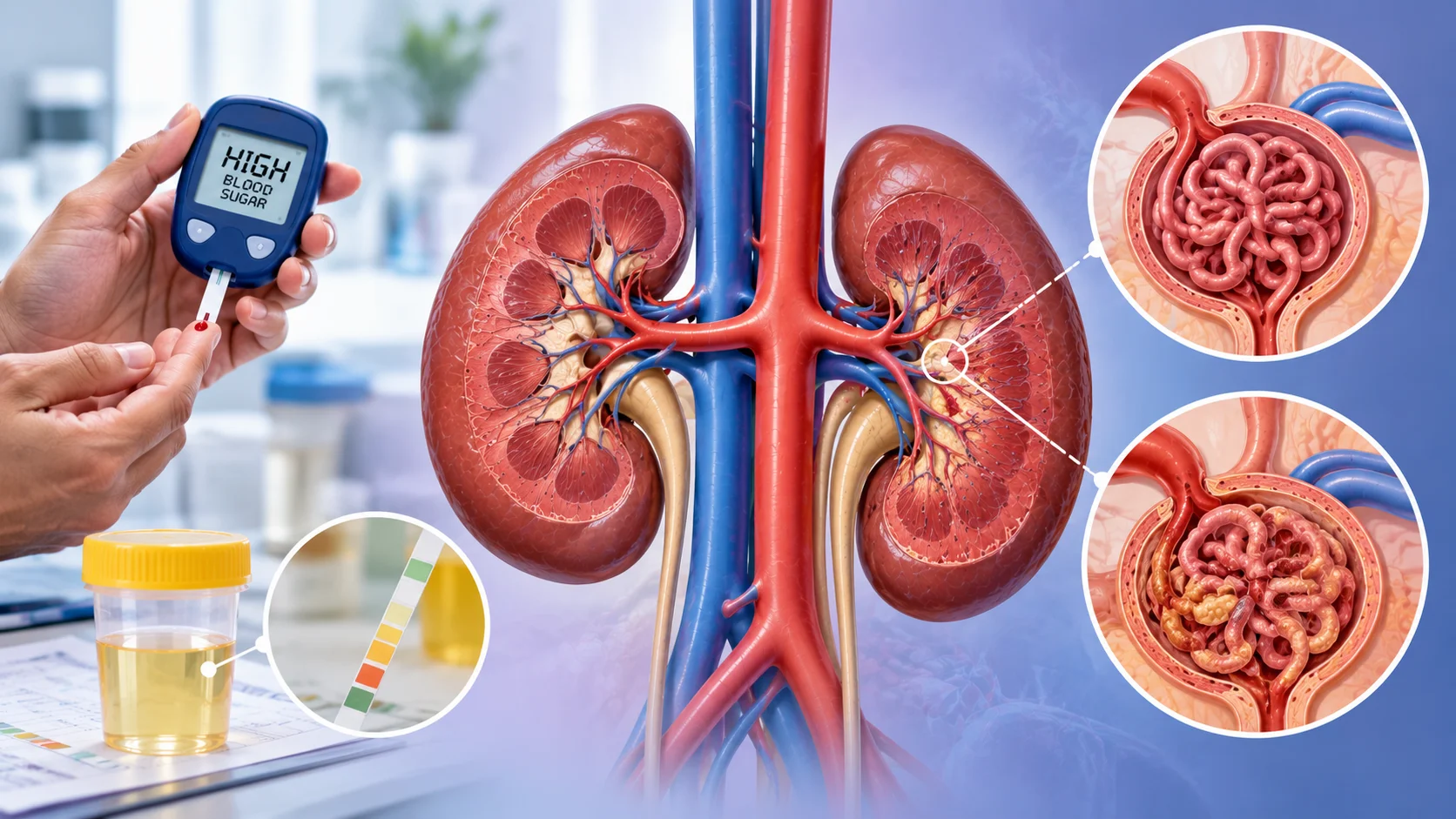
Diabetic nephropathy is kidney damage that develops as a complication of long-standing diabetes, and is one of the most common underlying causes of chronic kidney disease worldwide.
How It Develops
Over a period of years, persistently elevated blood sugar levels associated with diabetes can gradually damage the small blood vessels within the kidneys' filtering units, the glomeruli. This damage affects the glomeruli's ability to filter blood properly, initially allowing small amounts of protein to leak into the urine, and potentially progressing to more significant kidney function decline over time if the underlying diabetes isn't well managed.
General Symptoms
In its earliest stages, diabetic nephropathy typically causes no noticeable symptoms, often first detected through routine urine testing that identifies small amounts of protein. As the condition progresses, symptoms can begin to resemble those of chronic kidney disease more broadly, including swelling in the legs or around the eyes, fatigue, and changes in urination patterns.
General Treatment Approaches
Management of diabetic nephropathy centers heavily on maintaining good control of blood sugar levels and blood pressure, both of which play a central role in slowing further kidney damage. Certain medication classes have also been found to help protect kidney function specifically in the context of diabetes, and are commonly incorporated into treatment plans. Regular monitoring of kidney function and urine protein levels is an important part of ongoing management, allowing changes in treatment as needed over time.
Background
The connection between diabetes and kidney damage was recognized by physicians as early as the 19th century, though a clearer understanding of the specific way diabetes affects kidney blood vessels developed considerably later, particularly during the 20th century. As diabetes has become increasingly common globally, diabetic nephropathy has become one of the leading identified causes of chronic kidney disease, making it a major focus of both diabetes and kidney-related medical research.