What It Is
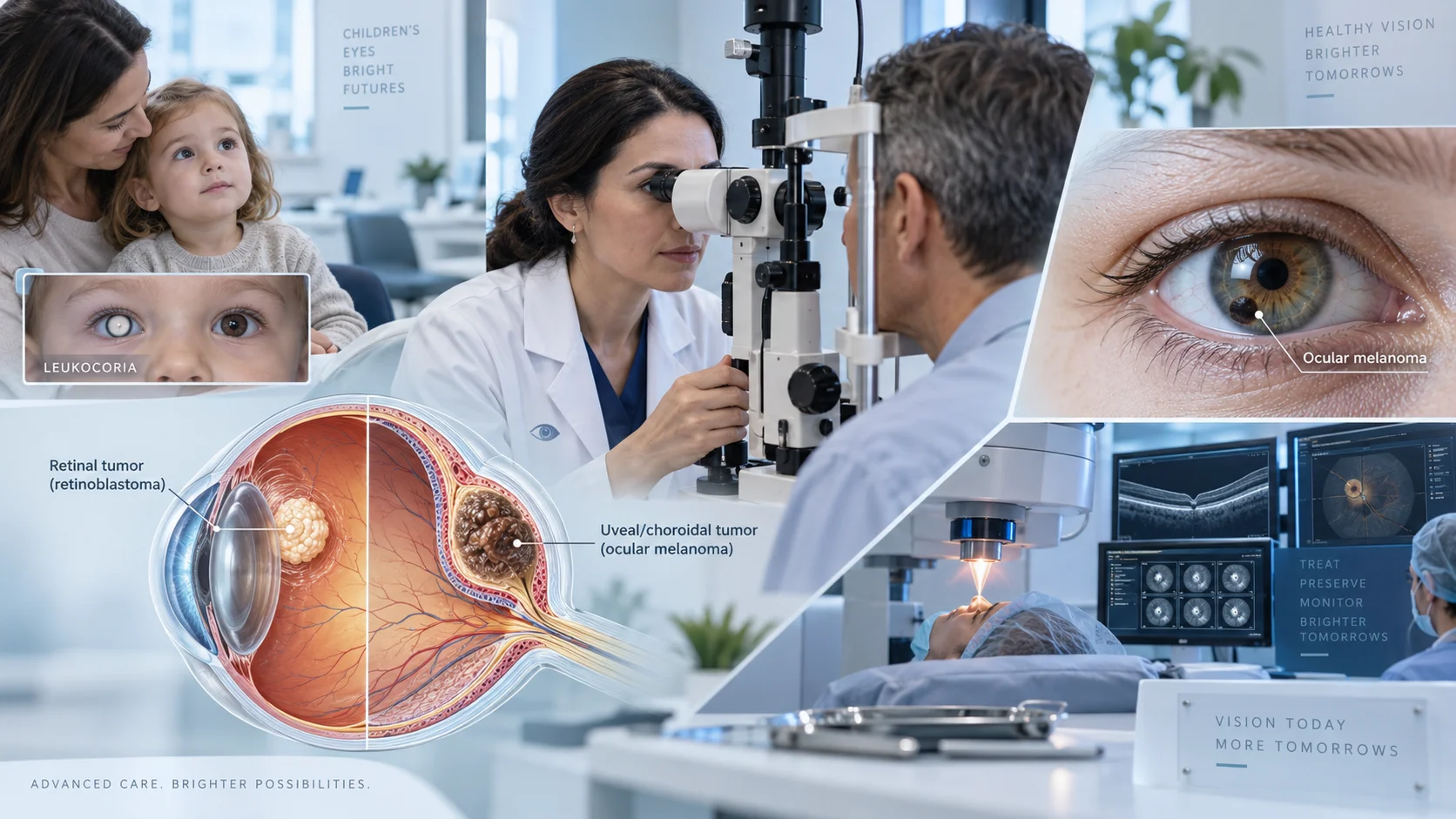
Eye cancer refers to several different types of cancer that can develop within or around the eye, with two of the most well-known forms being retinoblastoma, which occurs in children, and ocular melanoma, which most commonly occurs in adults.
How It Develops
Retinoblastoma develops when cells within the developing retina grow uncontrollably, generally related to a genetic change affecting a specific gene involved in regulating normal cell growth, and it almost always occurs in young children. Ocular melanoma develops from pigment-producing cells within the eye, most commonly within the uvea, the eye's middle layer, when these cells begin to grow and divide abnormally, similar in underlying process to melanoma affecting the skin, though occurring within the eye itself.
General Symptoms
Symptoms depend on the specific type of eye cancer involved. Retinoblastoma is often first noticed as an unusual white reflection in the pupil, particularly visible in photographs taken with flash, or as an eye that appears to turn inward or outward. Ocular melanoma may cause blurred vision, a visible dark spot on the colored part of the eye, or flashes of light, though it can also be found incidentally during a routine eye exam before symptoms develop.
General Treatment Approaches
Treatment for eye cancer depends heavily on the specific type, size, and location of the tumor. Options can include targeted radiation therapy, laser treatment, or surgery, with the specific approach chosen based on preserving as much vision and eye function as possible while effectively treating the cancer. Regular monitoring after treatment is also an important part of ongoing care.
Background
Retinoblastoma was among the first cancers for which a specific underlying genetic mechanism was identified, through research conducted in the 1970s and 1980s that significantly advanced the broader scientific understanding of how cancer develops. Treatment for various forms of eye cancer has continued to advance considerably over recent decades, with an increasing focus on approaches that aim to preserve vision and the eye itself wherever possible, alongside effectively treating the underlying cancer.