
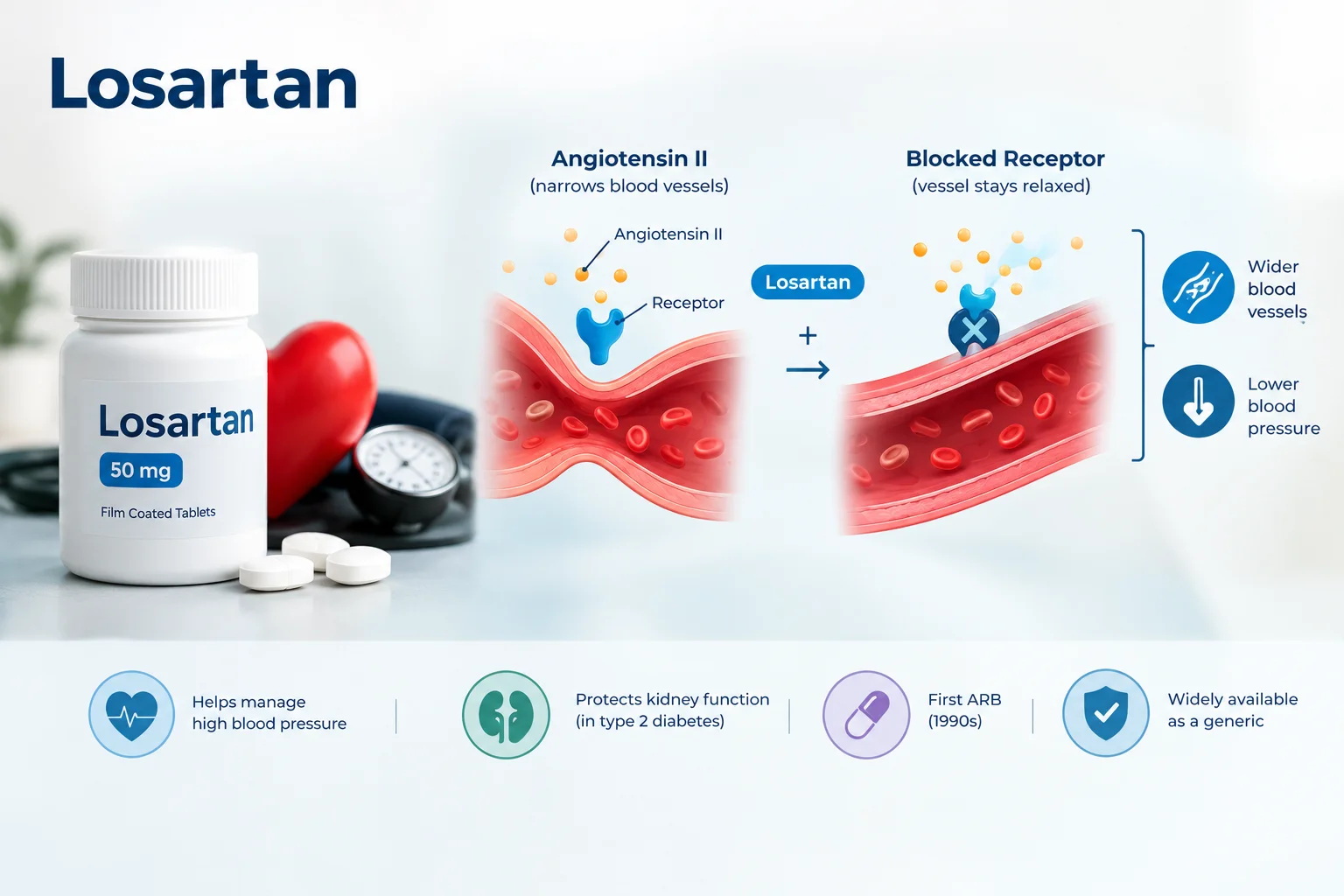
What It Is
Losartan belongs to a class of medicines called angiotensin II receptor blockers, commonly abbreviated as ARBs, used primarily to manage blood pressure.
What It's Used For
Losartan is generally used to help manage high blood pressure, and is also used in certain cases to help protect kidney function in people with type 2 diabetes and related kidney complications.
How It Works
Losartan works by blocking the receptors that a hormone called angiotensin II normally binds to. Angiotensin II is part of a hormonal system involved in narrowing blood vessels and encouraging the body to retain sodium and water, both of which raise blood pressure. By blocking angiotensin II from binding to its receptors, losartan prevents these effects, allowing blood vessels to remain more relaxed and widened, which helps lower blood pressure.
History and Regulatory Status
Losartan was developed by an American pharmaceutical company and was approved for clinical use in the mid-1990s, becoming the first medicine available in the angiotensin II receptor blocker class. Its introduction offered an alternative to an earlier, related class of blood pressure medicines that worked through a different but connected part of the same hormonal system, and which some patients tolerated less well. Losartan's patent protection expired in the mid-2010s, after which it became widely available as a generic medicine and remains a commonly prescribed option for blood pressure management worldwide.