What It Is
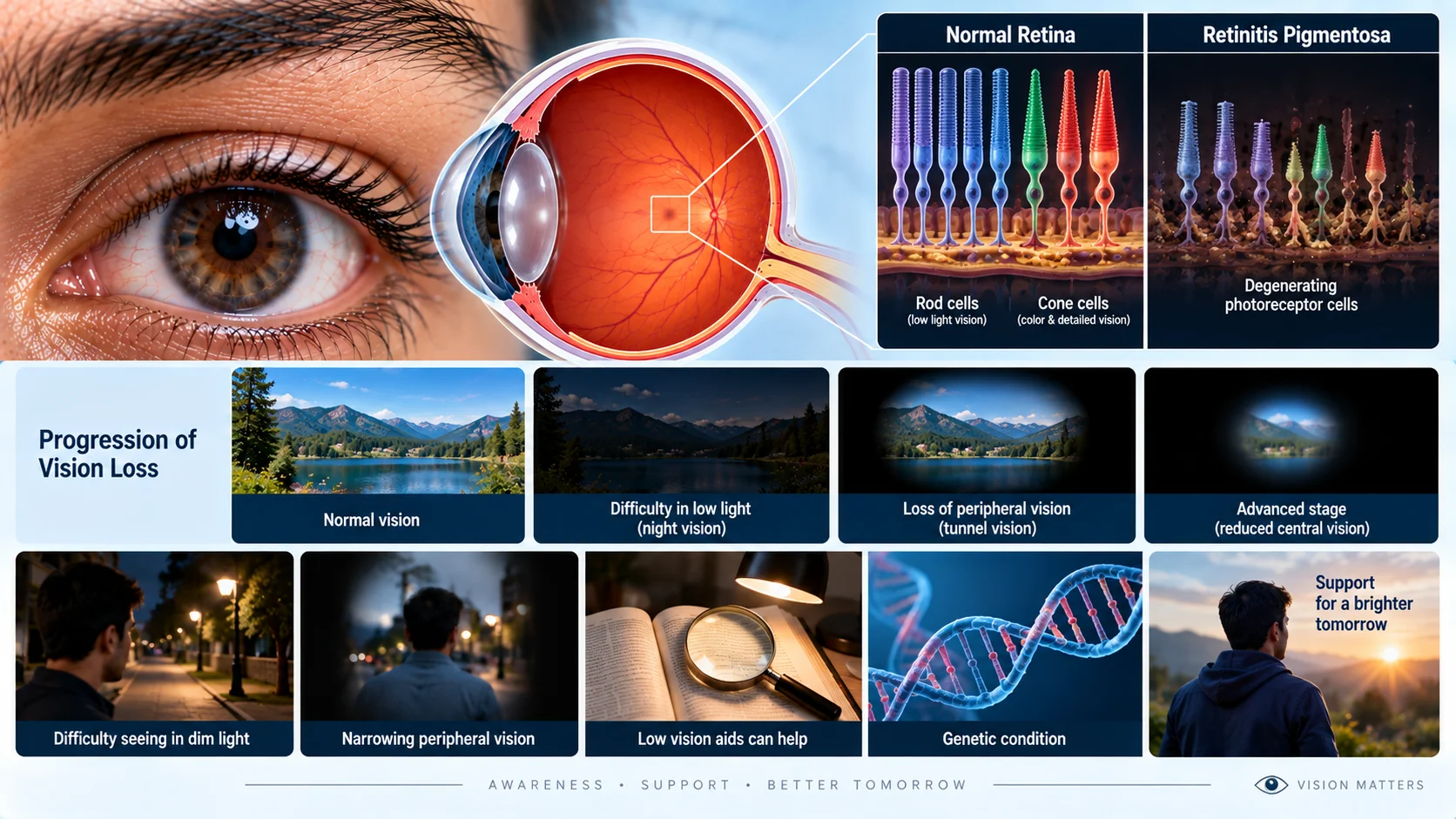
Retinitis pigmentosa is a group of inherited conditions that cause the light-sensitive cells of the retina to gradually break down over time, leading to progressive vision loss.
How It Develops
Retinitis pigmentosa results from genetic changes that affect the retina's photoreceptor cells, the rods and cones responsible for detecting light. In most forms of the condition, rod cells, which are responsible for vision in low light, are affected earlier and more significantly than cone cells, which is why early symptoms often relate to night vision before central, detailed vision is affected later in the disease's course.
General Symptoms
The earliest and most common symptom of retinitis pigmentosa is difficulty seeing in low light or darkness, often noticed first as trouble adjusting to dim environments. As the condition progresses, peripheral, or side, vision gradually narrows, sometimes described as tunnel vision, and central vision may eventually be affected as well in more advanced stages.
General Treatment Approaches
There's currently no cure for retinitis pigmentosa, and treatment generally focuses on managing symptoms and maximizing remaining vision, including the use of low-vision aids and lighting adjustments to support daily activities. Certain nutritional approaches have been studied for their potential to slow progression in some cases, and for one specific genetic form of the condition, a targeted gene therapy treatment has become available.
Background
Retinitis pigmentosa was first described as a distinct condition in the mid-19th century, based on its characteristic pattern of pigment changes visible within the retina during examination. Understanding of its genetic basis expanded considerably from the late 20th century onward, as researchers identified numerous different genes associated with the condition, laying the groundwork for the more recent development of targeted genetic treatments for specific forms of the disease.