What It Is
24-hour pH monitoring is a test that measures the level of acid in the esophagus over an extended period, helping assess how often and how severely stomach acid is refluxing upward into the esophagus.
What It Checks
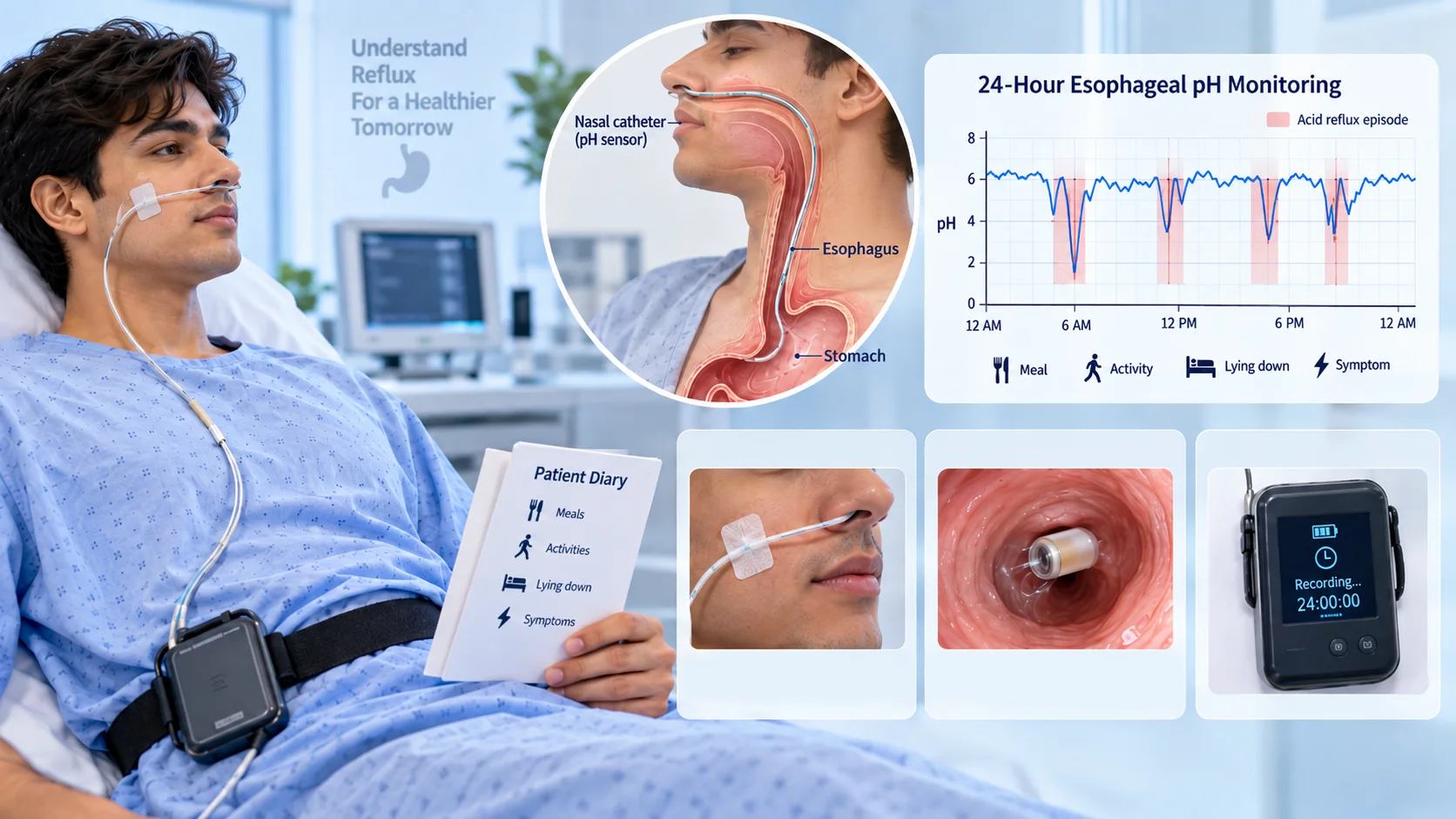
The test continuously measures pH levels, a measure of acidity, within the lower esophagus over roughly a 24-hour period, recording how often and for how long acid reflux episodes occur, along with their relationship to activities like eating, lying down, or specific symptoms the person experiences during the monitoring period.
Why It's Used
24-hour pH monitoring is commonly used to investigate persistent symptoms suggestive of acid reflux when the diagnosis isn't clear from symptoms alone, and to assess the severity and pattern of reflux, which can help guide further management decisions.
How It's Done
A thin, flexible tube or a small wireless capsule attached to the esophageal lining is used to measure pH levels continuously over the monitoring period. With the tube-based method, a thin catheter is passed through the nose into the lower esophagus and connected to a small, portable recording device worn during the monitoring period. The person generally keeps a diary noting meals, symptoms, and activities like lying down, which is later compared against the recorded pH data.
Background
The ability to measure esophageal pH developed alongside advances in sensor technology over the mid-20th century, and 24-hour monitoring specifically became established as a diagnostic technique in the 1970s and 1980s, offering a far more detailed picture of acid reflux patterns than could be gathered from symptoms or a single-point examination alone. The later development of wireless capsule-based monitoring offered a more comfortable alternative to the traditional tube-based method, and both approaches remain in use today depending on the specific clinical situation.