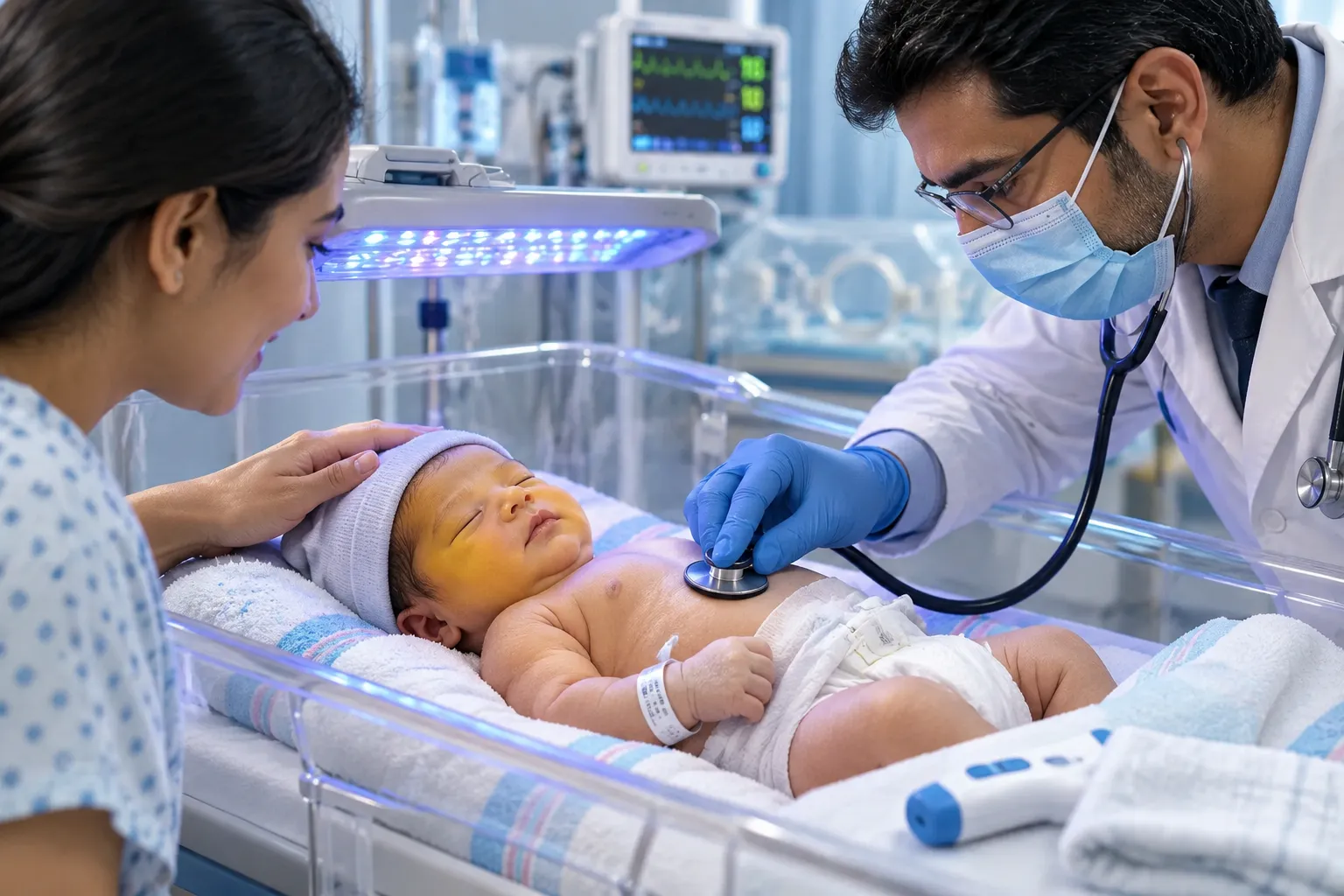
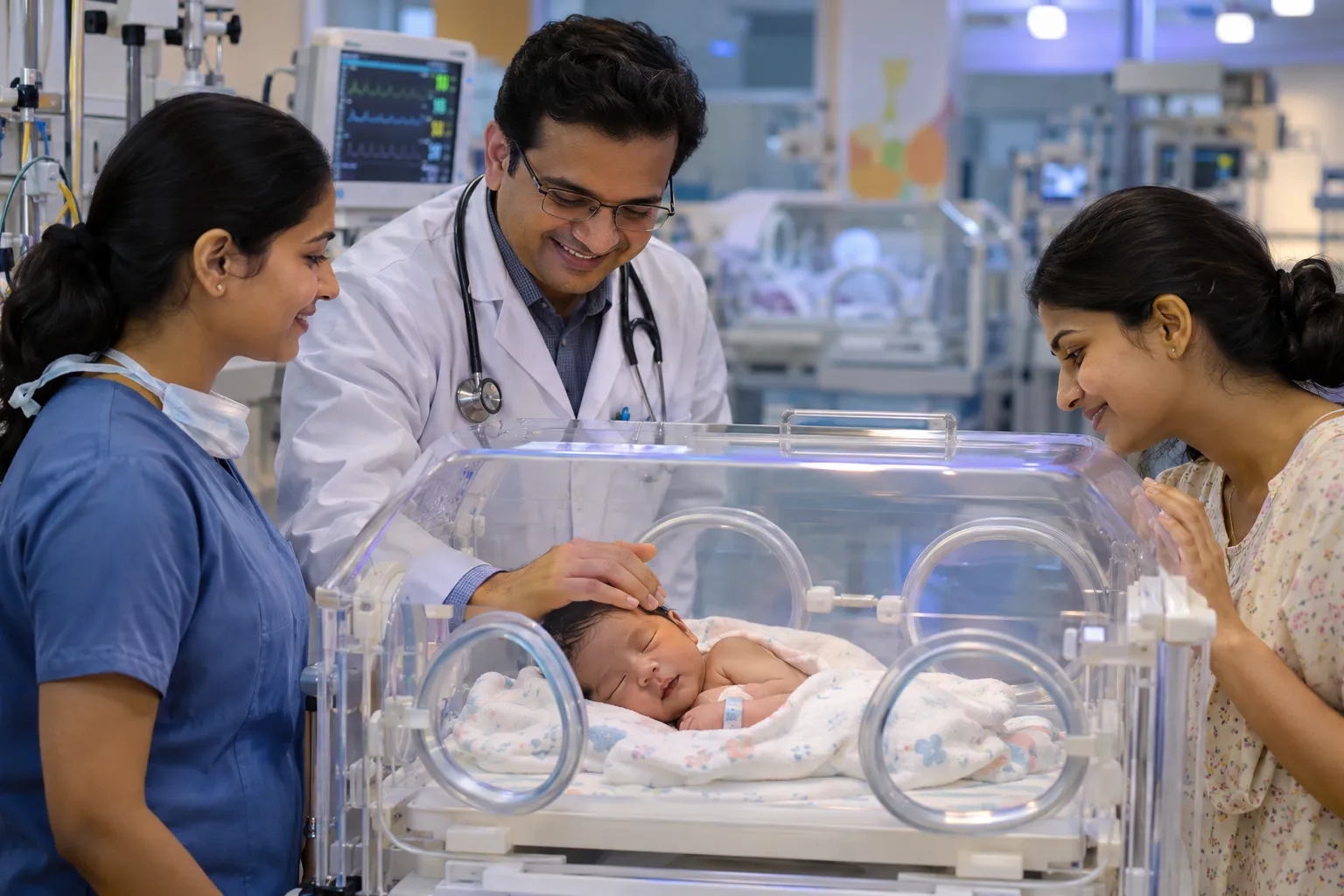
Bengaluru has some of India's most advanced newborn care, in both government and private hospitals. The first 28 days of life are still the most dangerous period of childhood, and the city's challenge now is to give every baby the same level of care.
Newborn survival: the numbers
Karnataka's neonatal mortality rate (NMR), the number of babies who die within 28 days of birth per 1,000 live births, fell to 12 in 2022, against a national figure of 19 (Deccan Herald). The state's infant mortality rate more than halved over the decade to 2022.
Cities do much better than villages. In 2020, Karnataka's urban NMR was 8, while the rural rate was 18. Bengaluru, with its concentration of neonatal intensive care units (NICUs), is on the better side of that divide. It also receives a steady flow of sick and premature babies referred from surrounding districts.
Across India, newborn deaths now make up nearly three-quarters of all infant deaths. Most of the remaining gains in child survival will therefore come from better care in the first month of life.
How newborn care is organised
India's public system runs newborn care at three tiers, and private hospitals follow similar levels.
Tier | Where | What it does |
|---|---|---|
Newborn Care Corner | Every delivery point | Resuscitation at birth, warmth, early breastfeeding |
Newborn Stabilisation Unit (NBSU) | Taluk hospitals, community health centres | Observes and stabilises sick babies before referral |
Special Newborn Care Unit (SNCU) | District and large hospitals | 24-hour care for sick newborns, except ventilation and major surgery |
Level III NICU | Teaching and specialist hospitals | Ventilation, very preterm babies (under 32 weeks or 1,500 g), neonatal surgery |
Karnataka has about 169 newborn stabilisation units and around 50 SNCUs, according to the state's child health division (Deccan Herald). When district units are full or a baby needs ventilation, the referral usually ends in Bengaluru.
Government hospitals: the backbone
Three government institutions carry most of the city's high-risk newborn load.
Vani Vilas Hospital (attached to Bangalore Medical College and Research Institute) is the state's main referral maternity hospital. Premature and low-birth-weight babies make up nearly 30% of its deliveries. In 2022 it opened a 72-bed high-risk pregnancy wing and Amruthadhaare, Karnataka's first government human milk bank. The bank pasteurises and screens donated breast milk for babies in the NICU. In its first year it supported 886 babies, including 300 preterm infants, and the NICU was able to stop using formula (Deccan Herald). Donor milk is now reserved for babies whose mothers are absent or unable to breastfeed, so that mothers are encouraged to breastfeed themselves.
HSIS Gosha Hospital (attached to the Bowring and Lady Curzon medical college) serves east Bengaluru and the central business district. About 19% of its roughly 550 births a month are preterm or low birth weight. It runs the city's second government milk bank.
Indira Gandhi Institute of Child Health (IGICH) in Jayanagar is the state's main government children's hospital. Its NICU is accredited at Level 3B by the National Neonatology Forum. A new eight-storey, 450-bed building on the campus adds around 50 NICU beds (Digital Health News).
Treatment in these hospitals is free or heavily subsidised. Eligible families can also use the Ayushman Bharat–Arogya Karnataka scheme for care in empanelled private hospitals.
Private NICUs and local innovation
Bengaluru has a dense network of private Level III NICUs, run by multispecialty hospitals and by women-and-children hospital chains. Many have full-time neonatologists, high-frequency ventilation, neonatal surgery and dedicated neonatal ambulances that collect babies born in other hospitals. Survival at the edge of viability is now reported regularly: in December 2025 a Bengaluru hospital discharged a baby born at 24 weeks weighing 480 grams after months of intensive care (MedBound Times).
The city has also produced ideas that have travelled. The best known is KIDROP (Karnataka Internet Assisted Diagnosis of Retinopathy of Prematurity), started by Narayana Nethralaya in 2008. Retinopathy of prematurity (ROP) is an eye disease of preterm babies that can cause permanent blindness if it is not caught early. KIDROP uses trained non-doctor technicians with portable cameras to screen babies in NICUs, while specialists in Bengaluru read the images remotely. It now covers about 190 government and private NICUs in Karnataka, and the state is reported to be the only one with ROP screening in all government district NICUs (Medical Dialogues). An indigenous AI model for ROP grading has been developed from its image database, and ten other states have taken up the model.
The gaps that remain
Crowding at the top. Government NICUs in Bengaluru take referrals from across the state and often run full. Some district units send babies to the city simply because they have no free cot.
Cost. A private NICU stay for a very preterm baby can run for weeks, and the bill can be beyond most families even with insurance or government schemes.
Prematurity and birth asphyxia. These remain the leading causes of newborn death. Birth asphyxia alone accounts for nearly a fifth of neonatal deaths in Karnataka, which is why the state has invested in resuscitation training in its SNCUs.
Safe transport. Babies are often moved long distances to Bengaluru. Transport without a trained team, warmth and oxygen can undo the benefit of the referral.
Follow-up after discharge. Babies who survive intensive care need regular checks for vision, hearing, growth and development. Families from outside the city often miss these visits.
Staff. New beds need neonatologists and specialist nurses to match. When IGICH expanded, it asked the state for 100 more doctors and 300 more nurses.
What parents should know
Plan the delivery. In a high-risk pregnancy (high blood pressure, diabetes, twins, or a history of preterm birth), deliver in a hospital with an NICU. Moving the mother before birth is safer than moving the baby after it.
Ask about the NICU level. A Level III unit can provide ventilation and care for babies born before 32 weeks or under 1,500 grams.
Breast milk first. A mother's own milk is the best food for a preterm baby. Donor milk from a hospital milk bank is the next best option.
Kangaroo mother care. Skin-to-skin contact keeps small babies warm, supports breastfeeding and reduces infections. Parents can start it in hospital and continue at home.
Do not skip screening. Preterm babies born before 34 weeks or under 2,000 grams need an eye check for ROP within the first month. Hearing screening is also recommended.
Keep follow-up appointments. Development checks in the first two years catch problems early, when they are easiest to treat.