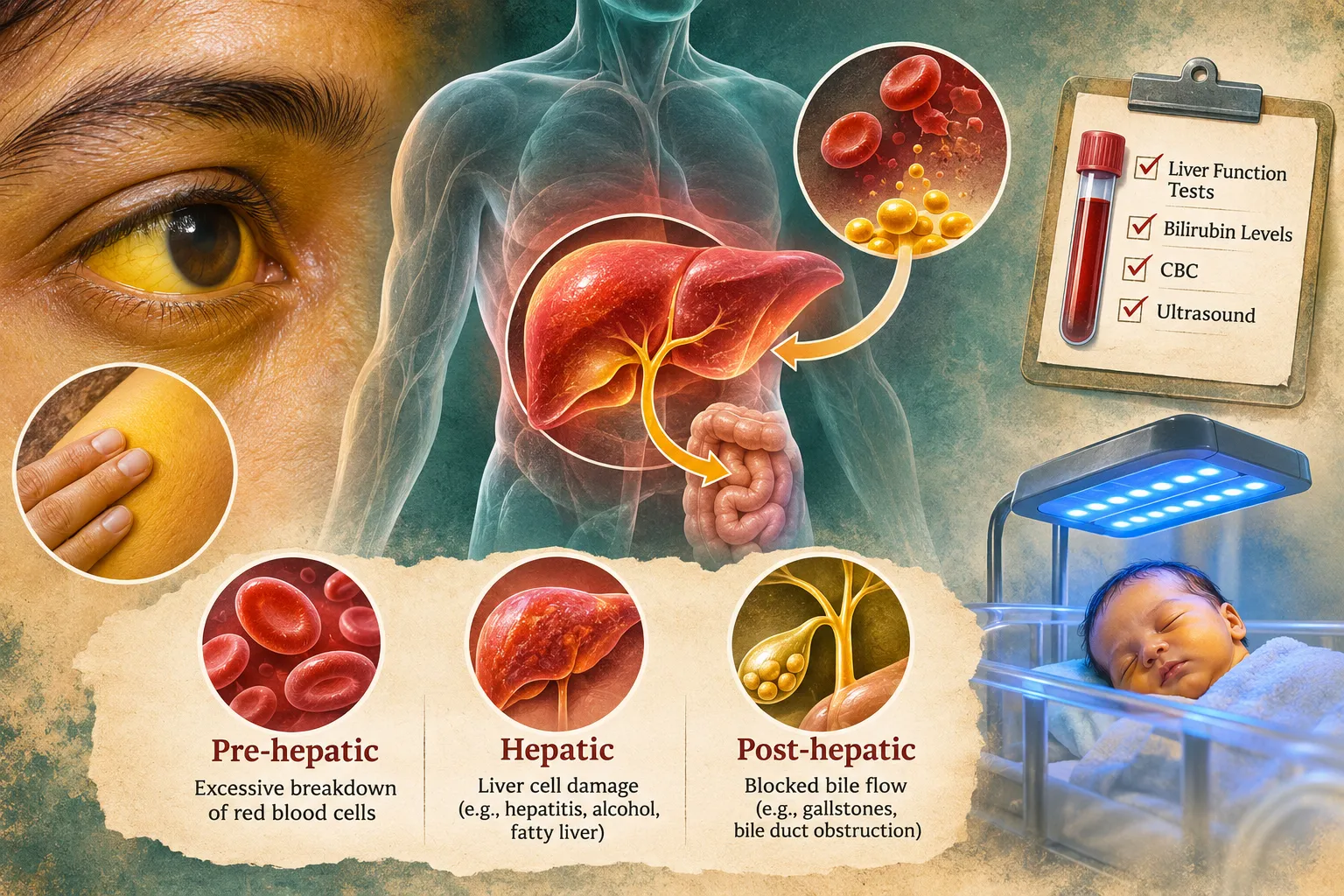
Jaundice is not a disease in itself. It is a sign that something is wrong with the way the body handles bilirubin, a yellow pigment made when old red blood cells break down. When bilirubin builds up in the blood, it stains the skin, the whites of the eyes and the mucous membranes yellow.
What is jaundice?
Jaundice (medical term: icterus) is yellowing of the skin and eyes caused by a raised level of bilirubin in the blood, a condition called hyperbilirubinaemia. Normal total bilirubin in adults is roughly 0.3 to 1.2 mg/dL. Yellowing usually becomes visible once the level crosses about 2.5 to 3 mg/dL.
The whites of the eyes (the sclera) are often the first place it shows, because they are pale and rich in elastin, which binds bilirubin. In darker skin, the eyes, palms, soles and the underside of the tongue are the most reliable places to look.
Because jaundice points to an underlying problem, the real question is always: what is causing it?
How the body normally handles bilirubin
Jaundice makes sense once you know bilirubin's normal journey. It has four stages, and a fault at any one of them can cause jaundice.
Production. Red blood cells live about 120 days. When they are broken down, mainly in the spleen, their haemoglobin is converted into bilirubin. This form is called unconjugated (or indirect) bilirubin. It does not dissolve in water, so it travels in the blood attached to albumin.
Uptake by the liver. Liver cells pull unconjugated bilirubin out of the blood.
Conjugation. Inside the liver cell, an enzyme called UGT1A1 attaches sugar molecules to bilirubin. This conjugated (or direct) bilirubin is water-soluble.
Excretion. Conjugated bilirubin is pumped into bile, flows down the bile ducts into the intestine, and is converted by gut bacteria into the pigments that colour stool brown. A small amount is reabsorbed and leaves through urine, giving it its pale yellow colour.
Doctors classify jaundice by where this chain breaks: before the liver, in the liver, or after the liver.
What causes jaundice?
The causes fall into three groups, depending on where the problem lies.
Type | Where the problem is | Bilirubin raised | Common causes | Typical clues |
Pre-hepatic (haemolytic) | Before the liver: too much bilirubin is made | Mainly unconjugated | Haemolytic anaemias (sickle cell disease, thalassaemia, G6PD deficiency), malaria, transfusion reactions, Gilbert's syndrome | Mild yellowing, normal-coloured urine, signs of anaemia |
Hepatic (hepatocellular) | In the liver: cells cannot process bilirubin | Both types | Viral hepatitis (A, B, C, D, E), alcohol-related liver disease, fatty liver disease, cirrhosis, drug-induced liver injury, autoimmune hepatitis, leptospirosis | Tiredness, poor appetite, nausea, dark urine |
Post-hepatic (obstructive) | After the liver: bile cannot drain | Mainly conjugated | Gallstones in the bile duct, cancer of the pancreas or bile ducts, bile duct strictures, primary sclerosing cholangitis | Pale or clay-coloured stools, dark urine, intense itching |
Pre-hepatic jaundice
Here the liver is healthy but overwhelmed. Red blood cells are being destroyed faster than normal, so more bilirubin is produced than the liver can clear. In India, malaria is an important cause. Inherited conditions such as G6PD deficiency can trigger sudden haemolysis after certain medicines, infections or fava beans.
Gilbert's syndrome deserves special mention. It affects an estimated 3 to 7 percent of people and is caused by reduced activity of the UGT1A1 enzyme. It produces mild, harmless jaundice during fasting, illness, stress or heavy exercise. It needs no treatment.
Hepatic jaundice
When liver cells are inflamed or damaged, they can neither take up nor conjugate bilirubin properly, and bile flow inside the liver is also disrupted.
Viral hepatitis is the most common cause of jaundice in adults in India. Hepatitis A and E spread through contaminated food and water and often cause outbreaks during the monsoon. Hepatitis E can be severe in pregnant women. Hepatitis B and C spread through blood and body fluids and can become chronic.
Alcohol damages liver cells over time, leading to alcoholic hepatitis and cirrhosis.
Non-alcoholic fatty liver disease (now also called MASLD), linked to obesity and diabetes, can progress to cirrhosis.
Medicines and toxins, including paracetamol overdose, anti-tuberculosis drugs, some antibiotics and certain herbal and unregulated remedies, can injure the liver.
Infections such as leptospirosis, dengue and typhoid can involve the liver.
Post-hepatic jaundice
The liver processes bilirubin normally, but bile cannot reach the intestine. Conjugated bilirubin backs up into the blood and spills into the urine, turning it dark. Stools turn pale because no pigment reaches the gut. Bile salts deposited in the skin cause itching.
Gallstones blocking the common bile duct are the most frequent cause. Painless jaundice in an older adult, especially with weight loss, must be investigated promptly, as it can be the first sign of pancreatic or bile duct cancer.
Jaundice in newborns
Jaundice is very common in newborns. About 60 percent of full-term babies and 80 percent of preterm babies develop some yellowing in the first week of life.
Physiological jaundice is the usual, harmless kind. A newborn has more red blood cells than it needs, they break down quickly, and the baby's liver is still immature. It typically appears on day 2 or 3, peaks around days 3 to 5 and fades within one to two weeks. Breastfeeding-related jaundice, linked to feeding difficulties in the first days or to factors in breast milk, is also common and rarely a reason to stop breastfeeding.
Jaundice in a newborn needs urgent medical review if it:
appears within the first 24 hours of life
spreads to the legs and soles, or deepens rapidly
comes with poor feeding, unusual drowsiness, a high-pitched cry or fever
lasts beyond 2 weeks in a full-term baby (3 weeks if preterm)
comes with pale, chalky stools or dark urine
Very high unconjugated bilirubin can cross into a baby's brain and cause permanent damage (kernicterus). This is preventable. Most cases are treated simply with phototherapy, in which blue light converts bilirubin into a form the baby can excrete. Exchange transfusion is reserved for severe cases.
Symptoms
The main sign is yellowing of the eyes and skin. Depending on the cause, it may come with:
dark, tea- or cola-coloured urine
pale, grey or clay-coloured stools
itching all over the body
tiredness, loss of appetite, nausea or vomiting
fever and chills, especially with infection or a blocked, infected bile duct
pain in the upper right abdomen
unexplained weight loss
Seek emergency care if jaundice comes with confusion or excessive sleepiness, vomiting blood or passing black stools, a swollen abdomen, high fever with shivering and abdominal pain, or easy bruising and bleeding. These can signal liver failure or a serious bile duct infection.
Not all yellow skin is jaundice. Eating large amounts of carrots, papaya or other carotene-rich foods can tint the skin orange-yellow (carotenaemia), but the whites of the eyes stay white.
How jaundice is diagnosed
A doctor starts with history and examination: alcohol use, medicines and supplements, travel, recent fever, blood transfusions, family history and the colour of urine and stools. Tests then narrow down the cause.
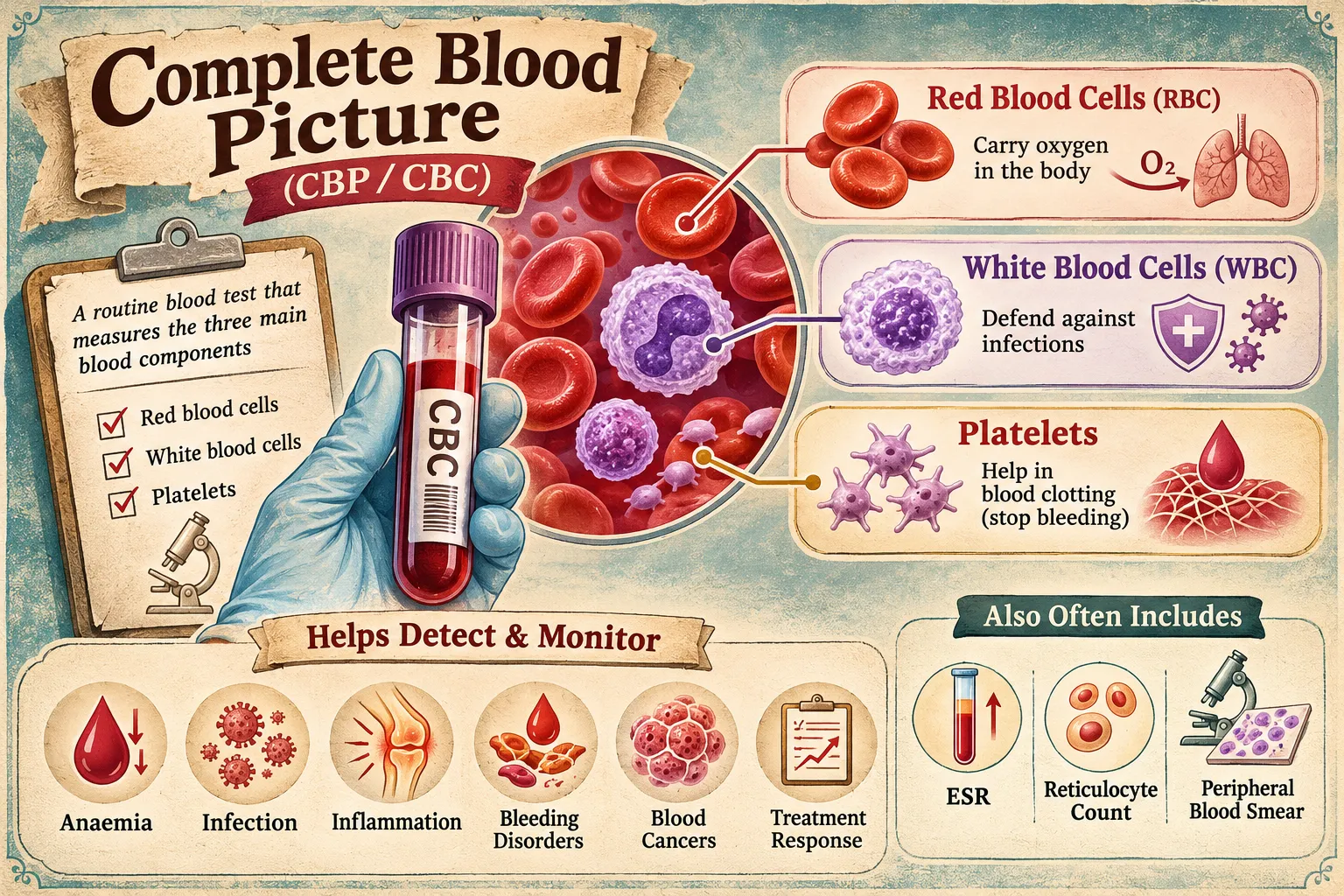
Blood tests: total, direct and indirect bilirubin; liver function tests (ALT, AST, alkaline phosphatase, GGT, albumin); complete blood count; prothrombin time/INR, which shows how well the liver is making clotting factors.
Tests for specific causes: hepatitis virus markers (such as IgM anti-HAV, HBsAg, anti-HCV, IgM anti-HEV), malaria tests, haemolysis markers, autoimmune markers.
Imaging: ultrasound of the abdomen is usually the first scan, to look at the liver and check for dilated bile ducts or gallstones. CT, MRCP (an MRI of the bile ducts) or endoscopic ultrasound may follow.
Procedures: ERCP can both show and clear a blocked bile duct. A liver biopsy is occasionally needed.
How jaundice is treated
The yellowing itself is not treated; the cause is. Jaundice fades once the underlying problem is controlled.
Viral hepatitis A and E: usually settle on their own in weeks with rest, fluids and adequate nutrition. Avoiding alcohol and unnecessary medicines protects the liver while it heals.
Hepatitis B and C: chronic infection is treated with antiviral medicines. Hepatitis C is now curable in most people.
Haemolysis: treating the trigger (for example, malaria) and managing anaemia.
Bile duct blockage: removal of stones by ERCP, stenting, or surgery, including gallbladder removal.
Alcohol- or drug-related injury: stopping the cause, with specific treatment where needed.
Cirrhosis and liver failure: specialist care and, in some cases, liver transplantation.
Itching: medicines such as cholestyramine can bring relief.
Newborns: phototherapy, and rarely exchange transfusion.
Prevention
Many causes of jaundice can be prevented.
Drink safe, boiled or filtered water and eat freshly cooked food, especially during the monsoon, to avoid hepatitis A and E.
Get vaccinated against hepatitis B (part of India's Universal Immunisation Programme) and hepatitis A.
Never share needles, razors or toothbrushes, and insist on screened blood and sterile equipment.
Limit alcohol, keep a healthy weight and manage diabetes to protect against fatty liver disease.
Take medicines, including paracetamol and herbal products, only as advised.
Prevent mosquito bites to reduce the risk of malaria.
Common myths
"Jaundice is a disease that local remedies or charms can cure." Jaundice is a sign with many possible causes, some serious. Delaying proper diagnosis can be dangerous, and some unregulated herbal preparations themselves harm the liver.
"Avoid yellow foods like turmeric." Food colour has no effect on bilirubin levels.
"Eat only bland, fat-free food." Most people with viral hepatitis need adequate calories and a normal balanced diet; extreme restrictions can slow recovery.
"Newborn jaundice needs sunlight." Direct sunlight is not a reliable or safe treatment. Babies who need treatment should receive medically supervised phototherapy.
When to see a doctor
Anyone who notices yellowing of the eyes or skin should see a doctor, even if they feel well. Most causes are treatable, and early diagnosis makes a real difference, especially for bile duct blockages, hepatitis B and C, and newborn jaundice.
This article is for general information and does not replace advice from a qualified doctor. If you or your child have jaundice, consult a healthcare professional.