The most common form is atopic dermatitis, which affects up to 1 in 5 children and about 1 in 10 adults. It often begins in infancy or early childhood. Many children improve as they grow older, although eczema can continue into adulthood or begin for the first time later in life.
Eczema is not contagious. It usually follows a pattern of flare-ups followed by periods when symptoms become milder or disappear.
Types of Eczema
Atopic Dermatitis
Atopic dermatitis is the most common type of eczema.
It is often associated with other allergic conditions such as:
Asthma
Hay fever
Food allergies
Contact Dermatitis
Contact dermatitis develops when the skin reacts to something it touches.
Possible triggers include irritants such as:
Soaps
Detergents
Cement
It can also be caused by allergens such as:
Nickel
Hair dye
Fragrances
Dyshidrotic Eczema
Dyshidrotic eczema causes small, intensely itchy blisters, particularly on:
Palms
Fingers
Soles of the feet
Nummular Eczema
Nummular eczema causes round or coin-shaped patches of irritated skin.
Seborrhoeic Dermatitis
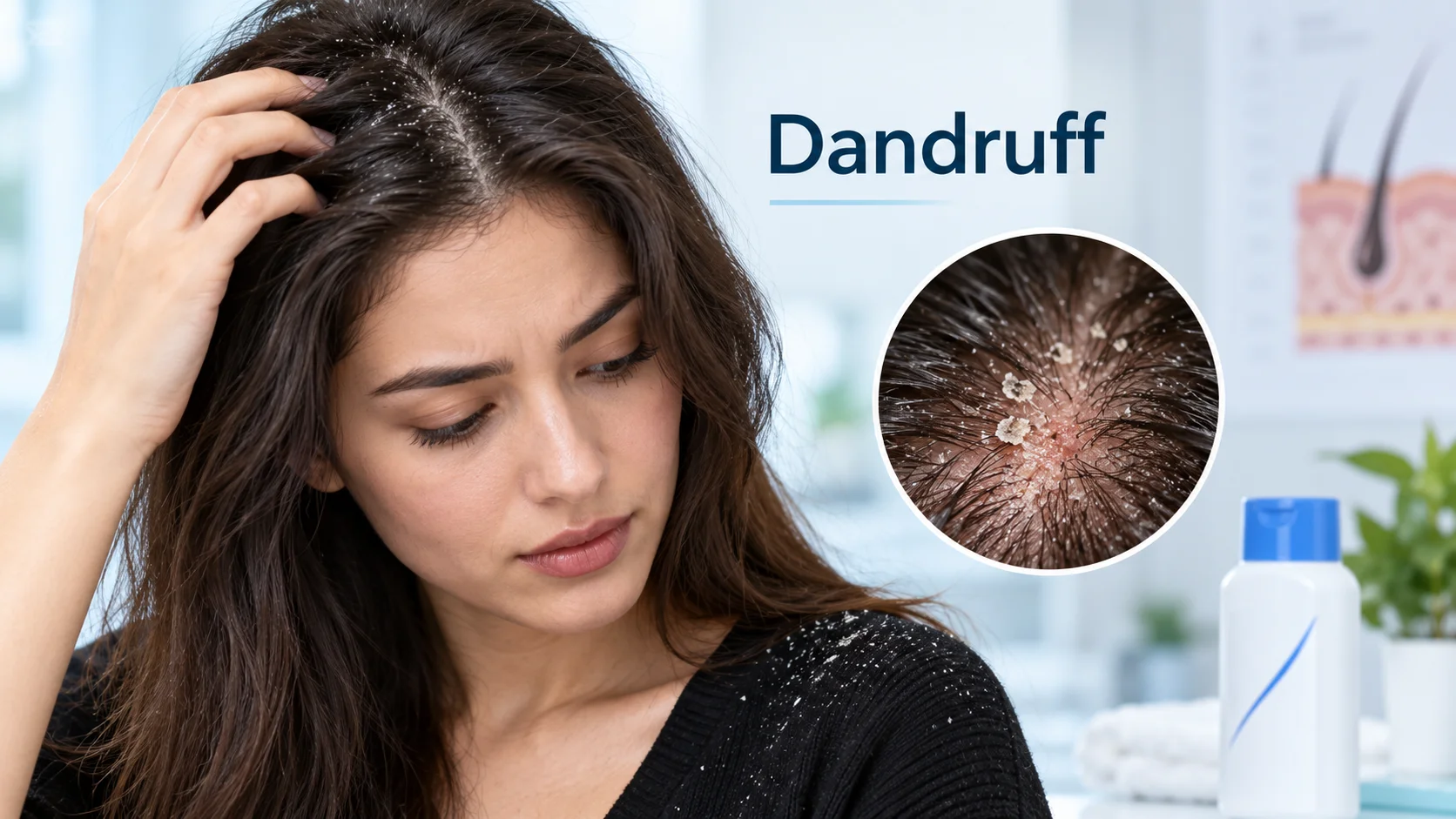
Seborrhoeic dermatitis causes greasy, scaly patches, commonly affecting the scalp and face.
Dandruff is considered a mild form of seborrhoeic dermatitis.
Hand Eczema
Hand eczema commonly affects people whose hands are repeatedly exposed to water, detergents or chemicals.
It is often seen in:
Homemakers
Healthcare workers
Cleaners
People working regularly with chemicals or water
Causes and Triggers
In atopic eczema, the skin’s protective barrier does not work as effectively as it should.
The skin loses moisture easily and allows irritants and allergens to enter more readily, which can trigger inflammation.
Changes in a gene called filaggrin may contribute to this weakened skin barrier.
Eczema also commonly runs in families with a history of:
Eczema
Asthma
Allergies
Common Triggers
Triggers vary between individuals but may include:
Soaps and detergents
Bubble baths
Hot water
Long baths
Woollen clothing
Synthetic fabrics
Sweating
Heat
Cold or dry weather
Dust mites
Pet dander
Pollen
Stress
Skin infections
In some infants, foods such as milk, egg or peanut may be associated with eczema.
Symptoms
Common symptoms include:
Intense itching, often worse at night
Dry skin
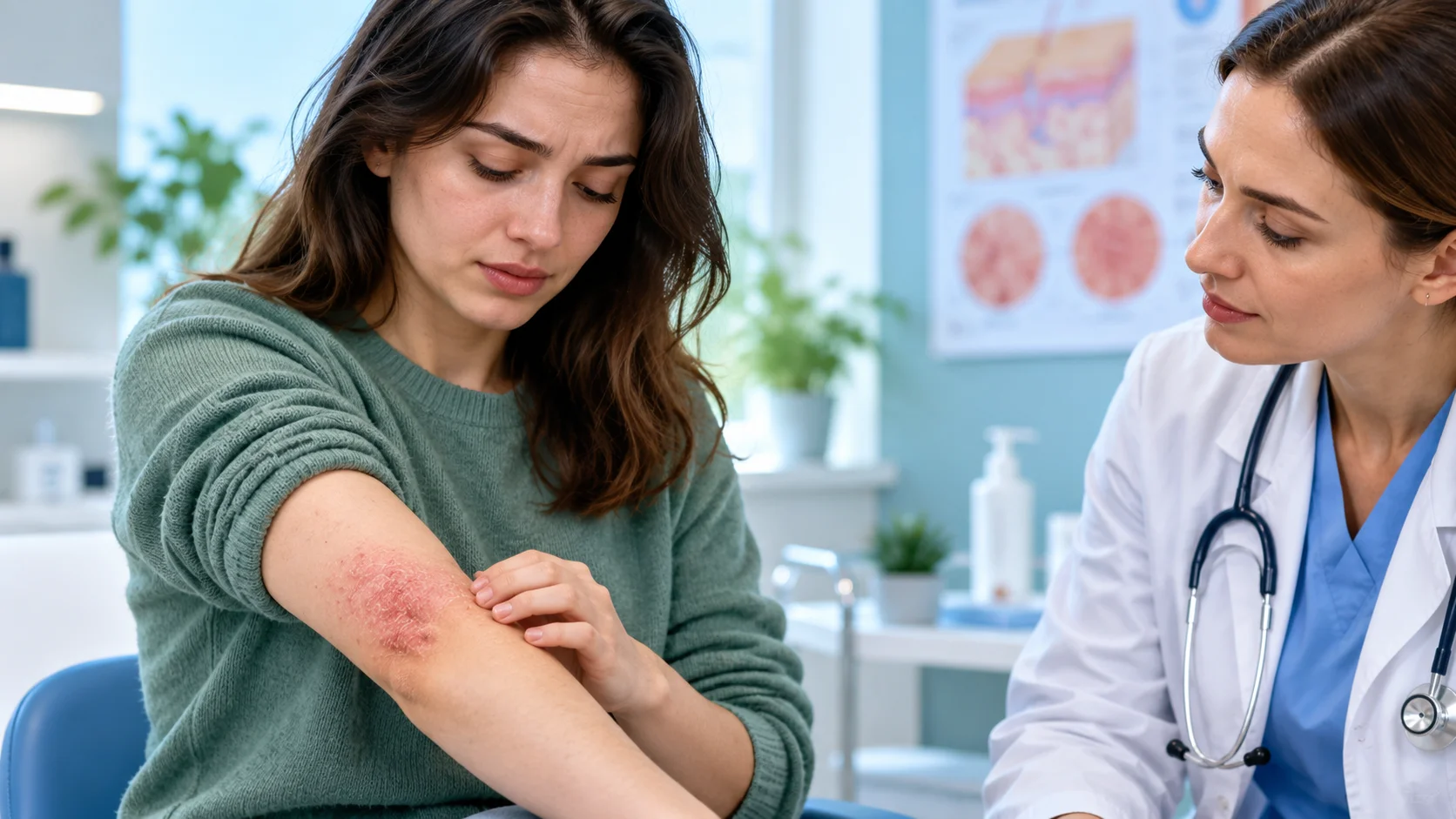
Rough or scaly skin
Red or darker patches
Small bumps that may ooze or crust
Cracked skin
Thickened skin caused by repeated scratching
On brown or darker skin, eczema may appear:
Dark brown
Purple
Grey
rather than bright red.
Where Eczema Appears
In babies, eczema commonly affects:
Face
Scalp
Outer surfaces of the arms and legs
In older children and adults, it commonly affects:
Inner elbows
Backs of the knees
Neck
Wrists
Ankles
Diagnosis
A doctor or dermatologist usually diagnoses eczema by:
Examining the skin
Asking about symptoms
Reviewing family and allergy history
There is no single test that confirms eczema.
Patch Testing
Patch testing may help identify substances causing allergic contact dermatitis.
Allergy Testing
Skin-prick tests or blood tests may sometimes be used when a food or environmental allergy is suspected.
Treatment
Eczema cannot currently be cured, but it can usually be controlled effectively.
Treatment combines regular skin care with medicines used during flare-ups.
Moisturisers
Moisturisers, also called emollients, are the foundation of eczema treatment.
They should usually be:
Applied generously
Used at least twice daily
Continued even when the skin appears clear
Regular moisturising helps repair and protect the skin barrier.
Topical Corticosteroids
Steroid creams or ointments can reduce inflammation during eczema flares.
When used at the correct strength and for the appropriate duration, they can be effective and safe.
Strong steroid creams should not be used on the face or for prolonged periods without medical advice.
Topical Calcineurin Inhibitors
Medicines such as:
Tacrolimus
Pimecrolimus
are steroid-free treatments that may be particularly useful for:
Face
Eyelids
Skin folds
Other Topical Treatments
Newer non-steroid treatments may include:
Crisaborole
Topical JAK inhibitors such as ruxolitinib
Antihistamines
Sedating antihistamines may sometimes help a person sleep when itching is severe at night.
However, they do not directly treat the eczema itself.
Treatment for Infection
If eczema becomes infected, treatment may include:
Antibiotics
Antiviral medicines
depending on the cause.
Wet Wrap Therapy
Wet wrap therapy involves applying moisturiser or prescribed medicine and covering the area with damp dressings.
It may help during severe flares and should generally be used with medical guidance.
Treatment for Moderate to Severe Eczema
When eczema is not adequately controlled with creams and skin care, additional treatments may be considered.
Phototherapy
Narrowband UVB phototherapy uses controlled ultraviolet light to reduce inflammation.
Oral Immunosuppressants
Medicines may include:
Cyclosporine
Methotrexate
Azathioprine
Biologic Medicines
Biologic treatments include:
Dupilumab
Tralokinumab
These target specific immune pathways involved in eczema.
Oral JAK Inhibitors
Options may include:
Upadacitinib
Abrocitinib
Baricitinib
Avoid Unprescribed Combination Creams
Mixed over-the-counter creams containing combinations of steroids, antifungals and antibiotics are commonly misused.
These products can sometimes worsen skin problems and should be used only when specifically prescribed by a doctor.
Daily Skin Care
Simple daily measures can reduce dryness, itching and flare-ups.
Helpful habits include:
Bathe in lukewarm water rather than hot water
Keep baths or showers to around 5 to 10 minutes
Use a mild, fragrance-free soap substitute
Pat the skin dry instead of rubbing
Apply moisturiser within three minutes after bathing
Wear soft cotton clothing
Avoid wool and tight synthetic fabrics
Wash clothes with mild detergent and rinse thoroughly
Keep fingernails short
Avoid scratching where possible
Use cotton gloves at night for children when necessary
Wear protective gloves for wet work or chemicals
Identify and avoid individual triggers
When to See a Doctor
See a healthcare professional if eczema:
Interferes with sleep
Affects everyday activities
Continues spreading
Does not improve with moisturisers and basic care
Seek prompt medical attention if the skin:
Becomes painful
Produces yellow pus
Develops heavy crusting
Develops clusters of painful blisters
Is accompanied by fever
These symptoms may suggest infection.
One serious complication is eczema herpeticum, a herpes virus infection that requires urgent treatment.
The Bottom Line
Eczema is a chronic inflammatory skin condition that causes dryness, itching, irritation and recurring flare-ups.
Although there is no cure, regular moisturising, avoiding personal triggers and using appropriate medical treatment can keep symptoms well controlled for many people.