What It Is
Allergy skin and patch testing are methods used to identify specific substances that trigger an allergic reaction in a particular person.
What It Checks
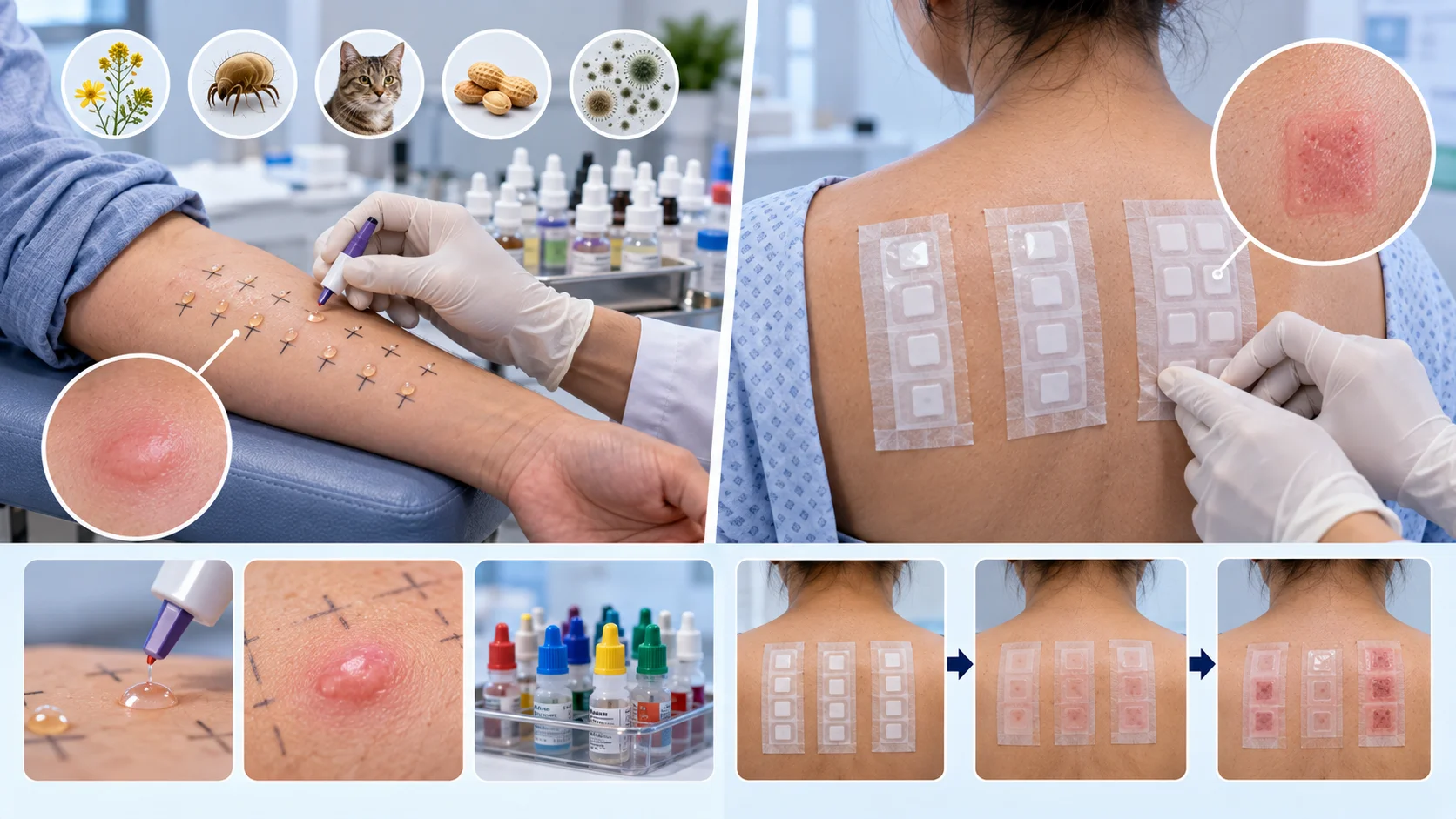
Skin prick testing checks for immediate-type allergic reactions, commonly related to substances like pollen, dust, certain foods, or animal dander. Patch testing, by contrast, checks for a different, delayed type of allergic skin reaction, commonly related to substances that come into direct contact with the skin, such as certain metals, fragrances, or other chemicals found in everyday products.
Why It's Used
Allergy skin and patch testing are commonly used to help identify the specific trigger behind allergic symptoms, such as sneezing, skin rashes, or other allergic reactions, allowing for more targeted avoidance of the identified substance going forward.
How It's Done
For skin prick testing, a small amount of diluted allergen is placed on the skin, usually on the forearm or back, and the skin is gently pricked at that spot, with results, such as a small raised bump, typically visible within 15 to 20 minutes. For patch testing, small patches containing different substances are applied to the skin, usually on the back, and left in place for a couple of days, with the skin examined for a delayed reaction at set intervals afterward.
Background
Skin testing for allergies developed in the late 19th and early 20th centuries, as researchers recognized that exposing the skin to small amounts of a suspected allergen could reproduce a localized version of an allergic reaction, providing a useful way to identify specific triggers. Patch testing developed as a related but distinct technique later in the 20th century, specifically suited to identifying delayed-type skin allergies, and both methods remain standard tools in allergy and dermatology practice today.