What It Is
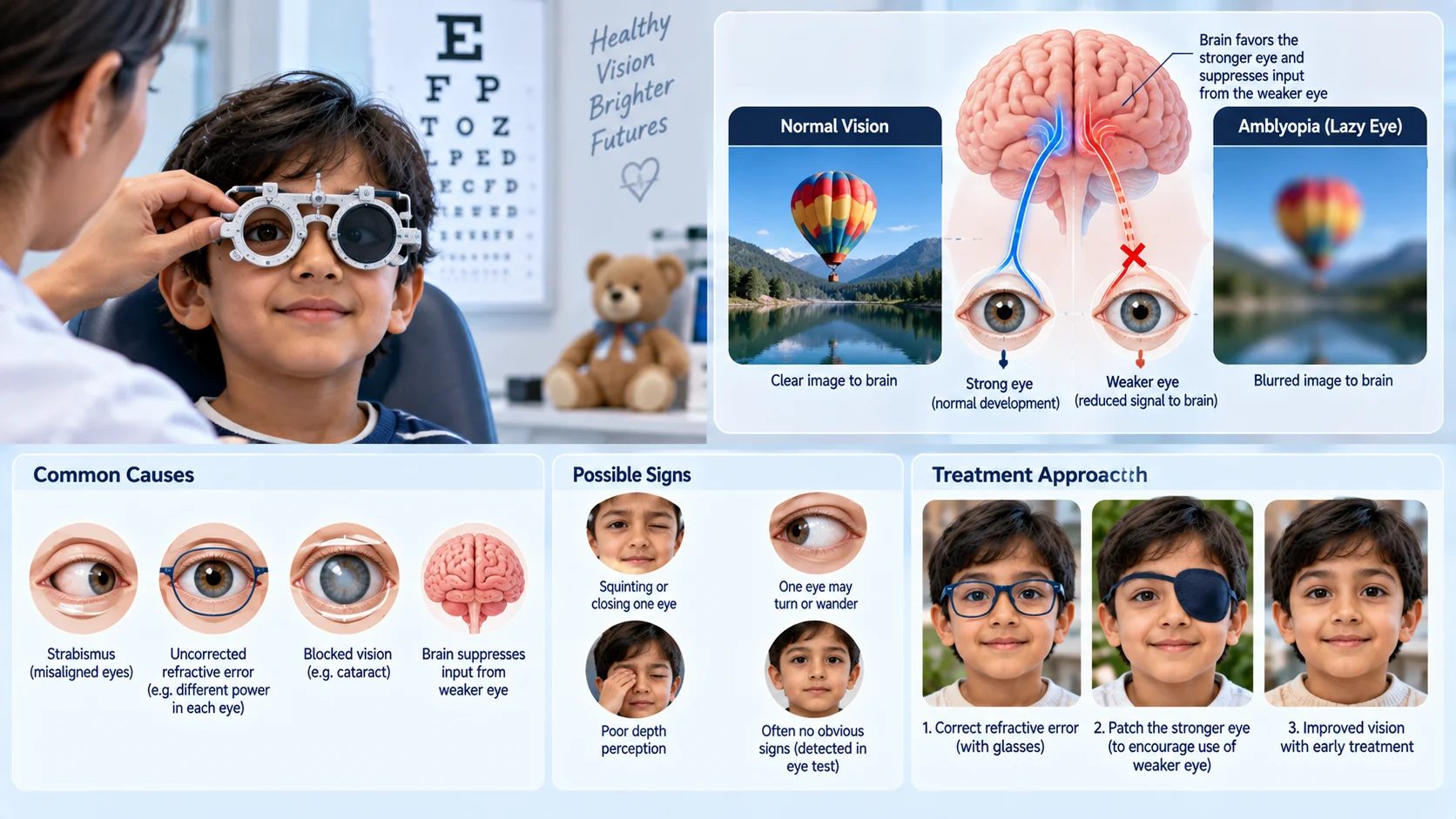
Amblyopia, commonly known as lazy eye, is a condition in which vision in one eye doesn't develop normally during childhood, even though the eye itself may appear structurally normal.
How It Develops
During early childhood, the brain and eyes are still developing the neural connections responsible for normal vision. If one eye consistently sends a weaker or different signal than the other, due to causes such as strabismus, a significant difference in refractive error between the two eyes, or something physically blocking clear vision in one eye, such as a cataract, the brain can begin to favor the stronger eye and effectively suppress input from the weaker one. Over time, this leads the weaker eye's vision to develop poorly, even though there may be nothing structurally wrong with the eye itself.
General Symptoms
Amblyopia can be difficult to notice without a formal eye exam, since a young child often doesn't realize their vision in one eye is different. Possible signs include one eye appearing to wander or turn, squinting or closing one eye, and poor depth perception. Because the brain, not the eye itself, is the source of the problem, standard vision tests focused only on the eye's physical structure can miss it without more specific testing.
General Treatment Approaches
Treatment for amblyopia generally works best when started as early as possible in childhood, while the visual system is still developing. Common approaches include correcting any underlying refractive error with glasses, and encouraging use of the weaker eye, often by temporarily patching the stronger eye to force the brain to rely on and strengthen the weaker one.
Background
Amblyopia has been recognized as a distinct condition affecting childhood vision development since the 19th century, though understanding of its underlying basis in the brain's visual processing, rather than the eye itself, developed considerably further over the 20th century. This understanding of amblyopia as fundamentally a developmental, brain-based condition is why early childhood screening and prompt treatment remain so strongly emphasized today.