What It Is
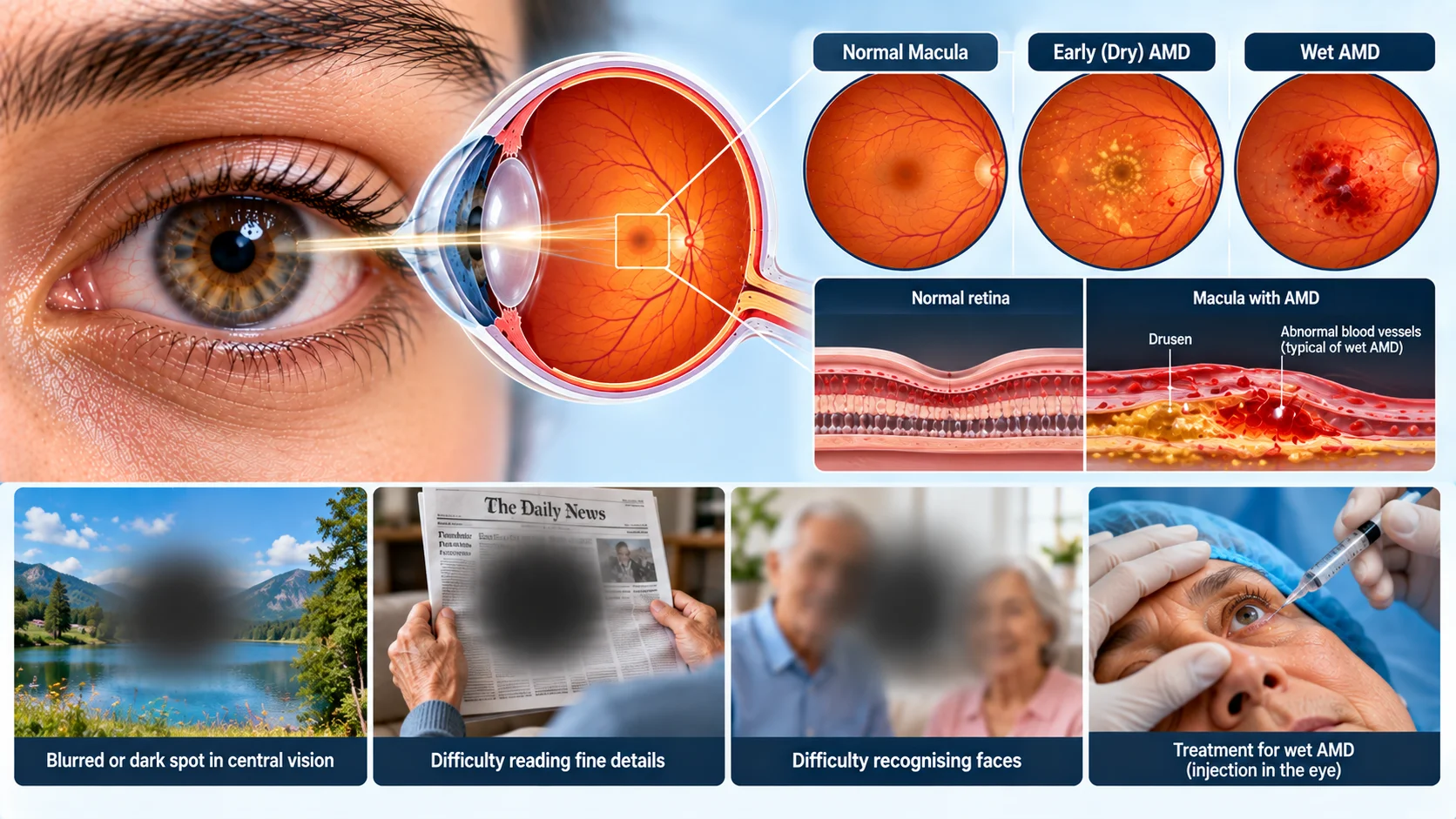
Age-related macular degeneration, commonly abbreviated as AMD, is a condition that affects the macula, the central part of the retina responsible for sharp, detailed central vision, typically developing in older adults.
How It Develops
AMD occurs in two main forms. In the more common "dry" form, the macula gradually thins and small deposits, called drusen, build up beneath it over time. In the less common but more rapidly progressive "wet" form, abnormal blood vessels grow beneath the retina and can leak fluid or blood, causing more sudden vision changes. The exact cause involves a combination of aging, genetic factors, and environmental factors such as smoking.
General Symptoms
Common symptoms of AMD include blurred or distorted central vision, difficulty recognizing faces, and a blank or dark spot developing in the center of the visual field. Peripheral, or side, vision is generally preserved even as central vision is affected, which is a distinguishing feature of the condition.
General Treatment Approaches
There's currently no cure for dry AMD, though certain nutritional supplements have been shown to help slow its progression in some cases, alongside lifestyle measures such as not smoking. Wet AMD is commonly treated with injections of medication directly into the eye, aimed at reducing the abnormal blood vessel growth and associated leakage.
Background
AMD was recognized as a distinct condition separate from other causes of vision loss in older adults over the course of the 20th century, aided by advances in retinal imaging. The development of injectable treatments for wet AMD in the mid-2000s represented a major breakthrough, transforming a condition that previously often led to significant vision loss into one that can frequently be managed effectively when caught and treated early.