What It Is
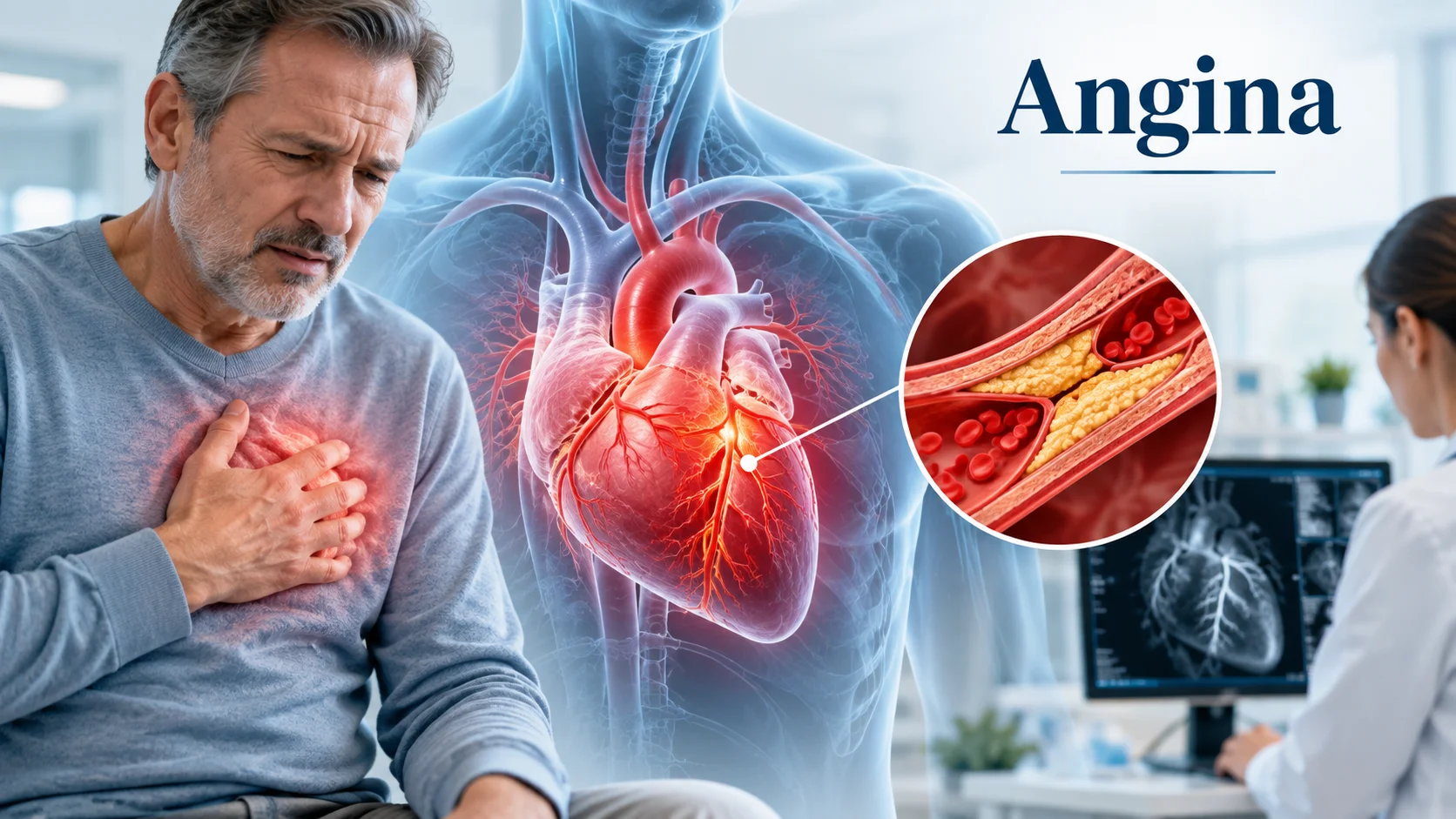
Angina refers to chest discomfort or pain that occurs when the heart muscle doesn't receive enough oxygen-rich blood, most commonly as a result of narrowed coronary arteries.
How It Develops
Angina typically develops when coronary arteries, the blood vessels supplying the heart muscle, become narrowed due to plaque buildup, a process related to coronary artery disease. When the heart's demand for oxygen increases, such as during physical activity or emotional stress, narrowed arteries may not be able to supply enough blood to meet that demand, resulting in temporary chest discomfort. In a pattern often described as stable angina, this discomfort tends to follow a predictable pattern, occurring with exertion and easing with rest.
General Symptoms
Angina commonly presents as chest pain or discomfort, often described as pressure, tightness, or a squeezing sensation, which may spread to the arm, shoulder, jaw, or back. It's frequently triggered by physical exertion, emotional stress, or extreme temperatures, and typically eases within several minutes of rest. Some people also experience accompanying shortness of breath or fatigue.
General Treatment Approaches
Management of angina generally involves addressing the underlying coronary artery narrowing, commonly through a combination of lifestyle changes, such as dietary adjustments and physical activity modifications, and medications aimed at improving blood flow to the heart and reducing the heart's oxygen demand. In some cases, procedures to restore blood flow through narrowed arteries, such as angioplasty with stent placement, may be considered, depending on the severity and pattern of the condition.
Background
Angina was described in medical literature as early as the 18th century, well before its underlying connection to coronary artery narrowing was understood. Over the following two centuries, as diagnostic tools and understanding of coronary artery disease advanced, angina became recognized as a specific symptom pattern closely tied to reduced blood flow to the heart, shaping how it's approached and managed in cardiology today.