
What It Is
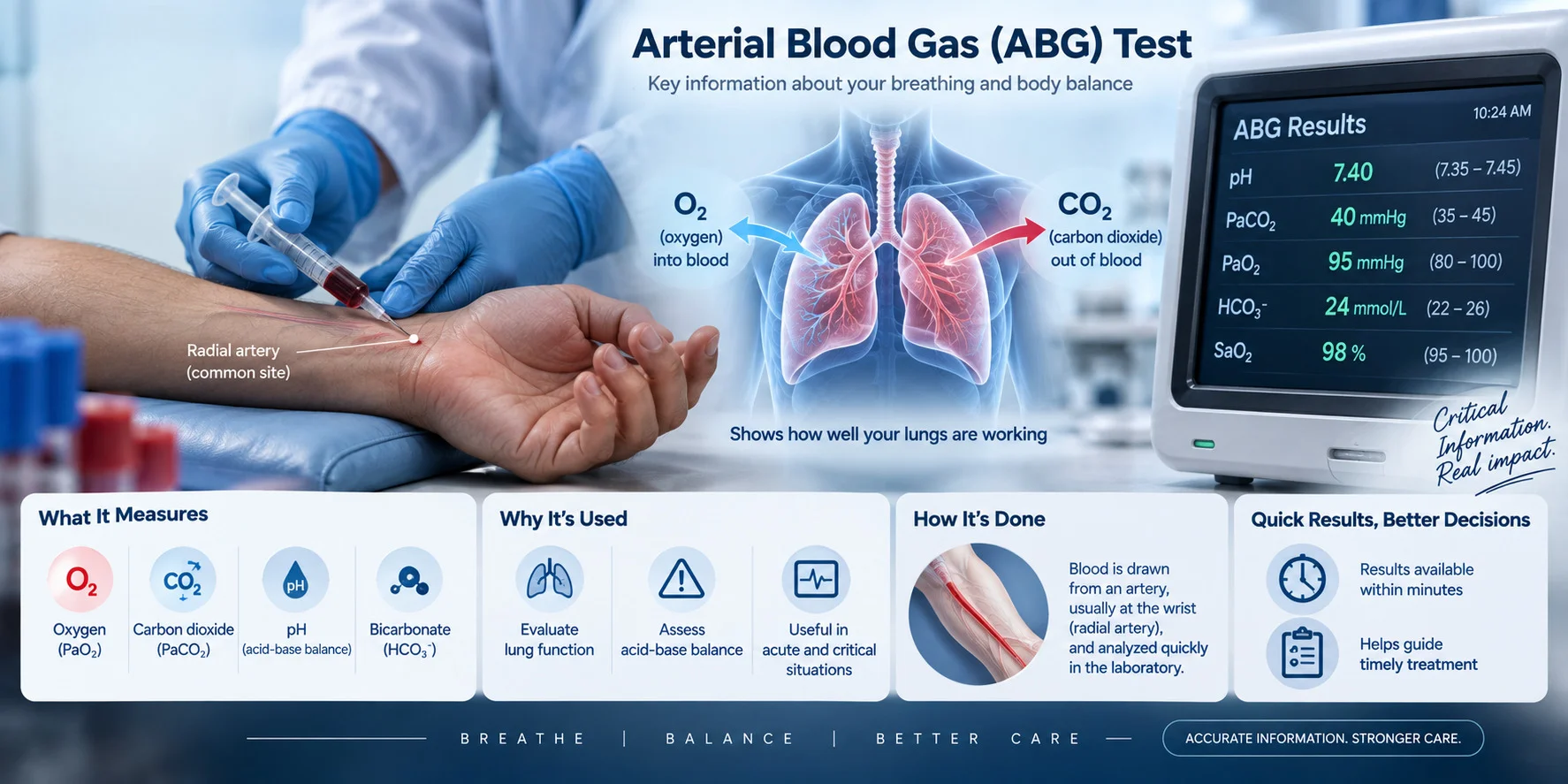
An arterial blood gas test, commonly abbreviated as ABG, measures the levels of oxygen and carbon dioxide in the blood, along with the blood's acid-base balance, using a sample drawn directly from an artery rather than a vein.
What It Checks
An ABG measures how much oxygen and carbon dioxide are present in arterial blood, along with the blood's pH, a measure of its acidity or alkalinity, and related values that help assess how well the lungs are functioning and how well the body is maintaining its acid-base balance.
Why It's Used
ABG testing is commonly used to evaluate how well the lungs are exchanging oxygen and carbon dioxide, particularly in situations involving significant respiratory distress, and to assess the body's acid-base balance in various acute medical situations.
How It's Done
Unlike most blood tests, which use blood from a vein, an ABG requires blood drawn directly from an artery, most commonly at the wrist, since arterial blood more accurately reflects oxygen and carbon dioxide levels as they exist in circulation before reaching the body's tissues. The sample is analyzed quickly, given that the values it measures can change rapidly.
Background
The ability to measure blood gas values developed alongside advances in chemistry and laboratory equipment over the mid-20th century, becoming an increasingly important tool as understanding of respiratory physiology deepened. ABG testing became particularly integral to the growth of critical care and emergency medicine during this period, and it remains a key diagnostic tool in these settings today, providing rapid, detailed information about respiratory and acid-base status.