
What They Do
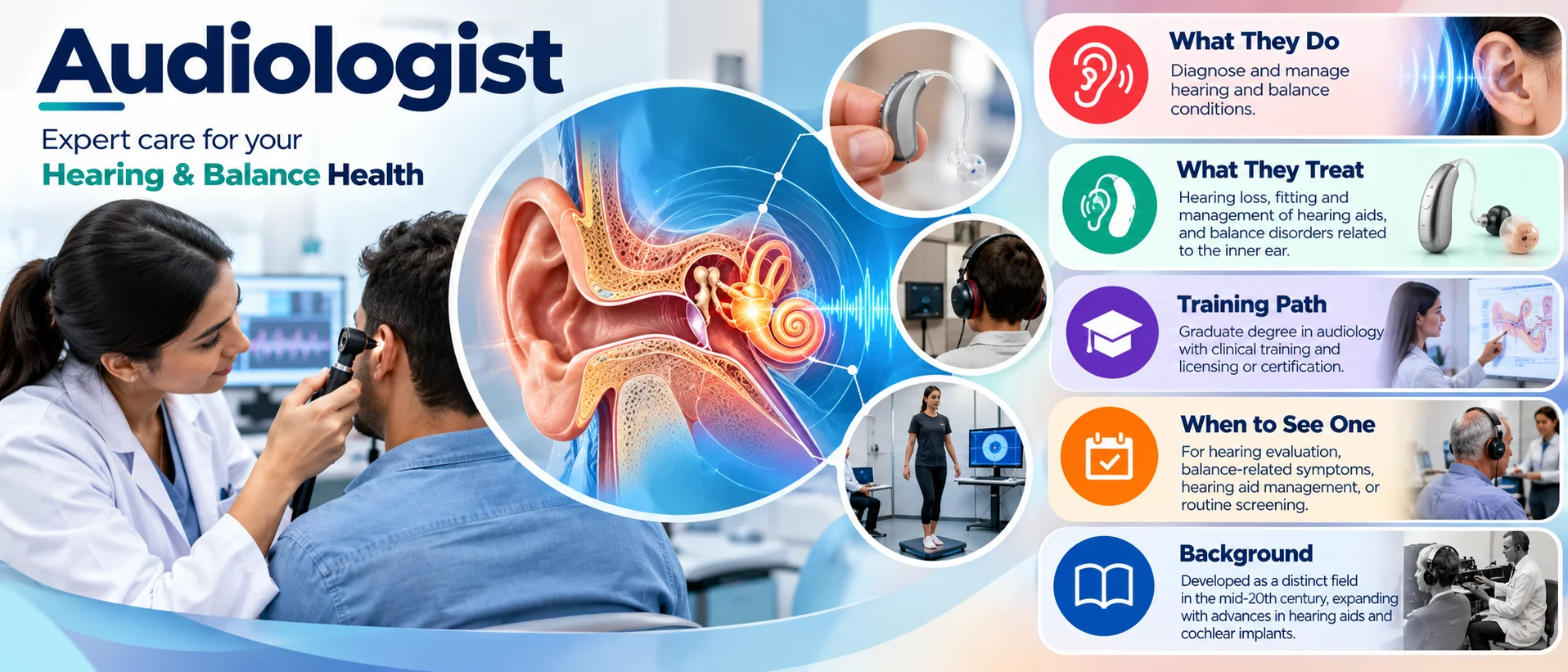
An audiologist specializes in diagnosing and managing hearing and balance conditions. Unlike ENT specialists, who are physicians handling both medical and surgical ear conditions, audiologists are non-surgical hearing care specialists focused specifically on assessment and rehabilitation of hearing and balance function.
What They Treat
Audiologists evaluate and manage hearing loss across all age groups, fit and manage hearing aids, and assess balance disorders that relate to the inner ear's role in maintaining balance. They also work with cochlear implant candidates and recipients, often as part of a broader team alongside an ENT specialist for the surgical aspects of implant placement.
Training Path
Becoming an audiologist typically requires a graduate degree in audiology, along with supervised clinical training and, in most countries, a licensing or certification process specific to the field. This training covers the detailed physiology of hearing and balance, along with the technical skills needed for hearing assessment and the fitting of hearing devices.
When to See One
People commonly see an audiologist for hearing evaluation, whether due to noticed hearing changes, routine screening, or concerns identified by another healthcare provider. Audiologists are also commonly involved in evaluating balance-related symptoms that may stem from the inner ear, and in the ongoing management of hearing aids or other assistive hearing devices.
Background
Audiology developed as a distinct clinical field in the mid-20th century, growing significantly in response to the need to assess and rehabilitate hearing loss in soldiers returning from military service with hearing damage. The field expanded considerably in the decades since, incorporating advancing hearing aid technology and, more recently, cochlear implant technology, broadening the range of tools available to help manage hearing loss.