
What It Is
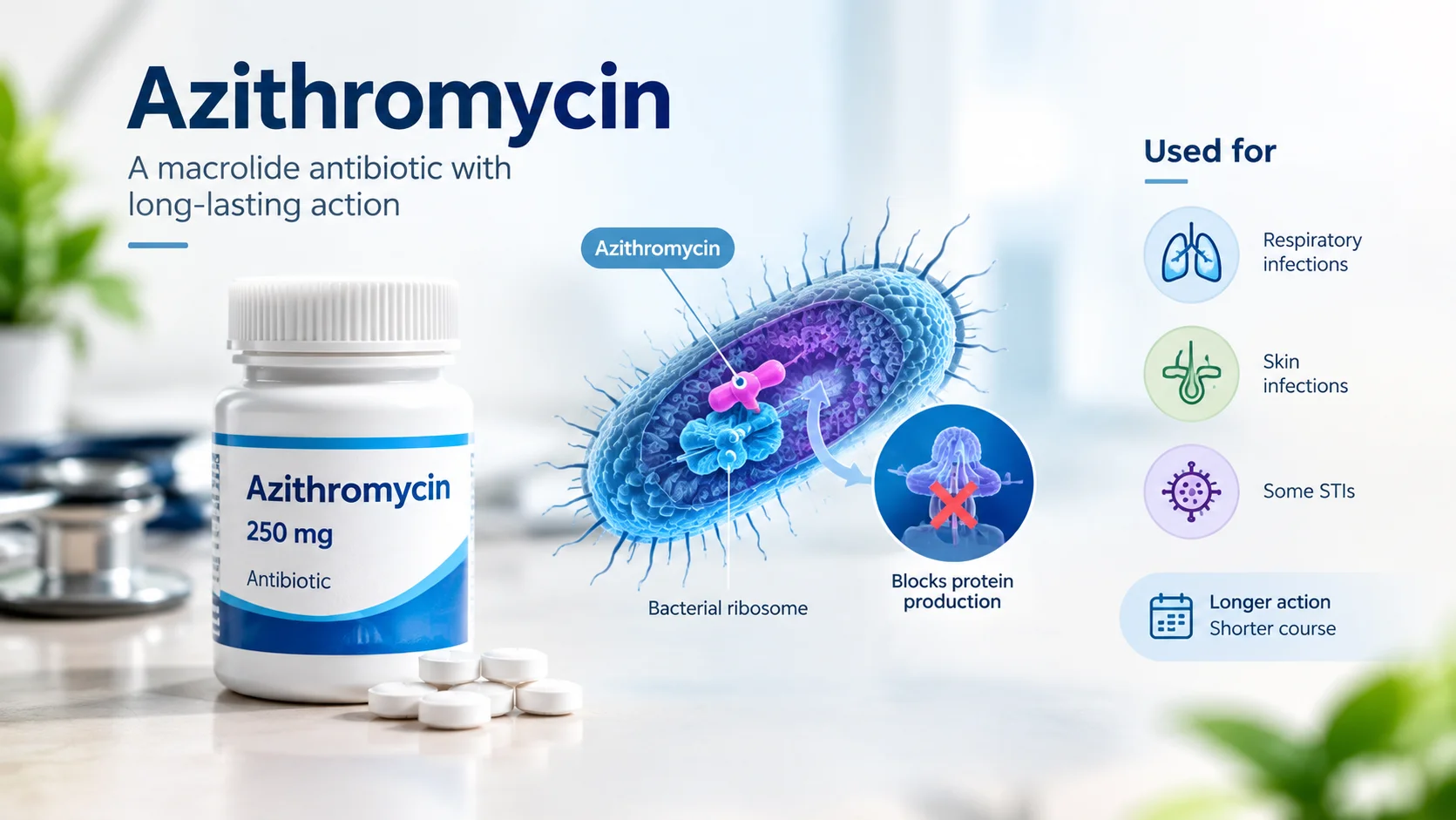
Azithromycin belongs to a class of antibiotics called macrolides, and is notable for its relatively long duration of action compared to many other antibiotics.
What It's Used For
Azithromycin is generally used to treat infections caused by susceptible bacteria, commonly including certain respiratory infections, skin infections, and some sexually transmitted infections.
How It Works
Azithromycin works by interfering with bacteria's ability to produce proteins. It binds to a specific part of the bacterial ribosome, the cellular structure responsible for assembling proteins, and blocks this process. Because bacteria depend on continuously producing proteins to survive, grow, and function, this disruption prevents the bacteria from multiplying effectively, allowing the body's immune system to clear the infection.
History and Regulatory Status
Azithromycin was developed by researchers in the former Yugoslavia in the late 1970s and early 1980s, building on the existing macrolide antibiotic class. It was later licensed and further developed by an American pharmaceutical company, and was introduced for widespread clinical use in the early 1990s. One of its notable features at the time of introduction was that it could remain effective in the body for a longer period than many earlier antibiotics, allowing for shorter treatment courses. It's now widely available in generic form and remains one of the most commonly prescribed antibiotics globally.