What It Is
A biopsy is a procedure in which a small sample of tissue is removed from the body for closer examination, typically under a microscope, to help diagnose a suspected condition.
What It Checks
A biopsy allows a pathologist to directly examine cells and tissue structure in detail, which can reveal information that isn't possible to determine through imaging or blood tests alone, including whether abnormal cells, such as cancer cells, are present, and helping characterize the specific nature of a condition.
Why It's Used
Biopsies are commonly used when imaging or other tests have identified an abnormality that needs closer examination to determine exactly what it is, and are considered a key step in confirming many diagnoses, particularly related to cancer, but also relevant to a range of other conditions affecting different tissues and organs.
How It's Done
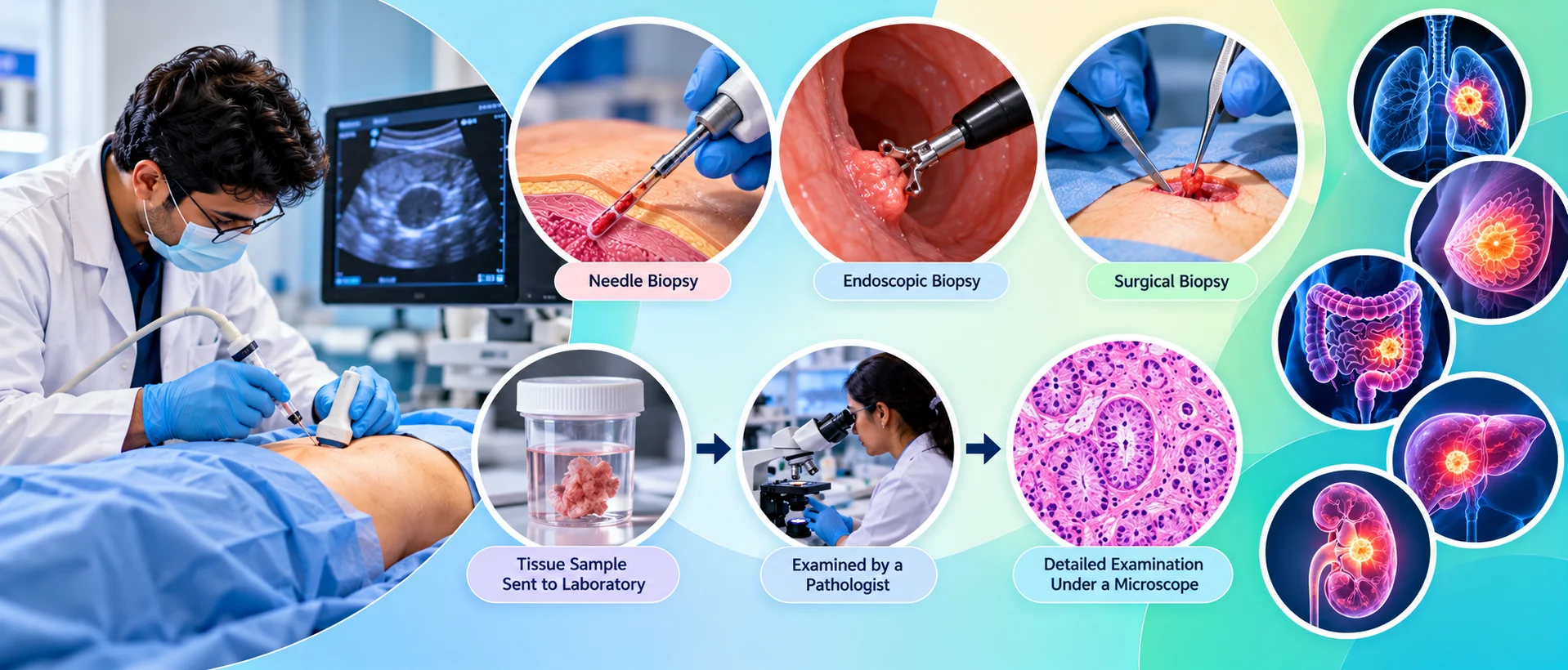
The specific method used to obtain a biopsy sample varies considerably depending on which part of the body is being sampled and the nature of the area being examined. Common approaches include using a needle to withdraw a small tissue sample, using an endoscope to collect a sample during an internal examination, or performing a minor surgical procedure to remove a larger sample. The collected tissue is then sent to a laboratory, where a pathologist examines it in detail.
Background
Examining tissue samples to better understand disease has roots going back centuries, but biopsy as a formal diagnostic procedure developed considerably as a distinct clinical practice in the 19th and 20th centuries, alongside advances in microscopy and a deepening understanding of how disease affects tissue at a cellular level. Biopsy techniques have continued to advance since then, including less invasive methods for obtaining samples from many parts of the body, and biopsy remains a foundational diagnostic tool across many areas of medicine today.