What It Is
Blepharitis is a chronic condition involving inflammation of the eyelids, particularly along the edges where the eyelashes are located.
How It Develops
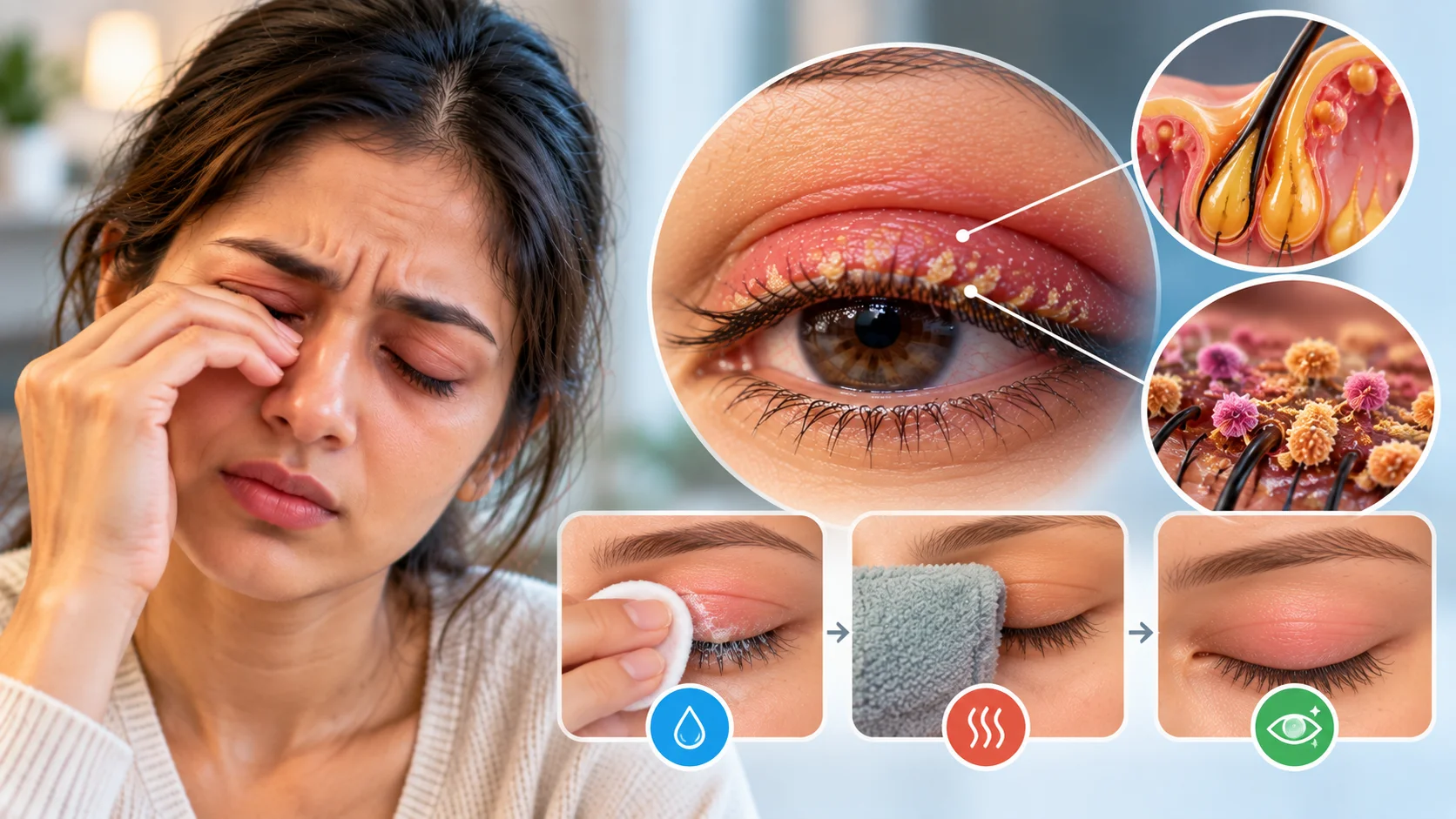
Blepharitis often develops due to a combination of factors, including overgrowth of bacteria that naturally live on the skin near the eyelid margin, dysfunction of small oil-producing glands along the eyelid edge, or an association with certain underlying skin conditions that affect oil gland function elsewhere on the body as well. This combination of factors leads to ongoing irritation and inflammation along the eyelid margin.
General Symptoms
Common symptoms of blepharitis include red, swollen eyelids, itching or a burning sensation, crusting around the eyelashes, particularly noticeable after waking, and a gritty or foreign-body sensation in the eyes. Because it's a chronic condition, symptoms often persist over a long period, sometimes improving and worsening in cycles.
General Treatment Approaches
Treatment for blepharitis generally focuses on regular eyelid hygiene, including gentle cleaning of the eyelid margin to remove crusting and reduce bacterial buildup, along with warm compresses to help improve the function of the oil-producing glands. In some cases, antibiotic ointment or other targeted treatments may be added, particularly for more persistent or bacterially driven cases.
Background
Blepharitis has been recognized as a common eyelid condition for a long time, though a more detailed understanding of its various underlying contributing factors, including the role of the eyelid's oil-producing glands, developed considerably over the 20th century. Because it tends to be a chronic, recurring condition rather than one with a single definitive cure, ongoing eyelid hygiene remains the cornerstone of long-term management today.