What It Is
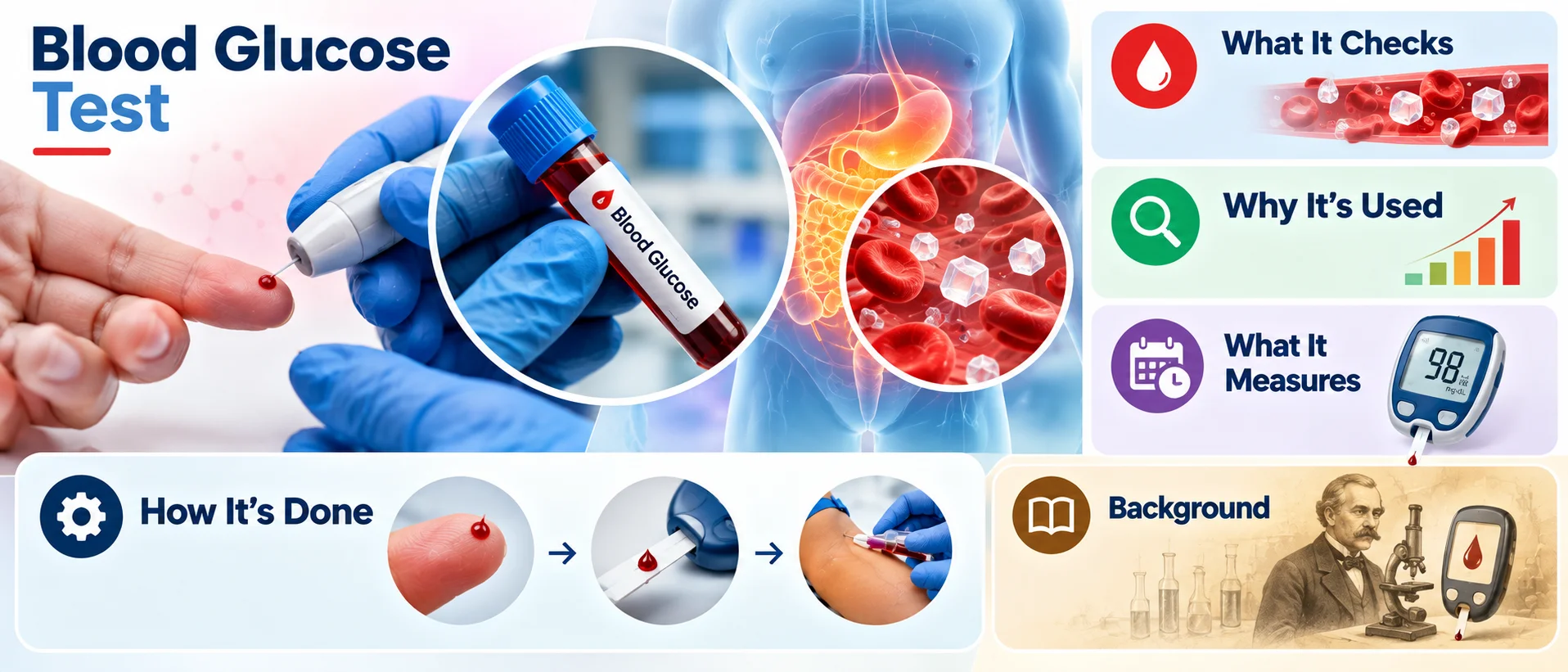
A blood glucose test measures the amount of glucose, or sugar, present in the blood at the time the sample is taken.
What It Checks
The test directly measures the concentration of glucose circulating in the bloodstream at a single point in time. It's often done in different forms, including a fasting test, taken after a period without eating, and a random or post-meal test, taken without any specific timing requirement relative to food intake, each offering a slightly different snapshot of blood sugar levels.
Why It's Used
Blood glucose testing is commonly used as part of routine health checkups, to investigate symptoms that might relate to blood sugar regulation, and to monitor blood sugar levels over time in various clinical contexts, given how central glucose regulation is to overall metabolic health.
How It's Done
A blood glucose test typically requires a small blood sample, which can be obtained either through a simple finger-prick method, often used for quick, point-of-care testing, or through a standard blood draw from a vein for laboratory analysis. Fasting tests require avoiding food and drink, other than water, for a set period beforehand.
Background
The ability to measure blood glucose developed alongside broader advances in chemistry during the 19th and early 20th centuries, as researchers identified glucose as a key substance in blood and developed methods to quantify it. Testing became significantly faster and more accessible with the development of portable glucose meters in the latter half of the 20th century, which allowed blood sugar to be measured quickly outside of a traditional laboratory setting, a development that changed how blood sugar monitoring is approached in many contexts today.