What It Is
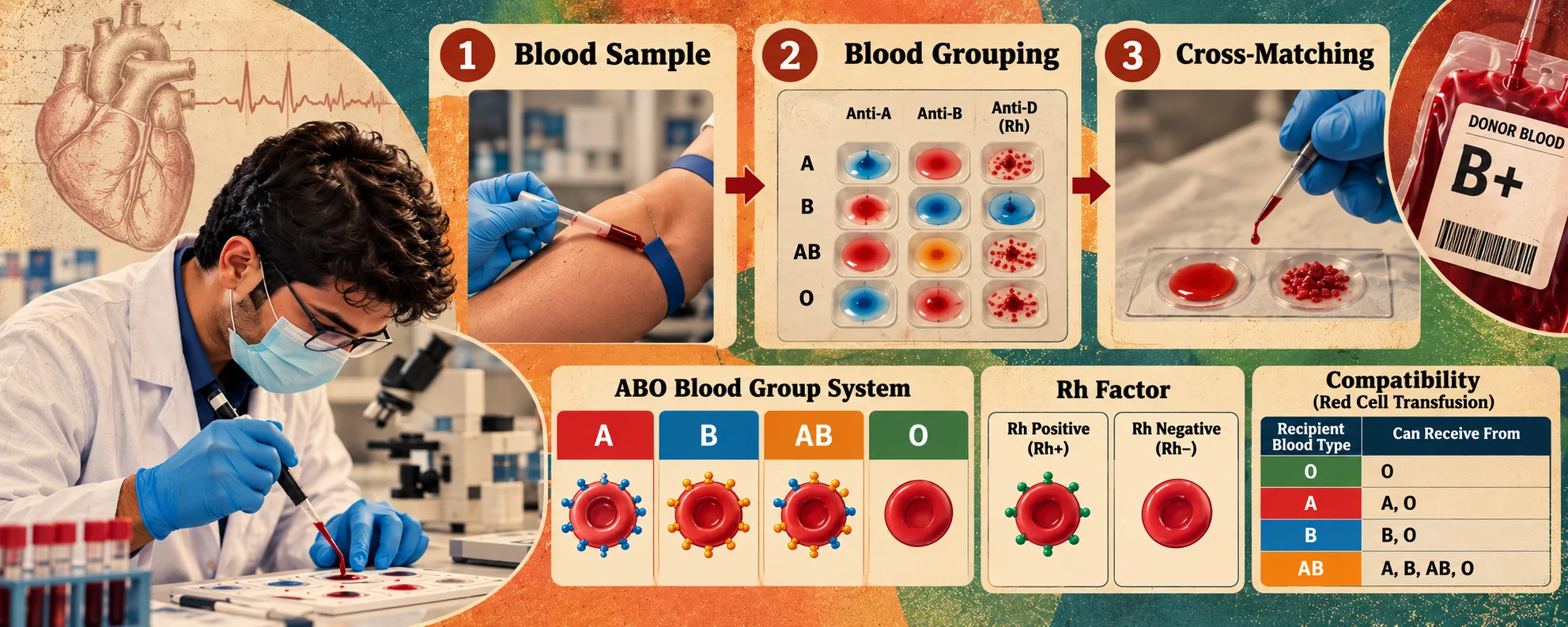
Blood grouping is a test that determines a person's blood type, while cross-matching is a related test used to check the compatibility between a specific unit of donor blood and a specific recipient before a blood transfusion.
What It Checks
Blood grouping identifies which blood type a person has, based on specific markers, called antigens, present on the surface of red blood cells, along with the presence or absence of the Rh factor. Cross-matching goes a step further, directly testing a sample of the recipient's blood against a specific unit of donor blood to check for any reaction that would indicate incompatibility.
Why It's Used
Blood grouping is commonly performed as part of routine health information, during pregnancy, and before any situation where a blood transfusion might be needed. Cross-matching is specifically performed before an actual blood transfusion takes place, to help ensure the safety of that specific transfusion.
How It's Done
Both tests require a blood sample, typically drawn from a vein in the arm. For blood grouping, the sample is tested against known reagents that react differently depending on blood type. For cross-matching, a sample of the recipient's blood is directly mixed with a small sample from the specific donor unit in the laboratory, and the mixture is examined for any sign of an incompatible reaction before the transfusion is approved to proceed.
Background
The major blood group system was discovered by an Austrian physician in the early 20th century, a breakthrough that explained why some earlier blood transfusions had led to severe reactions while others didn't. This discovery, along with the later identification of the Rh factor in the 1940s, transformed blood transfusion from a risky, poorly understood procedure into a considerably safer, more predictable one, and blood grouping and cross-matching remain essential safety steps before any transfusion today.