Blood vessels form an extensive network throughout the body, carrying blood to and from every tissue. Laid end to end, the blood vessels in an average adult would stretch tens of thousands of miles — a vast transport system built from three main types of vessels, each suited to a different role.
Arteries: Carrying Blood Away From the Heart
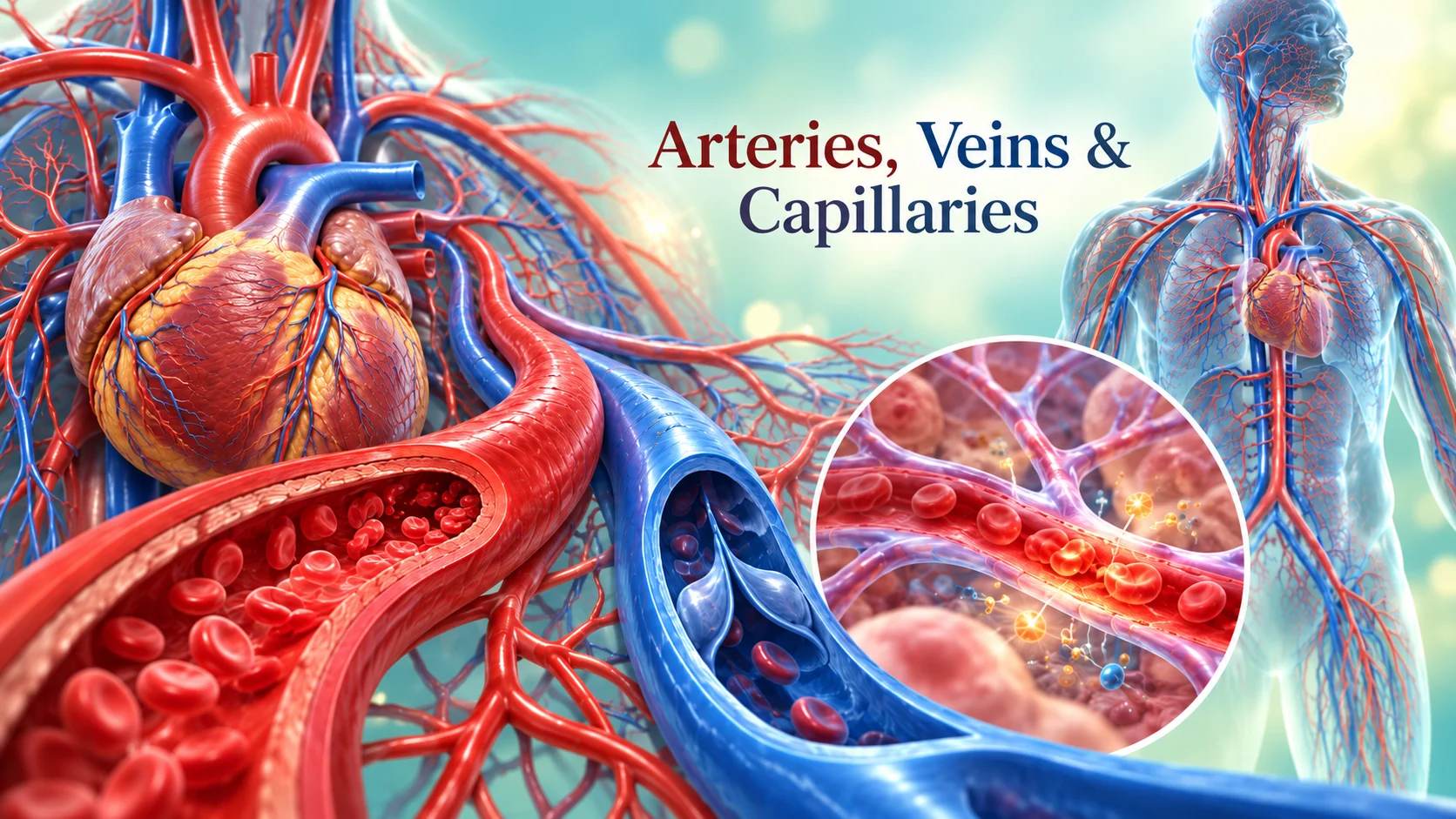
Arteries carry oxygen-rich blood away from the heart out to the rest of the body, with one notable exception in the pulmonary artery, which carries oxygen-poor blood to the lungs. Because they carry blood under high pressure directly from each heartbeat, artery walls are thick and muscular, allowing them to expand slightly with each pulse and help maintain steady blood flow.
Veins: Returning Blood to the Heart
Veins carry blood back toward the heart, generally under much lower pressure than arteries. To help blood move against gravity, particularly from the legs, many veins contain one-way valves that prevent blood from flowing backward, while surrounding muscle contractions, especially during movement, help push blood along.
Capillaries: Where Exchange Happens
Connecting the smallest arteries to the smallest veins is a vast network of capillaries, vessels so narrow that red blood cells often pass through in single file. Capillary walls are only a single cell thick, thin enough to allow oxygen, nutrients, and waste products to pass directly between the blood and surrounding tissue — this exchange is the entire purpose of the circulatory system.
A Branching, Responsive Network
Blood vessels branch repeatedly as they move further from the heart, growing progressively smaller until they reach capillary level, then merge back together on the return journey through veins. The diameter of many blood vessels can also adjust, widening or narrowing to direct more or less blood to a particular area depending on that tissue's current needs.
A Closed, Continuous System
Together, blood vessels form a closed loop with the heart, meaning blood normally stays contained within this network throughout its entire circuit around the body, completing a full loop in less than a minute at rest.