Blood is a specialized fluid that circulates continuously through the body, carrying oxygen, nutrients, waste products, and immune cells to and from every tissue. An average adult has roughly five liters of it, made up of several distinct components, each with its own role.
Plasma: The Liquid Base
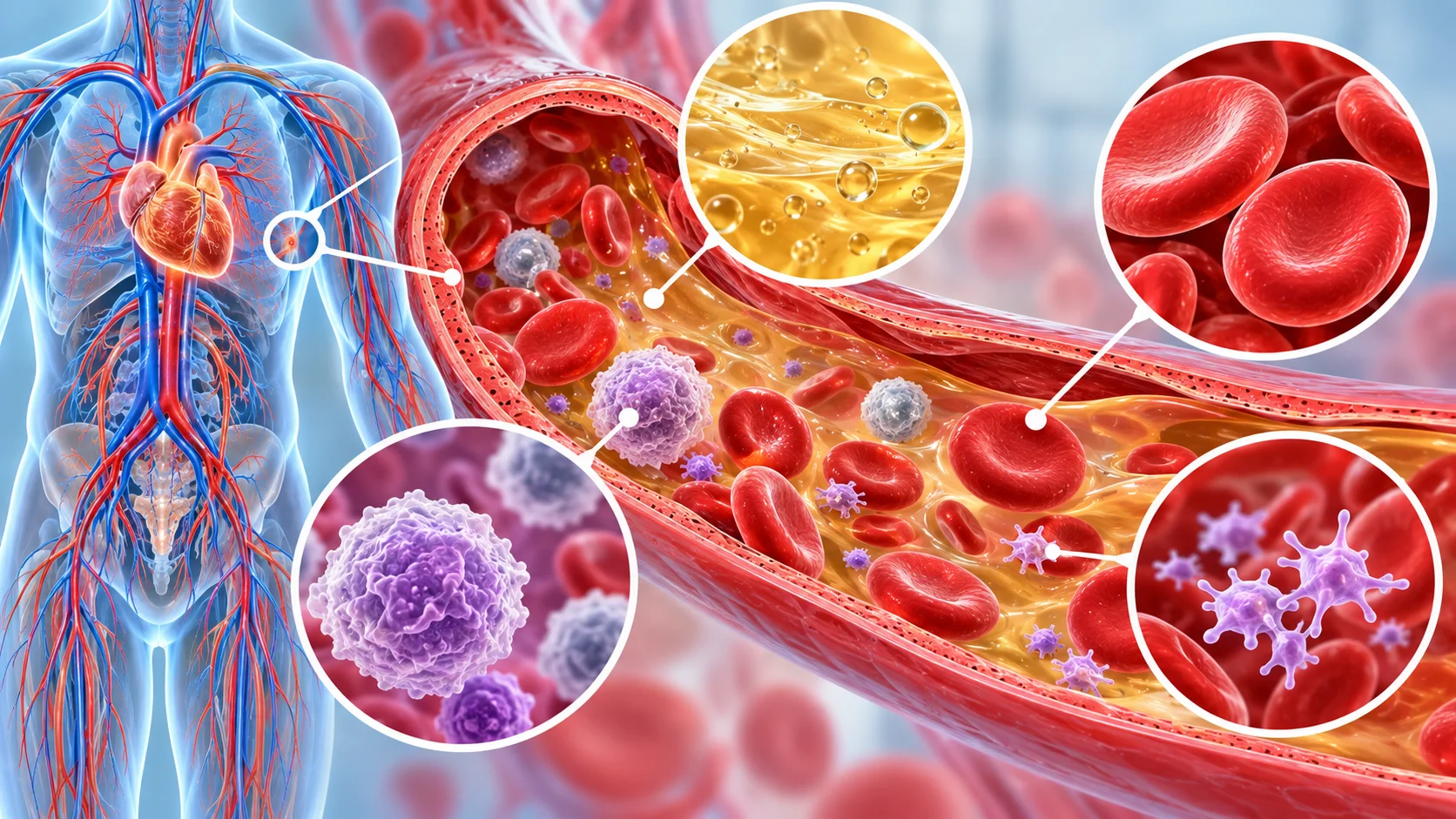
More than half of blood's volume is plasma, a straw-colored fluid made mostly of water. Plasma carries dissolved nutrients, hormones, and proteins throughout the body, and also transports waste products toward the organs responsible for removing them, primarily the kidneys and liver.
Red Blood Cells: Carrying Oxygen
Red blood cells make up the largest portion of blood's solid components. Each contains a protein called hemoglobin, which binds to oxygen in the lungs and releases it in tissues throughout the body that need it. Red blood cells are produced continuously in bone marrow and typically live for about 120 days before being broken down, largely by the spleen.
White Blood Cells: Immune Defense
White blood cells are far less numerous than red blood cells but play a central role in defending the body against infection. Different types of white blood cells perform different tasks — some directly attack invading bacteria or viruses, while others coordinate broader immune responses or produce antibodies targeting specific threats.
Platelets: Enabling Clotting
Platelets are small cell fragments involved in stopping bleeding. When a blood vessel is damaged, platelets gather at the site and, along with a cascade of clotting proteins in the plasma, form a clot that seals the injury and prevents excessive blood loss.
A Constantly Circulating System
Blood completes a full circuit through the body, driven by the heart, in less than a minute, continuously delivering oxygen and nutrients while carrying away waste and coordinating immune responses — making it one of the most active and essential tissues in the human body.