Bone marrow is a soft, spongy tissue found within the hollow spaces of many bones throughout the body. Despite being tucked away out of sight, it performs one of the body's most essential ongoing tasks: producing blood cells.
Two Types of Marrow
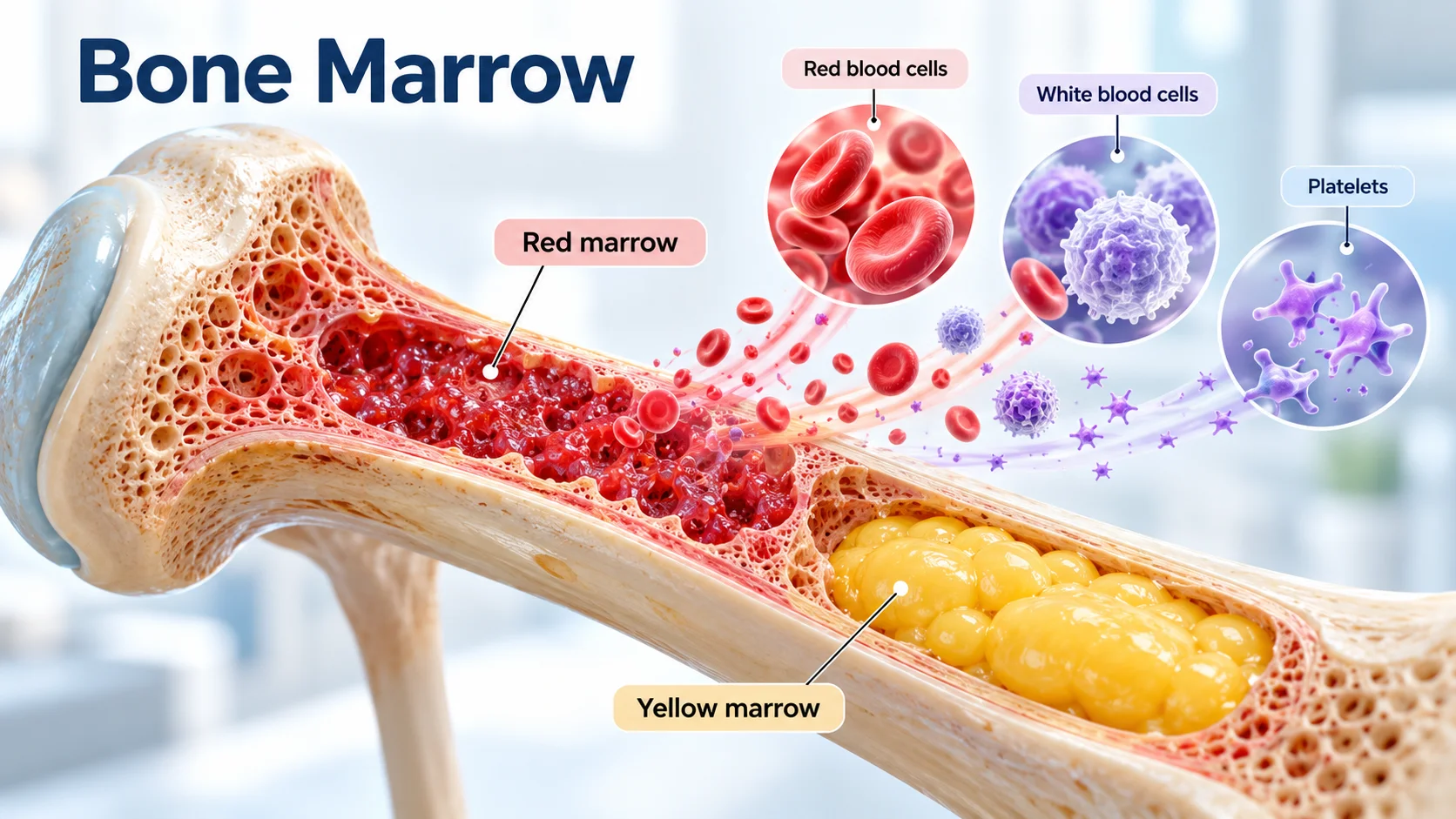
There are two main types of bone marrow. Red bone marrow is the primary site of blood cell production and is concentrated in certain bones, particularly flat bones like the pelvis, sternum, and skull, as well as the ends of long bones. Yellow bone marrow, found in the central cavities of many long bones, is composed largely of fat cells and serves more as an energy reserve, though it can convert back into active red marrow if the body's demand for blood cell production increases.
Producing Blood Cells
Within red bone marrow, specialized cells called hematopoietic stem cells continuously divide and mature into the different types of blood cells the body needs: red blood cells, which carry oxygen; white blood cells, which are central to immune defense; and platelets, which are involved in blood clotting. This process, called hematopoiesis, is ongoing throughout life, replacing blood cells as older ones naturally wear out and are removed from circulation.
A High-Output System
Given how frequently blood cells need to be replaced, particularly red blood cells and platelets, bone marrow is one of the most active tissues in the body in terms of cell production, generating billions of new blood cells every single day to keep pace with the body's ongoing needs.
Background
The role of bone marrow in producing blood cells was established through research conducted primarily in the 19th and early 20th centuries, as scientists developed microscopy techniques capable of observing the different stages of blood cell development within marrow tissue. This understanding later became foundational to the development of bone marrow transplantation, a medical procedure developed in the mid-20th century that relies directly on marrow's blood-producing capability.