What It Is
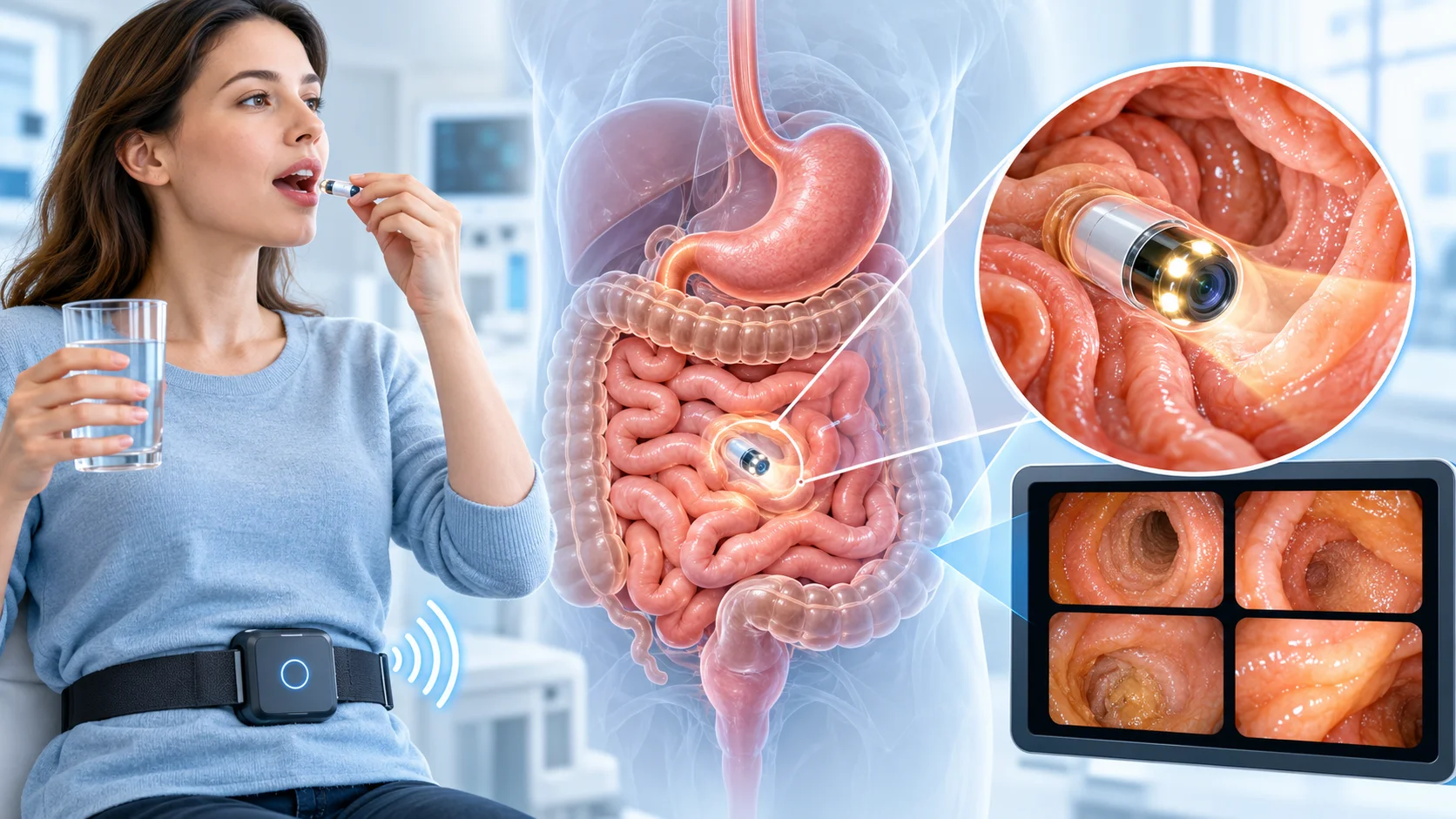
Capsule endoscopy is a procedure that uses a tiny, swallowable capsule containing a camera to capture images of the digestive tract, particularly areas of the small intestine that are difficult to reach with standard endoscopy.
What It Checks
As the capsule travels naturally through the digestive tract, it captures a large number of images along the way, which are later reviewed for signs of abnormalities such as bleeding, inflammation, or unusual growths, particularly within the small intestine, a region not easily reached by standard upper endoscopy or colonoscopy.
Why It's Used
Capsule endoscopy is commonly used to investigate suspected bleeding or other abnormalities within the small intestine when standard endoscopic procedures haven't identified a clear cause, given how much of the small intestine's length lies beyond the reach of those more traditional techniques.
How It's Done
The person swallows a small capsule, about the size of a large vitamin pill, which contains a tiny camera, light source, and transmitter. As the capsule moves naturally through the digestive tract over several hours, it captures thousands of images, which are wirelessly transmitted to a recording device worn by the person. The capsule is eventually passed naturally from the body, and the collected images are later reviewed in detail by a physician.
Background
Capsule endoscopy was developed in the late 1990s and became available for clinical use in the early 2000s, offering a way to examine the small intestine that had previously been very difficult to visualize directly using existing endoscopic technology. Since its introduction, it has become a valuable diagnostic tool specifically for conditions affecting the small intestine, complementing the more established roles of upper endoscopy and colonoscopy for other parts of the digestive tract.