Beyond the skeletal muscle responsible for voluntary movement, the body contains two other distinct types of muscle tissue, cardiac and smooth muscle, each suited to a very different role than the muscles that move the skeleton.
Cardiac Muscle: Built for the Heart
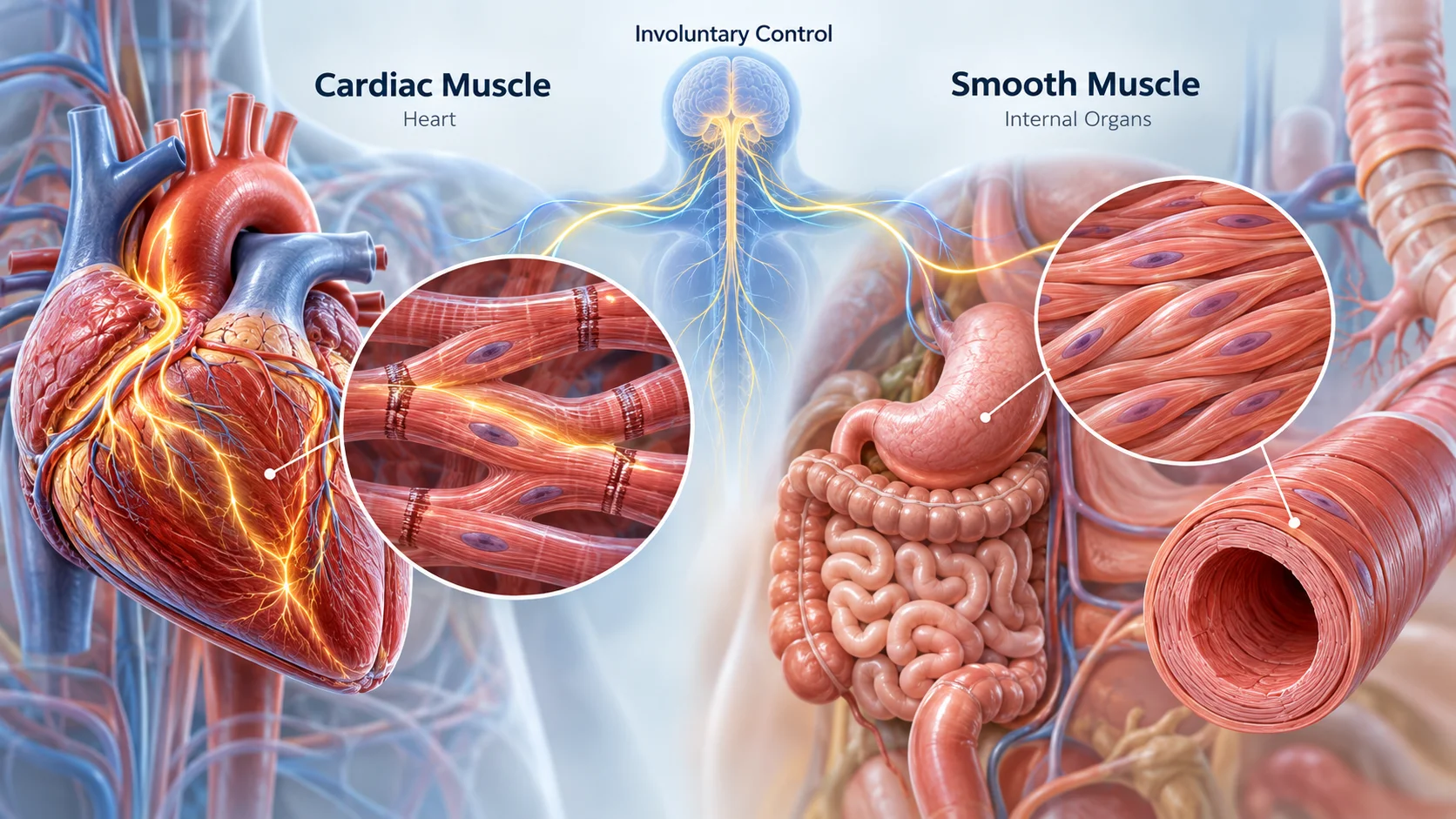
Cardiac muscle is found only in the walls of the heart, and it's specifically built for a lifetime of continuous, rhythmic contraction. Unlike skeletal muscle, cardiac muscle cells are interconnected by specialized junctions that allow electrical signals to spread quickly and efficiently from cell to cell, which is what allows the heart's chambers to contract in a coordinated, synchronized way with every beat. Cardiac muscle also contains an especially high number of energy-producing structures within its cells, reflecting the heart's need for a constant, uninterrupted energy supply to keep beating without pause.
Smooth Muscle: Built for Internal Organs
Smooth muscle is found in the walls of many internal structures, including the digestive tract, blood vessels, the bladder, and the airways. Unlike skeletal and cardiac muscle, smooth muscle cells aren't organized into the same visibly striped pattern, which is part of where its name comes from. Smooth muscle typically contracts more slowly and can sustain contraction for longer periods than skeletal muscle, well suited to tasks like gradually moving food through the digestive tract or adjusting the diameter of a blood vessel over time.
Involuntary Control
Both cardiac and smooth muscle operate involuntarily, meaning they aren't under conscious control the way skeletal muscle is. Instead, they're regulated by the autonomic nervous system, along with hormones and, in the case of the heart, its own internal electrical pacemaker system, allowing these muscles to function continuously without requiring any deliberate effort.
Background
The distinction between skeletal, cardiac, and smooth muscle became clearer through microscopic study in the 19th century, as researchers observed differences in cell structure and organization between these tissue types. Further research throughout the 20th century clarified how each type is specifically suited to its role, from the heart's need for coordinated, tireless contraction to the slower, sustained action required of muscle within the digestive tract and blood vessels.