What It Is
Cardiac catheterization is a procedure in which a thin, flexible tube called a catheter is guided into the heart and its surrounding blood vessels, used both to gather detailed diagnostic information and to perform certain treatments directly.
What It Checks
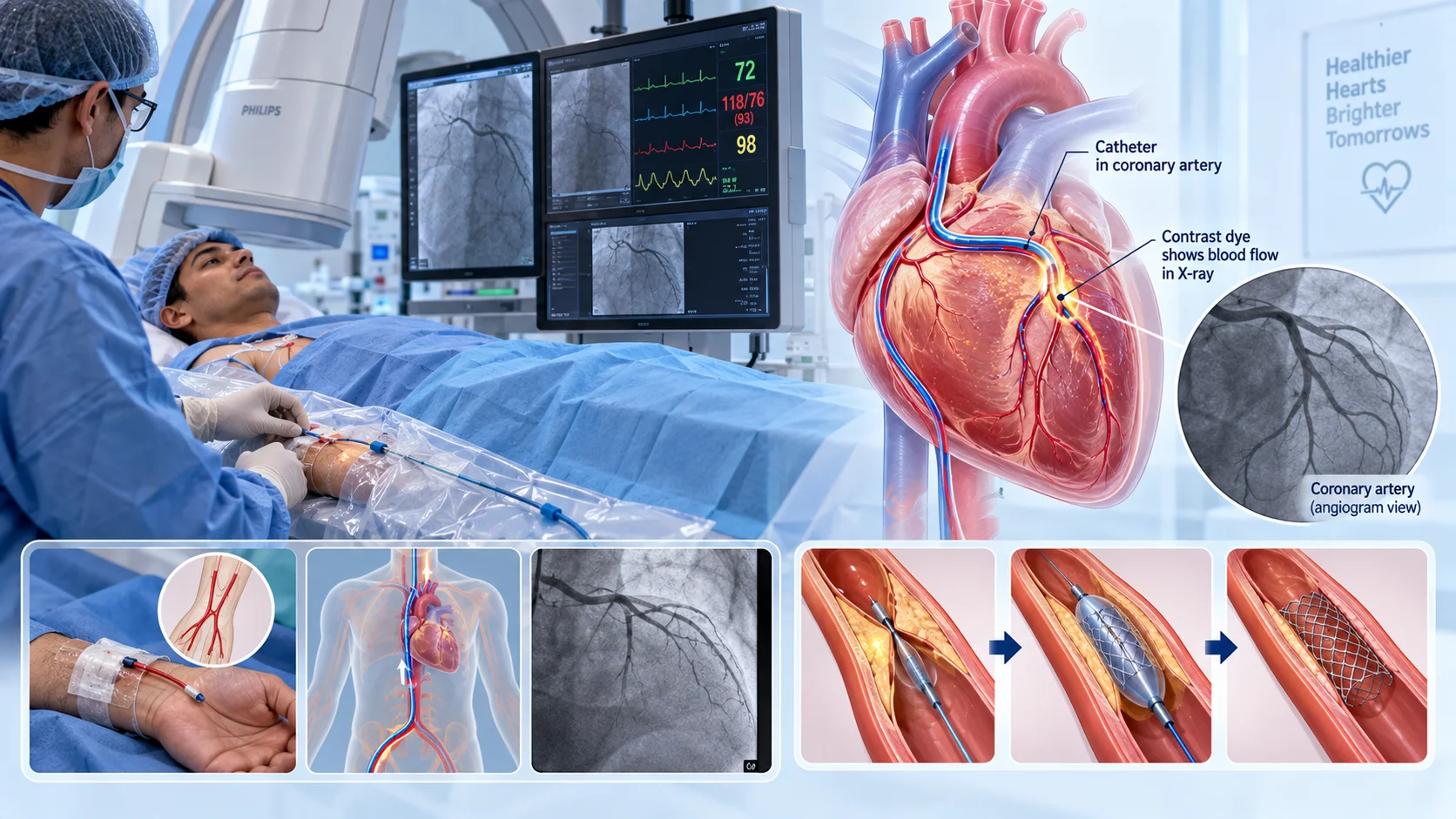
Cardiac catheterization allows direct measurement of pressures within the heart's chambers and blood vessels, and, when combined with contrast dye and X-ray imaging as in angiography, allows detailed visualization of the coronary arteries and heart structures. This provides detailed information about heart function and blood flow that other tests often can't capture as precisely.
Why It's Used
Cardiac catheterization is commonly used to evaluate suspected coronary artery disease in detail, assess heart valve function, and measure pressures within the heart in various cardiac conditions. It's also used therapeutically, allowing procedures such as angioplasty and stent placement to be performed during the same session if a blockage is identified.
How It's Done
During cardiac catheterization, a catheter is inserted into a blood vessel, typically at the wrist or groin, and carefully guided up to the heart under continuous X-ray guidance. Once in position, various measurements can be taken, contrast dye can be injected to visualize the coronary arteries or heart chambers, and, if needed, treatment procedures can be performed through the same catheter access point.
Background
Cardiac catheterization was first performed on a living person in the late 1920s, in a now-famous case where a German physician passed a catheter into his own heart to demonstrate the procedure's feasibility, a contribution that later earned him a share of the Nobel Prize. The technique developed considerably over the following decades, expanding from a purely diagnostic tool into one that also allows direct treatment, and it remains a central procedure in modern cardiology, combining detailed diagnosis with the ability to treat many conditions in the same session.