What It Is
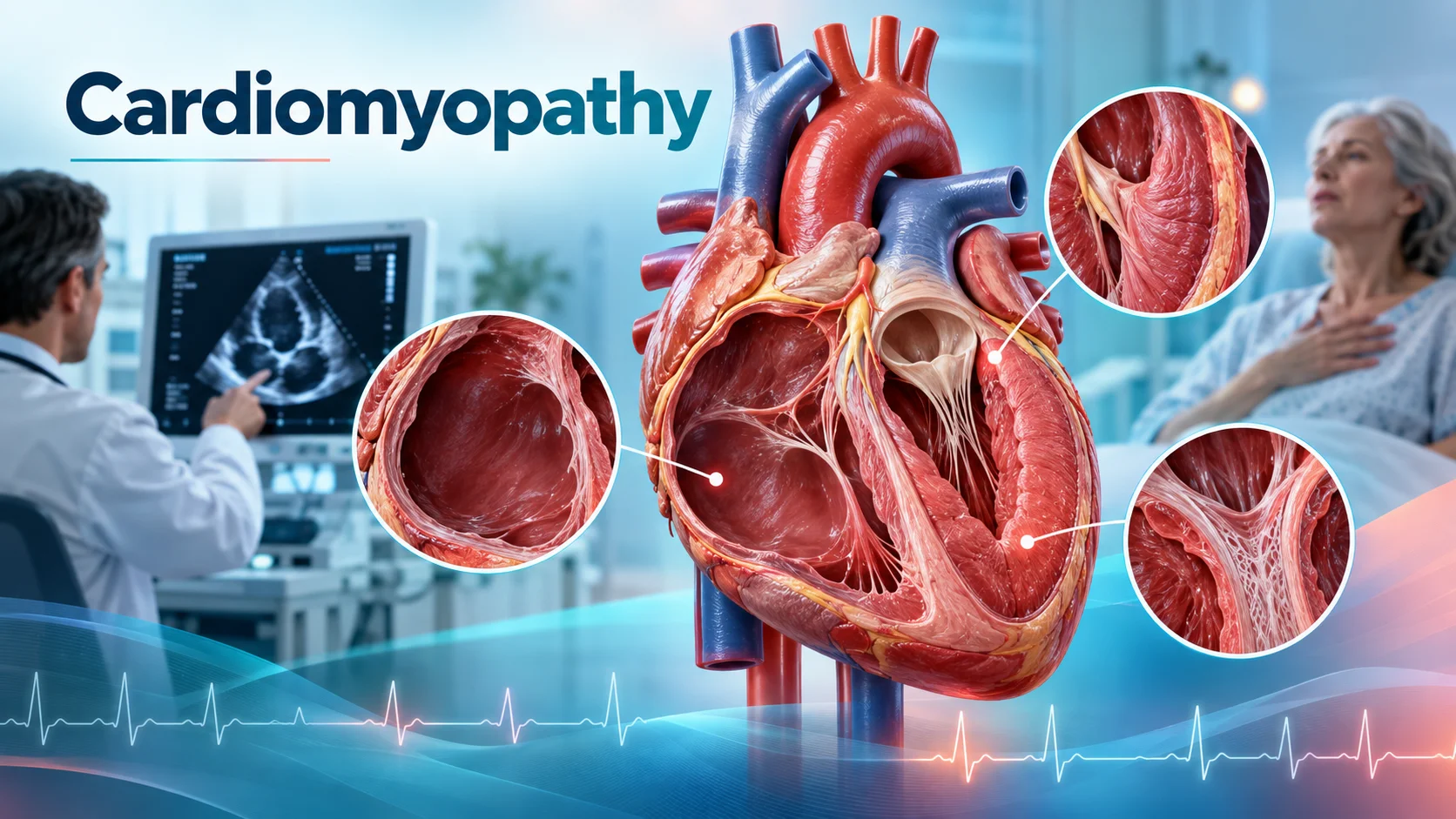
Cardiomyopathy refers to a group of conditions that directly affect the heart muscle itself, making it harder for the heart to pump blood effectively.
How It Develops
Cardiomyopathy can develop in several different patterns. In some forms, the heart muscle becomes enlarged and weakened, reducing its pumping strength. In others, the heart muscle becomes abnormally thickened, which can make it harder for the heart to relax and fill with blood between beats. In another pattern, the heart muscle becomes stiff and less flexible, limiting how well the chambers can expand. These changes can result from a variety of causes, including underlying genetic factors, longstanding high blood pressure, prior infections affecting the heart, or, in some cases, no clearly identified cause.
General Symptoms
Symptoms of cardiomyopathy often reflect the heart's reduced pumping efficiency and can include shortness of breath, fatigue, swelling in the legs or abdomen, and irregular heartbeat sensations. Some people also experience lightheadedness or fainting episodes. Symptoms can range from mild to significant, and some people have no noticeable symptoms in earlier stages.
General Treatment Approaches
Treatment for cardiomyopathy depends heavily on which specific pattern is present and its underlying cause. General approaches often include medications aimed at supporting heart function, reducing strain on the heart, and managing related symptoms such as fluid buildup. Lifestyle adjustments are commonly recommended as well. In certain cases, medical devices or more advanced interventions may be considered, depending on the severity and specific type of cardiomyopathy involved.
Background
Cardiomyopathy was recognized as a distinct category of heart disease, separate from conditions caused primarily by blocked arteries or valve problems, more clearly during the mid-20th century, as imaging and diagnostic tools improved. Since then, researchers have identified several distinct patterns and underlying causes within this category, leading to a more refined understanding of the condition and more tailored treatment approaches for each specific type.