
What They Do
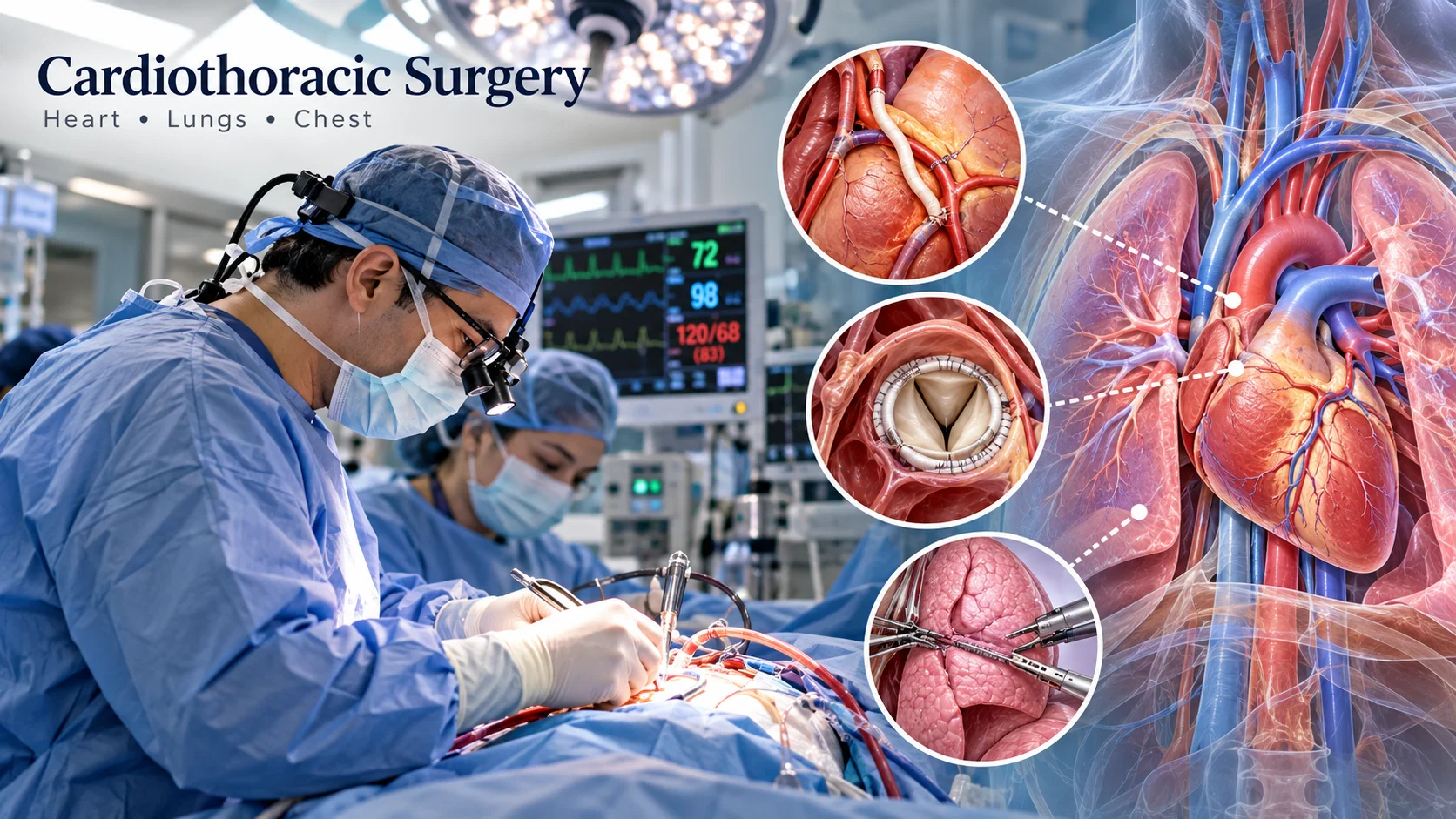
A cardiothoracic surgeon is a physician who performs surgical procedures on the heart, lungs, and other structures within the chest. While cardiologists manage heart conditions through medication and non-surgical procedures, cardiothoracic surgeons handle the cases that require open surgical intervention.
What They Treat
Cardiothoracic surgeons perform procedures such as coronary artery bypass surgery, heart valve repair or replacement, and surgery to correct congenital heart defects. Some cardiothoracic surgeons focus more specifically on thoracic, or chest-related, surgery beyond the heart itself, including procedures involving the lungs and esophagus. In many countries, congenital heart surgery in children is handled by a further subspecialized group of surgeons.
Training Path
Becoming a cardiothoracic surgeon requires completing a medical degree, followed by general surgical training, and then several additional years of specialized training specifically in cardiothoracic surgery. This is one of the longer and more demanding surgical training pathways, reflecting the complexity and precision required for operating on the heart and surrounding structures.
When to See One
Patients are typically referred to a cardiothoracic surgeon by a cardiologist or another physician once it's determined that a heart or chest condition requires surgical treatment rather than medication or a less invasive procedure. This might follow findings from tests such as angiography showing significant blockages, or an evaluation showing a heart valve isn't functioning adequately.
Background
Cardiac surgery developed relatively late compared to many other surgical fields, largely because operating on a beating heart presented enormous technical challenges. The development of the heart-lung machine in the 1950s, which could temporarily take over the function of the heart and lungs during surgery, was a major turning point that made many modern cardiac procedures possible for the first time. Since then, the field has continued to advance considerably, including the development of minimally invasive and robotic-assisted cardiac surgery techniques.