What It Is
A cataract is a clouding of the eye's naturally clear lens, which can gradually interfere with vision as it progresses.
How It Develops
The lens of the eye is normally clear, allowing light to pass through easily and focus on the retina. Over time, proteins within the lens can begin to clump together, causing areas of the lens to become cloudy. This process most commonly develops gradually with age, though it can also be related to other factors, including certain medical conditions, prolonged sun exposure, or, less commonly, be present from birth.
General Symptoms
Common symptoms of a cataract include increasingly blurry or cloudy vision, difficulty seeing clearly at night, sensitivity to glare from lights, and colors appearing faded or less vivid than before. These changes typically develop slowly over months to years.
General Treatment Approaches
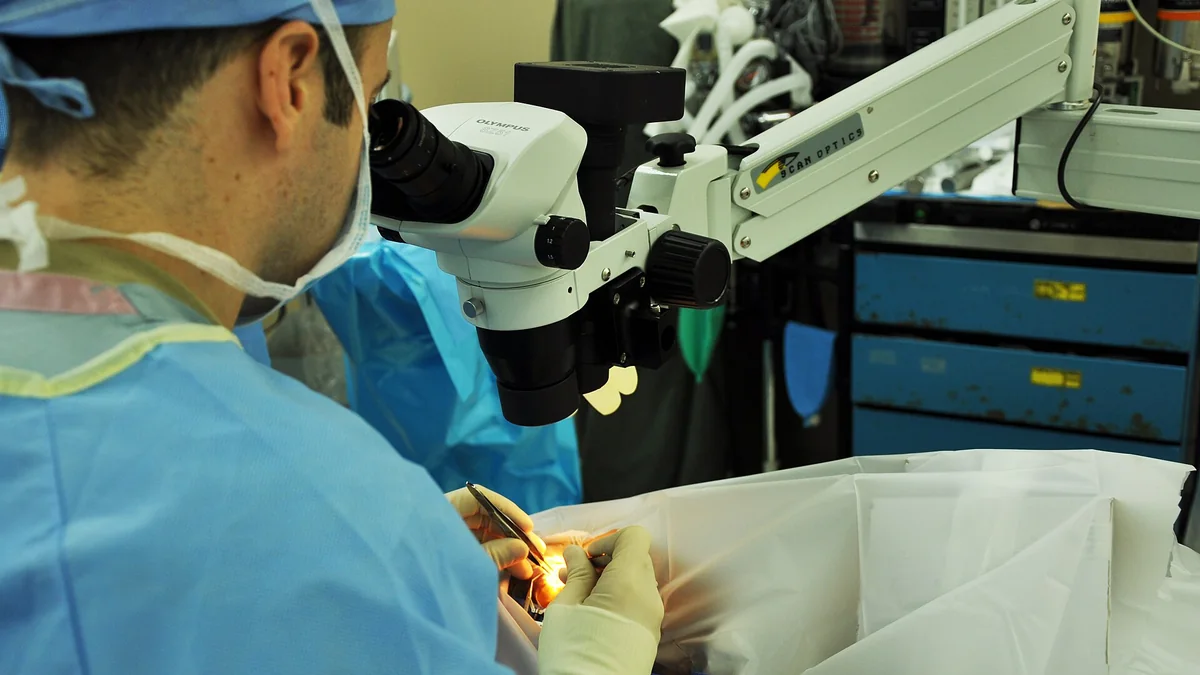
In earlier stages, vision changes from a cataract can sometimes be managed with updated glasses or brighter lighting. As a cataract progresses and begins to significantly affect daily activities, surgical removal of the cloudy lens, replaced with an artificial lens, is the standard treatment, and it's one of the most commonly performed and highly successful surgical procedures in medicine.
Background
Cataract removal has an extremely long history, with early forms of the procedure, involving simply displacing the cloudy lens rather than removing and replacing it, described in ancient texts from India dating back over 2,000 years. Modern cataract surgery, involving removal of the cloudy lens and its replacement with an artificial one, developed considerably over the 20th century, and the introduction of microsurgical techniques has since made it one of the safest and most refined surgical procedures performed today.