What It Is
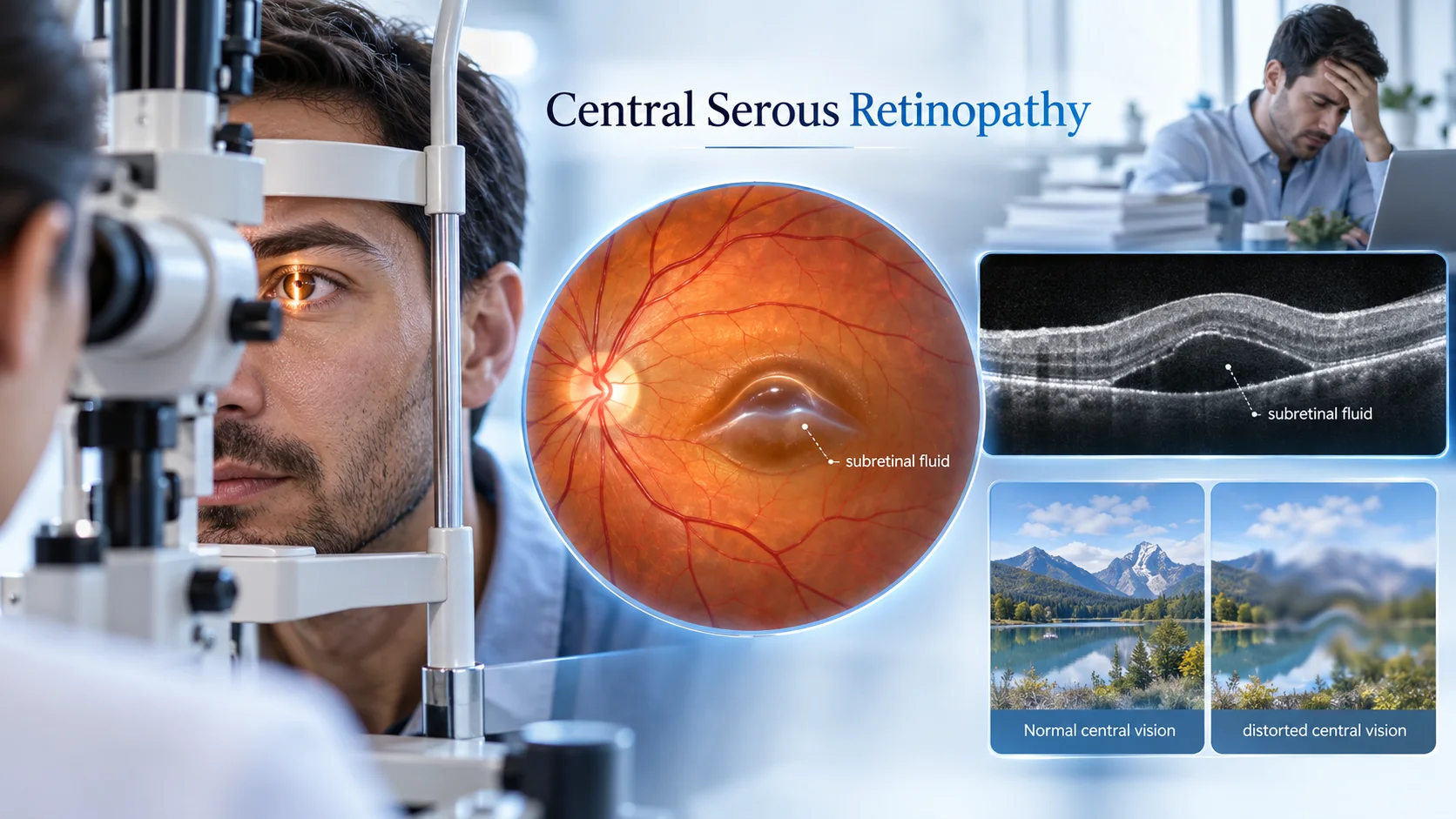
Central serous retinopathy is a condition in which fluid accumulates beneath the retina, particularly around the macula, causing a small area of the retina to lift slightly away from the underlying tissue.
How It Develops
Central serous retinopathy occurs when a layer of tissue beneath the retina, responsible for regulating fluid movement, doesn't function properly in a small area, allowing fluid to leak through and collect beneath the retina. The exact cause isn't always clear, but the condition has a notable association with elevated stress hormone levels, including from certain medications, and tends to occur more often in people experiencing significant stress.
General Symptoms
Common symptoms of central serous retinopathy include blurred or distorted central vision, objects appearing smaller than they actually are, and a dim or dark area noticed in the central visual field. Symptoms are typically limited to one eye at a time.
General Treatment Approaches
Many cases of central serous retinopathy resolve on their own within a few months as the fluid naturally reabsorbs, so monitoring is often the first approach. For cases that persist longer or recur frequently, treatments such as laser therapy may be considered to help seal the area of fluid leakage.
Background
Central serous retinopathy was first described as a distinct condition in the mid-20th century, as retinal imaging technology improved enough to clearly identify this specific pattern of fluid buildup beneath the retina. Its association with stress and certain medications, particularly corticosteroids, became better recognized over subsequent decades, and this connection remains an active area of ongoing research today.