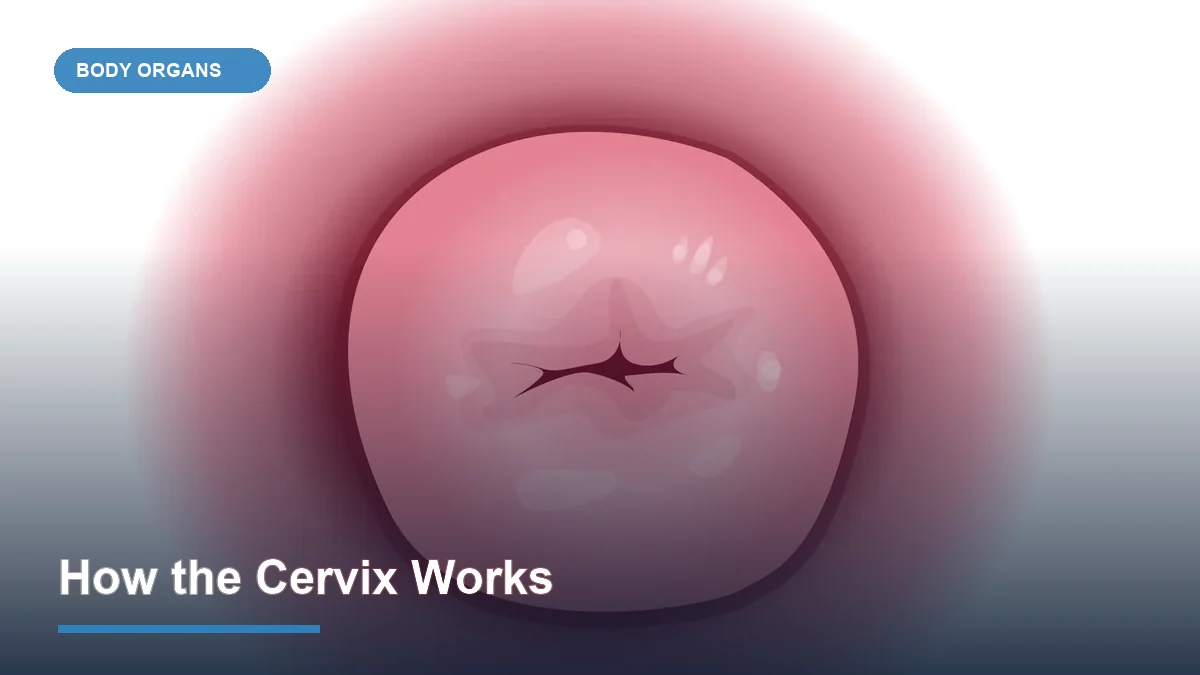
The cervix is the lower, narrow portion of the uterus that connects to the vagina, forming a passageway between the two structures. Though relatively small, it plays several distinct roles across different stages of the reproductive cycle.
A Regulated Opening
The cervix contains a narrow canal that allows for the passage of substances between the uterus and vagina. Outside of pregnancy, this canal allows menstrual blood to leave the uterus during menstruation, and provides a pathway for sperm to travel from the vagina into the uterus.
Changing Mucus Throughout the Cycle
Glands within the cervix produce mucus, and the consistency of this mucus changes throughout the menstrual cycle in response to shifting hormone levels. Around the time of ovulation, cervical mucus typically becomes thinner and more slippery, which can make it easier for sperm to pass through the cervix. At other points in the cycle, the mucus tends to become thicker, forming more of a barrier.
Its Role During Pregnancy
During pregnancy, the cervix remains firm and closed, and a thickened mucus plug forms within the cervical canal, helping to seal off the uterus and protect the developing pregnancy from substances or organisms that might otherwise enter from below. As pregnancy progresses toward childbirth, the cervix gradually softens and begins to open, or dilate, a necessary step that allows the baby to eventually pass through the birth canal.
A Site of Ongoing Cell Renewal
Like many tissues in the body, the cells lining the cervix are continuously renewed. The cervix also contains a transition zone where two different types of tissue meet, an area of particular interest in cervical health screening and research.
Background
Detailed anatomical understanding of the cervix developed alongside broader advances in gynecological medicine over the 19th and 20th centuries. The development of tools that allowed direct visual examination of the cervix considerably advanced understanding of its structure and the changes it undergoes throughout the reproductive cycle and during pregnancy.