What It Is
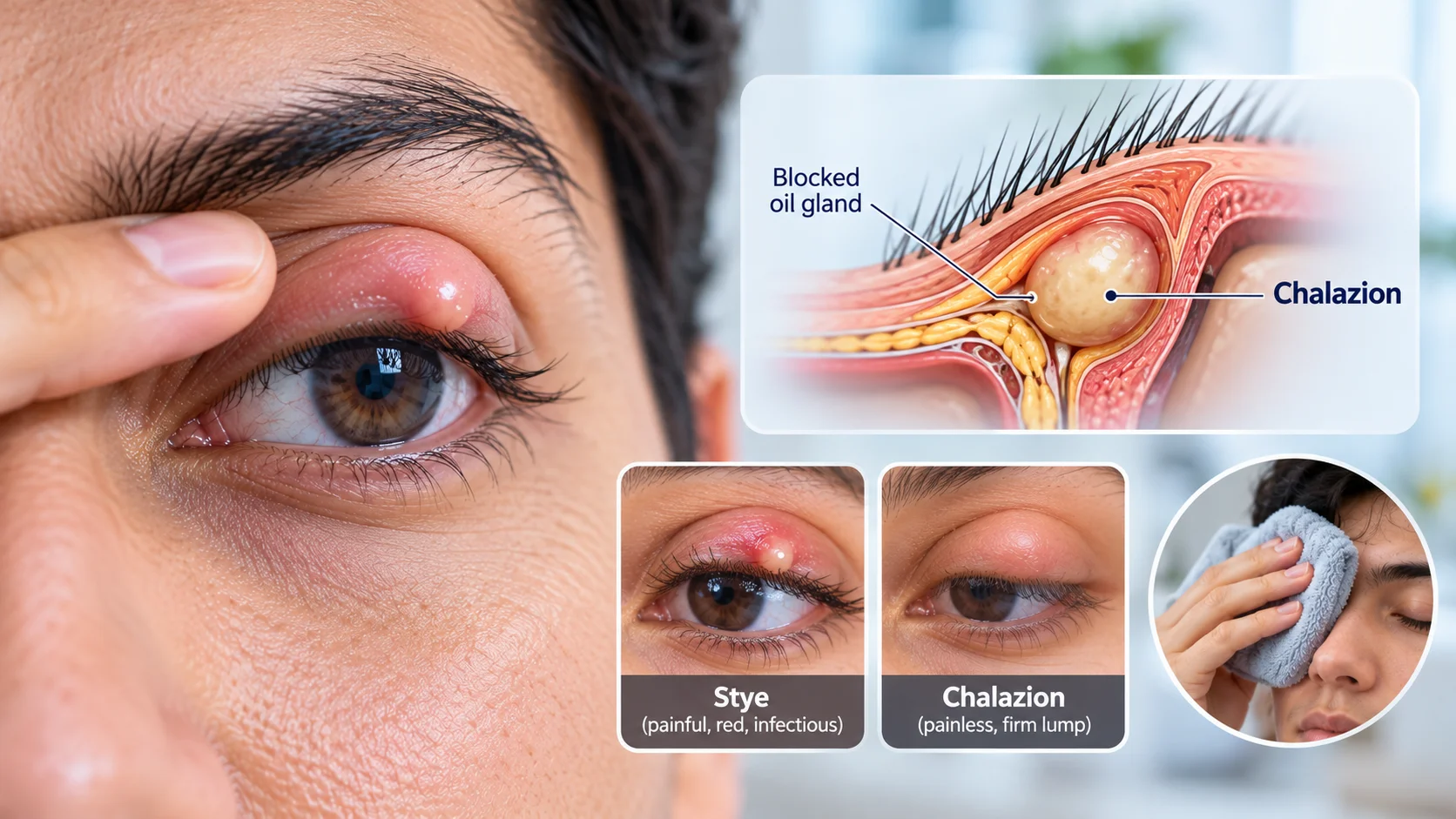
A chalazion is a small, usually painless lump that develops on the eyelid, resulting from a blocked oil gland, and is closely related to, though generally distinct from, a stye.
How It Develops
A chalazion forms when one of the small oil-producing glands within the eyelid becomes blocked, causing the oil it normally produces to build up and trigger a localized area of inflammation. Unlike a stye, which typically involves an active bacterial infection and tends to be more painful, a chalazion is generally a more chronic, non-infectious blockage, and sometimes develops after an earlier stye hasn't fully resolved.
General Symptoms
The main symptom of a chalazion is a firm, usually painless lump within the eyelid, which can gradually grow larger over a period of weeks. Unlike a stye, a chalazion isn't usually associated with significant redness or tenderness, though a larger chalazion can sometimes press on the eye and cause mild blurring of vision.
General Treatment Approaches
Many chalazia gradually shrink and resolve on their own over a period of weeks to months, often assisted by regular warm compresses to help the blocked gland drain. For chalazia that persist, grow large, or cause bothersome symptoms, treatment options include a steroid injection directly into the lump or a minor surgical procedure to drain it.
Background
The distinction between a chalazion and a stye became clearer as ophthalmology developed as a more detailed clinical specialty in the 19th and 20th centuries, with the underlying difference between an infected gland and a blocked, non-infectious one becoming better understood. This distinction remains clinically useful today, since it helps guide whether antibiotic treatment or a different approach, focused more on gland drainage, is more appropriate.