What It Is
A colonoscopy is a procedure that allows direct visual examination of the inside of the large intestine, or colon, using a long, flexible tube fitted with a camera.
What It Checks
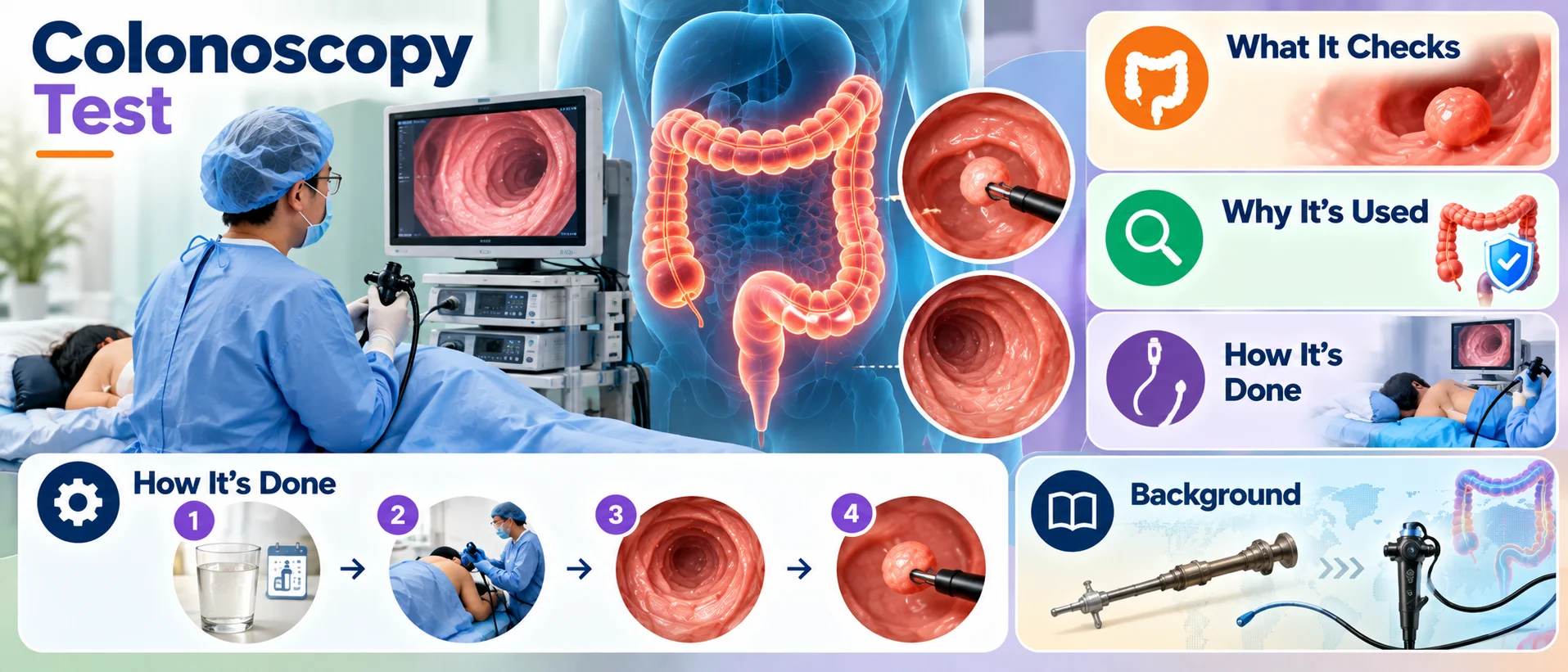
During a colonoscopy, the examining physician can directly view the lining of the colon, looking for abnormalities such as polyps, growths, inflammation, or other changes in the tissue. If anything unusual is found, small tissue samples, called biopsies, or entire polyps can often be removed during the same procedure for further laboratory examination.
Why It's Used
A colonoscopy is commonly used as a general screening tool for colorectal health, particularly given its ability to detect and, in the case of polyps, directly remove abnormal tissue before it potentially develops further. It's also used to investigate symptoms related to the digestive tract and to monitor known conditions of the colon over time.
How It's Done
Before a colonoscopy, the colon needs to be thoroughly emptied, which typically involves following a specific preparation process beforehand. During the procedure itself, a thin, flexible tube called a colonoscope is gently guided through the colon, transmitting real-time video images to a screen for the examining physician to review. The procedure is usually done with sedation to help the person remain comfortable throughout.
Background
Endoscopic examination of the digestive tract has a long history, but flexible fiber-optic colonoscopes, which allowed for a far more comfortable and effective examination than earlier rigid instruments, were developed in the late 1960s and became widely used in subsequent decades. Since then, colonoscopy has become one of the most established procedures in digestive health, valued in particular for combining direct visual examination with the ability to intervene, such as removing polyps, within the same procedure.