What It Is
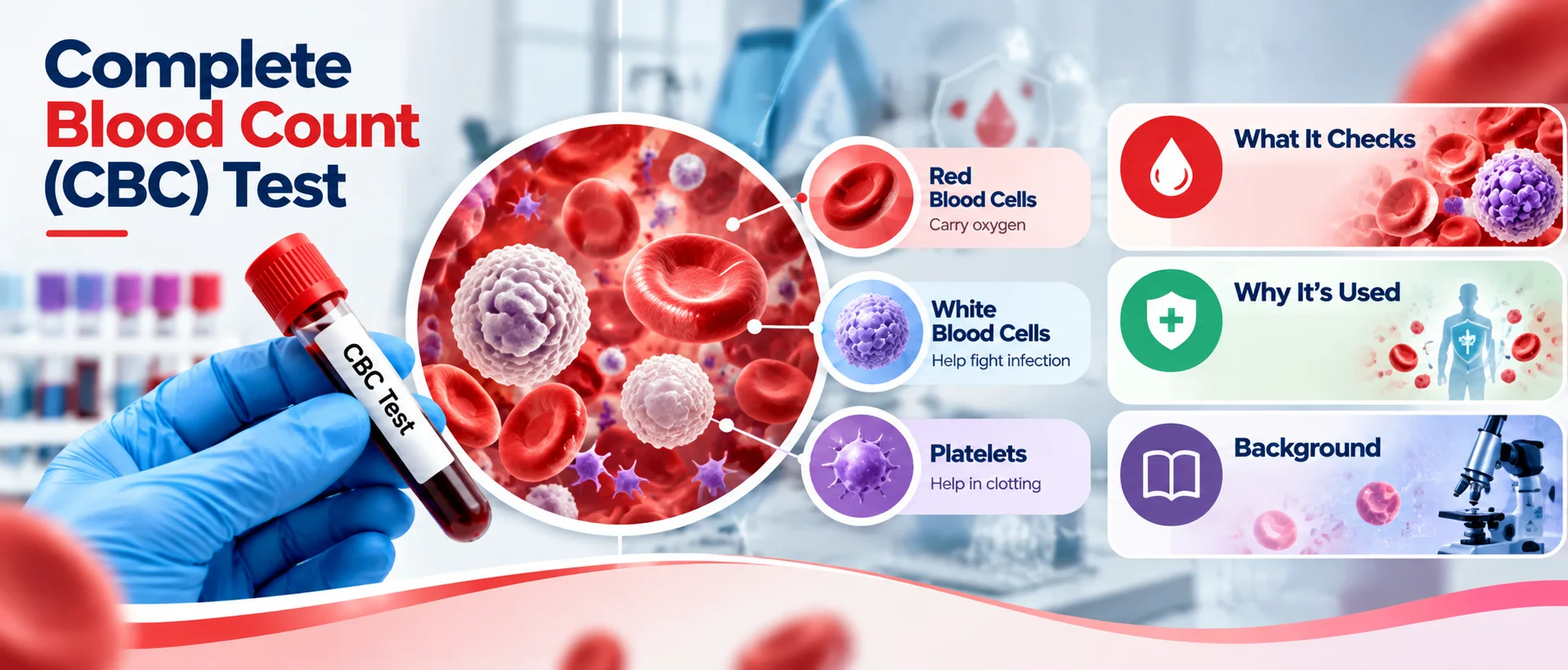
A complete blood count, commonly abbreviated as CBC, is one of the most frequently ordered blood tests, giving an overview of the different types of cells that make up blood.
What It Checks
A CBC measures several components of blood, including red blood cells, white blood cells, and platelets. It typically reports the number of each cell type present, along with additional measurements related to red blood cells, such as hemoglobin levels and the average size of red blood cells. Together, these measurements give a broad snapshot of blood health.
Why It's Used
Because it covers so many different blood components at once, a CBC is one of the most general-purpose tests in medicine. It's commonly used as part of routine health checkups, to investigate symptoms like fatigue or unexplained bruising, or to monitor overall health during treatment for various conditions.
How It's Done
A CBC requires a small blood sample, usually drawn from a vein in the arm using a needle and syringe or a vacuum tube system. The sample is sent to a laboratory, where automated analyzers count and measure the different blood cell types, a process that typically takes only a short time to complete.
Background
Blood cell counting was originally done manually, using a microscope and a specialized counting chamber, a slow and painstaking process. The development of automated cell-counting technology in the mid-20th century transformed the CBC into a fast, standardized, and widely accessible test, and it remains one of the most commonly performed laboratory tests in healthcare settings worldwide today.