What It Is
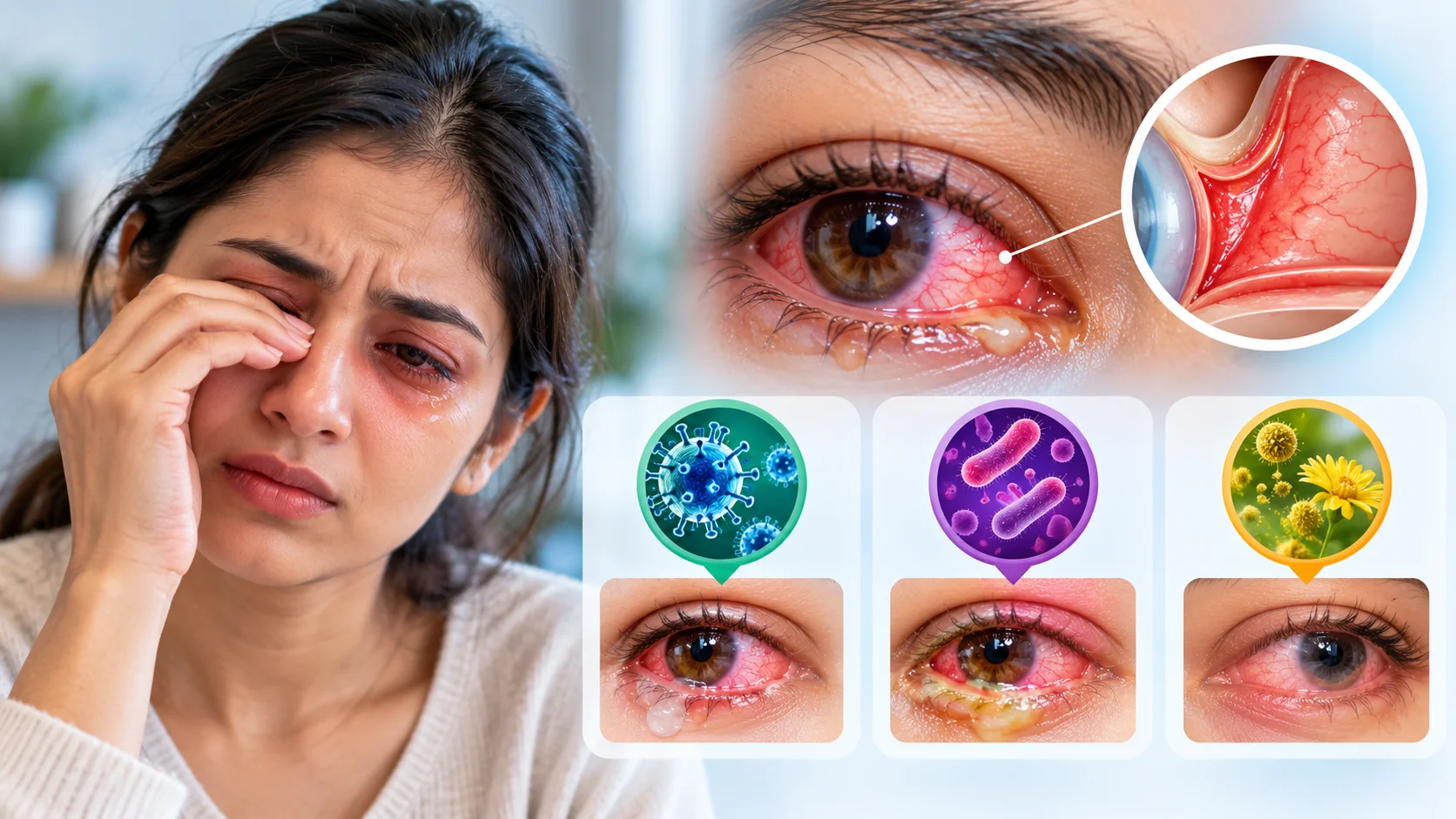
Conjunctivitis, commonly known as pink eye, is inflammation of the conjunctiva, the thin, clear membrane covering the white part of the eye and the inner surface of the eyelids.
How It Develops
Conjunctivitis can develop for several different reasons. Viral conjunctivitis, one of the most common forms, is caused by a viral infection and is often associated with a cold or other upper respiratory illness. Bacterial conjunctivitis results from a bacterial infection. Allergic conjunctivitis develops in response to allergens such as pollen or dust, rather than an infection, and tends to occur in people with a broader tendency toward allergies.
General Symptoms
Common symptoms of conjunctivitis include redness, itching or a gritty feeling in the eye, excessive tearing, and discharge, which can vary in appearance depending on the underlying cause, sometimes causing the eyelids to stick together, particularly after sleep.
General Treatment Approaches
Viral conjunctivitis generally resolves on its own over one to two weeks, with treatment focused on comfort measures. Bacterial conjunctivitis is commonly treated with antibiotic eye drops. Allergic conjunctivitis is generally managed by avoiding the specific trigger where possible, along with antihistamine eye drops to relieve symptoms.
Background
Conjunctivitis has been recognized as a common eye condition throughout recorded medical history, given how frequently it occurs and how visible its symptoms are. The ability to distinguish between its viral, bacterial, and allergic forms developed considerably with the growth of microbiology and immunology in the 19th and 20th centuries, allowing for more targeted treatment approaches based on the specific underlying cause in each case.