What It Is
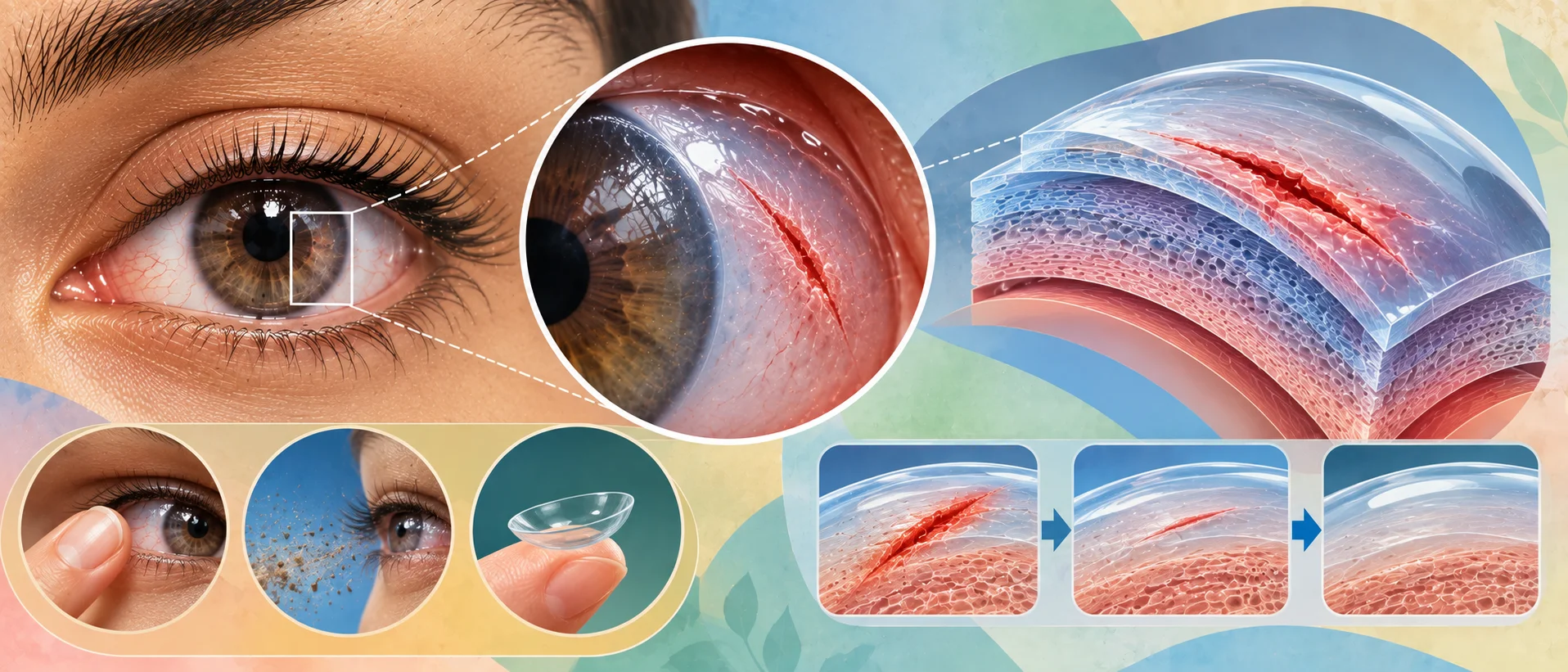
A corneal abrasion is a scratch or scrape on the surface of the cornea, the clear front layer of the eye, typically resulting from minor injury.
How It Develops
The cornea's outer surface can be scratched by a range of common causes, including contact with dust, sand, or other small particles, minor trauma from a fingernail or object, or improper contact lens use. Because the cornea is richly supplied with nerve endings, even a small scratch on its surface can cause significant discomfort.
General Symptoms
Common symptoms of a corneal abrasion include eye pain, a sensation of something being in the eye, redness, excessive tearing, sensitivity to light, and blurred vision. Symptoms are often quite noticeable given how sensitive the cornea is, even when the scratch itself is relatively minor.
General Treatment Approaches
Most corneal abrasions heal on their own within a few days, given the cornea's ability to regenerate its surface layer relatively quickly. Treatment generally focuses on comfort and preventing infection during healing, commonly involving lubricating or antibiotic eye drops. Larger or deeper abrasions, or those that don't improve as expected, generally warrant closer evaluation.
Background
Corneal abrasions have been recognized as a common eye injury throughout medical history, given how frequently the eye's exposed surface is subject to minor trauma in daily life. Understanding of the cornea's structure and its notable capacity for rapid surface healing developed considerably through the growth of ophthalmology as a specialty in the 19th and 20th centuries, and modern treatment approaches reflect this understanding of the cornea's natural ability to repair itself when properly protected during healing.