
What It Is
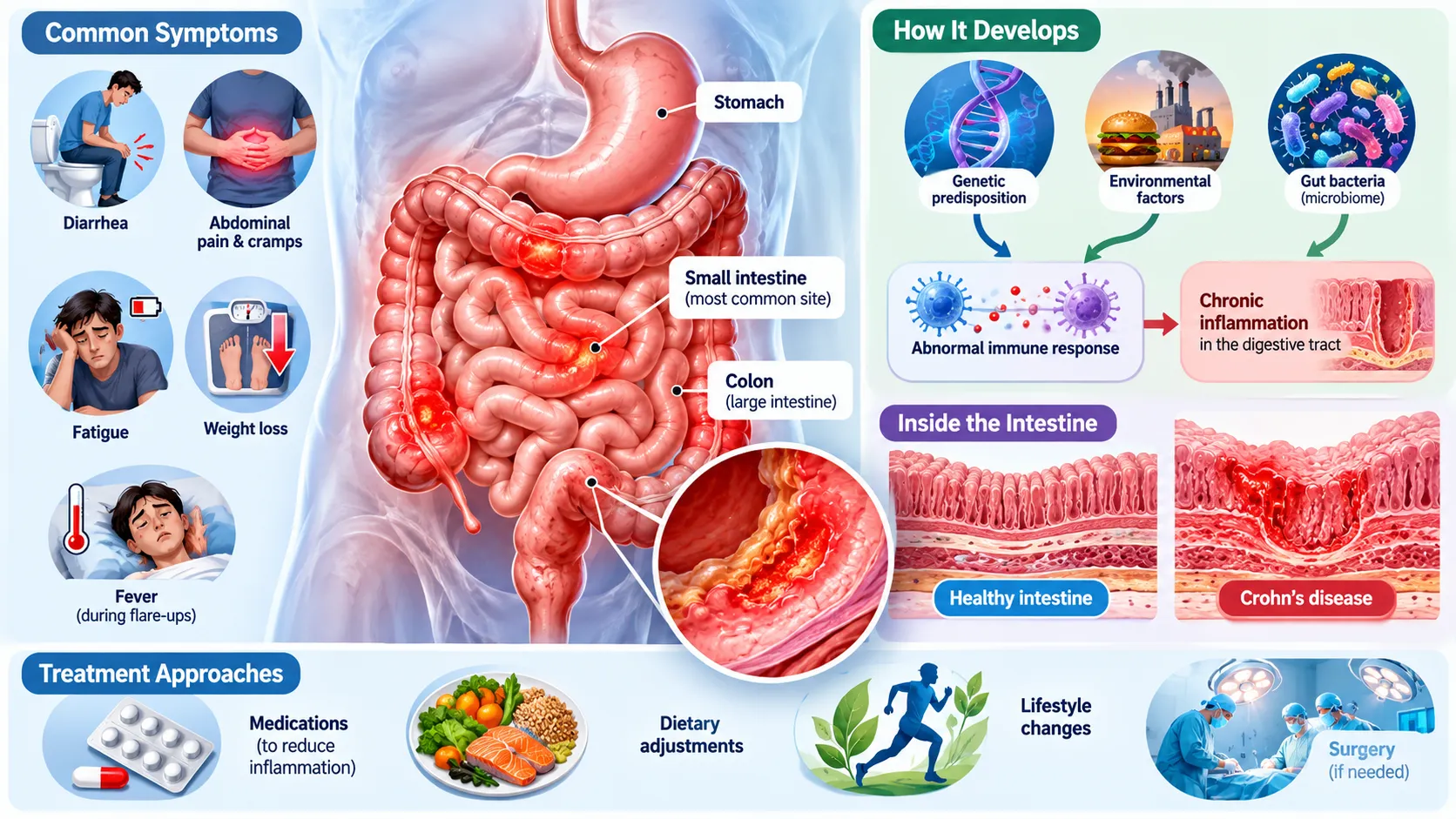
Crohn's disease is a chronic inflammatory condition affecting the digestive tract. It belongs to a broader category of conditions known as inflammatory bowel disease, and can affect any part of the digestive tract from the mouth to the anus, though it most commonly involves the end of the small intestine and the beginning of the colon.
How It Develops
Crohn's disease is believed to result from an abnormal immune system response, in which the body's immune defenses mistakenly attack the lining of the digestive tract, causing chronic inflammation. The exact trigger isn't fully understood, but it's thought to involve a combination of genetic susceptibility, environmental factors, and the community of bacteria naturally present in the gut. Unlike some digestive conditions that affect only the innermost lining, Crohn's disease inflammation can extend through multiple layers of the intestinal wall.
General Symptoms
Common symptoms of Crohn's disease include persistent diarrhea, abdominal pain and cramping, fatigue, and unintended weight loss. Some people also experience fever during flare-ups. Because inflammation can occur in patches along the digestive tract, symptoms can vary considerably between individuals, and the condition often follows a pattern of flare-ups followed by periods of remission with fewer or no symptoms.
General Treatment Approaches
Treatment for Crohn's disease generally aims to reduce inflammation, manage symptoms, and maintain periods of remission. This commonly involves medications aimed at calming the immune system's inflammatory response, along with dietary and lifestyle adjustments tailored to the individual. In cases involving significant complications, such as a blockage or damage to the intestine that doesn't respond to medication, surgery to remove the affected section of intestine may be considered.
Background
Crohn's disease is named after the American gastroenterologist who, along with colleagues, provided one of the first detailed clinical descriptions of the condition in 1932. Understanding of the disease has expanded considerably since then, particularly regarding the role of the immune system and gut bacteria, which has shaped the development of increasingly targeted treatment approaches over recent decades.