What It Is
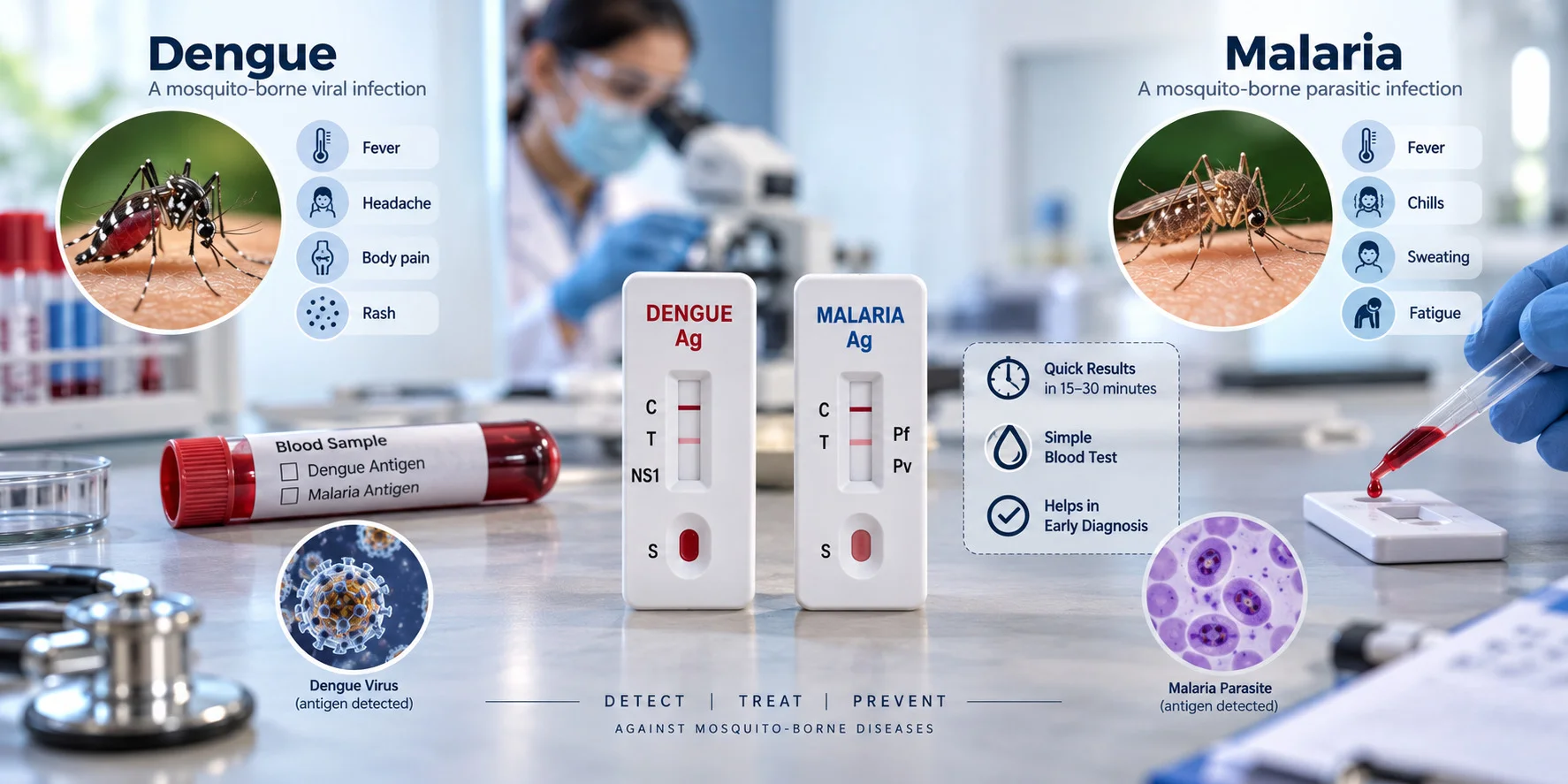
Dengue and malaria antigen tests are blood tests used to detect specific proteins, called antigens, produced by the dengue virus or the malaria parasite, helping identify a current infection with either of these mosquito-borne illnesses.
What It Checks
These tests detect the presence of specific antigens associated with the dengue virus or malaria parasite directly in the blood, which generally indicates an active infection, rather than measuring the body's antibody response, which can take longer to develop and may persist after an infection has resolved.
Why It's Used
Dengue and malaria antigen tests are commonly used in regions where these illnesses are common, to quickly confirm a suspected infection in someone presenting with symptoms such as fever, particularly during periods or seasons when these illnesses are more prevalent.
How It's Done
These tests typically require a small blood sample, which can often be tested using a rapid test format that provides results within a short period, sometimes within 15 to 30 minutes, making them useful for prompt diagnosis. Laboratory-based versions of these tests are also available and may be used for further confirmation.
Background
Rapid antigen testing technology for infectious diseases developed considerably over the late 20th and early 21st centuries, as advances in immunology and diagnostic technology made it possible to detect specific disease-related proteins quickly and with simpler equipment than traditional laboratory methods required. Antigen testing for dengue and malaria has become an increasingly important diagnostic tool, particularly in regions with a high burden of these mosquito-borne illnesses where rapid diagnosis supports faster treatment decisions.