
What They Do
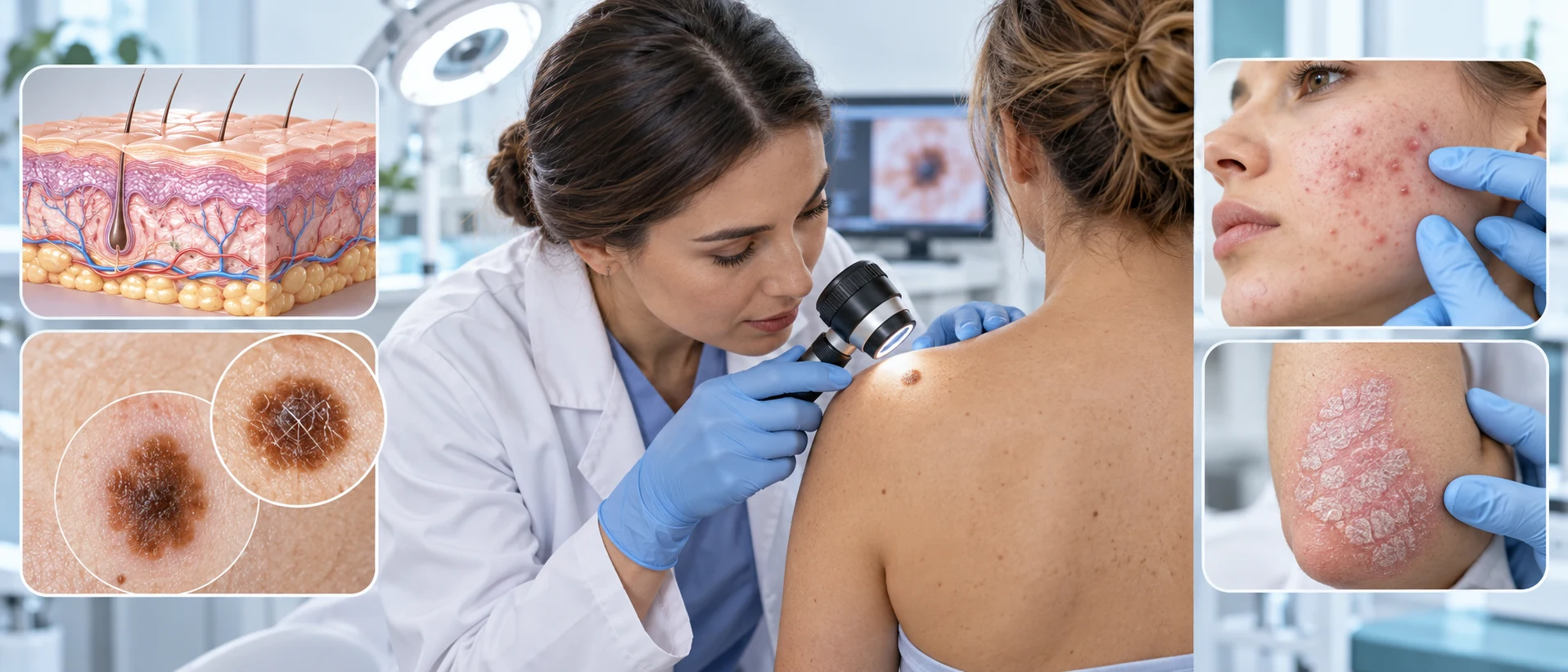
A dermatologist is a physician who specializes in diagnosing and treating conditions affecting the skin, hair, and nails. Dermatology covers a wide range of both medical and, in some cases, cosmetic concerns related to these tissues.
What They Treat
Dermatologists manage a wide variety of skin conditions, including acne, eczema, psoriasis, and various rashes and infections, as well as conditions affecting hair and nails. They also play a central role in skin cancer detection and treatment, including performing skin biopsies and, in some cases, minor surgical procedures to remove suspicious growths. Some dermatologists also offer cosmetic procedures related to skin appearance.
Training Path
Becoming a dermatologist requires completing a medical degree, followed by dedicated residency training specifically in dermatology. Some dermatologists pursue further fellowship training in a specific area, such as dermatopathology, which focuses on diagnosing skin conditions through microscopic examination of tissue samples, or Mohs surgery, a specialized technique used in certain types of skin cancer removal.
When to See One
People commonly see a dermatologist for persistent or worsening skin conditions, unusual changes in moles or other skin growths, hair loss, or nail changes. Regular skin checks with a dermatologist are also commonly recommended for people with a higher risk of skin cancer, such as those with significant sun exposure history or a family history of skin cancer.
Background
Dermatology developed as a distinct medical specialty in the 19th century, as physicians began to more systematically classify and study the wide range of conditions affecting the skin. The field expanded considerably in the 20th century with advances in understanding skin biology and the development of more effective treatments for both common and rarer skin conditions, and it continues to evolve alongside ongoing research into skin cancer and chronic inflammatory skin conditions.