What It Is
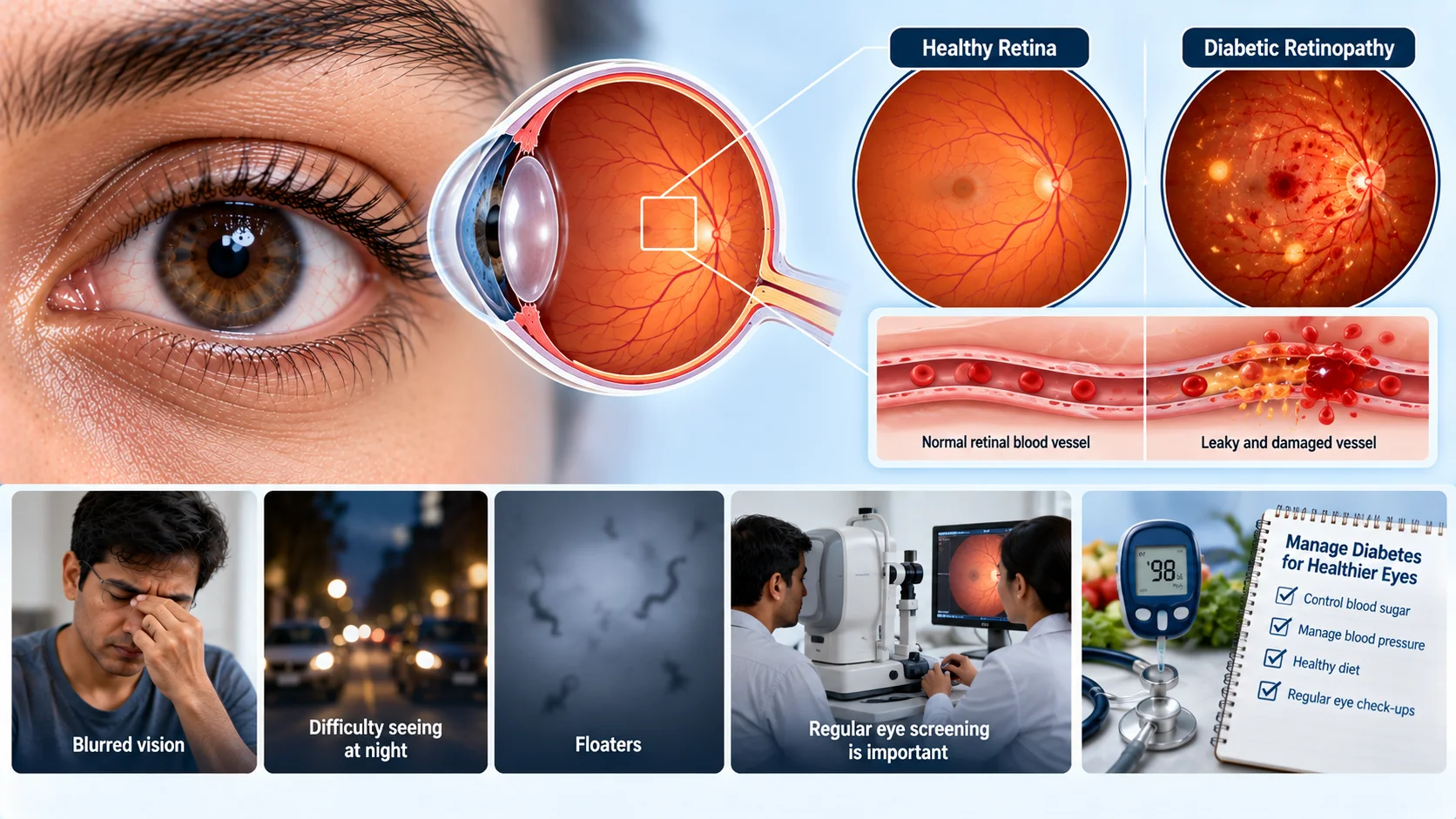
Diabetic retinopathy is damage to the blood vessels of the retina, the light-sensitive layer of tissue at the back of the eye, occurring as a complication of long-standing diabetes.
How It Develops
Over time, persistently elevated blood sugar levels associated with diabetes can damage the small blood vessels supplying the retina. In earlier stages, these vessels can weaken and leak fluid or blood. In more advanced stages, the retina may respond by growing new, fragile blood vessels that are prone to bleeding, a process that can significantly threaten vision if it progresses without treatment.
General Symptoms
In its earlier stages, diabetic retinopathy often causes no noticeable symptoms, which is part of why regular eye screening is important for people with diabetes. As the condition progresses, symptoms can include blurred or fluctuating vision, dark spots or floaters, and, in advanced cases, significant vision loss.
General Treatment Approaches
Management of diabetic retinopathy centers heavily on maintaining good control of blood sugar levels, blood pressure, and cholesterol, which helps slow the progression of blood vessel damage. For more advanced disease, treatments such as laser therapy or injections of medication directly into the eye may be used to address abnormal blood vessels or swelling within the retina.
Background
The connection between diabetes and retinal blood vessel damage was recognized by physicians in the 19th century, but a detailed understanding of the disease's progression developed considerably further with the growth of retinal imaging technology in the 20th century. Regular retinal screening for people with diabetes has become a standard part of diabetes care, reflecting how effectively early detection and timely treatment can help prevent vision loss from this condition.