What It Is
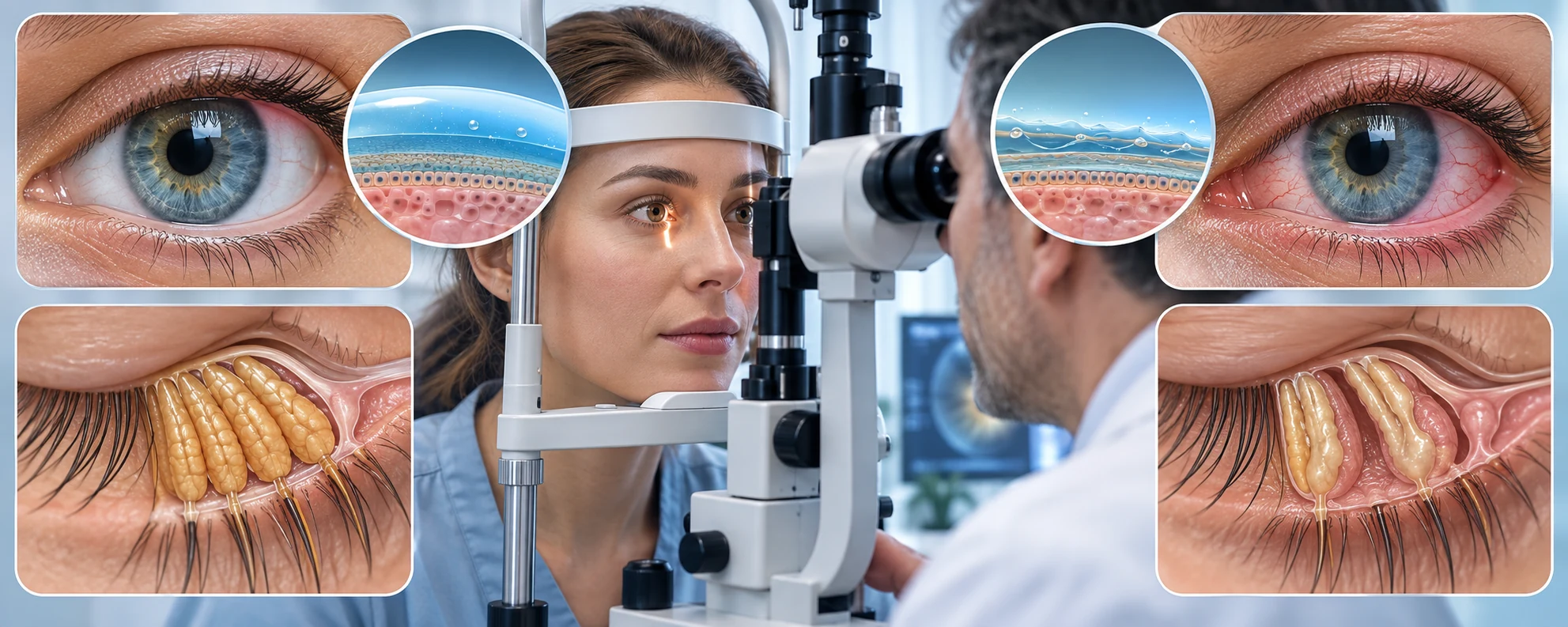
Dry eye syndrome is a common condition in which the eyes don't produce enough tears, or produce tears of poor quality, resulting in inadequate lubrication of the eye's surface.
How It Develops
Tears aren't simply water; they're a carefully balanced mixture of water, oils, and mucus, each playing a role in keeping the eye's surface properly lubricated and protected. Dry eye can develop when tear production decreases, often related to aging or certain underlying conditions, or when the oil component of tears is inadequate, allowing the watery portion to evaporate too quickly, which is actually one of the most common underlying patterns behind the condition.
General Symptoms
Common symptoms of dry eye include a gritty, burning, or stinging sensation in the eyes, redness, sensitivity to light, and, somewhat counterintuitively, excessive watering, which can occur as the eye overproduces watery tears in response to irritation from underlying dryness.
General Treatment Approaches
Dry eye is commonly managed with lubricating eye drops, often called artificial tears, used regularly throughout the day. Addressing the specific underlying cause, such as gland dysfunction affecting the oil component of tears, may involve additional treatments such as warm compresses or other targeted therapies. Environmental adjustments, such as using a humidifier or taking regular breaks during prolonged screen use, are also commonly recommended.
Background
Dry eye has been recognized as a distinct eye condition for a long time, but a more detailed understanding of the different components of tears and the specific ways their balance can be disrupted developed considerably over the 20th century. Given how common the condition has become, partly linked to increased screen use in daily life, it remains an active area of ongoing research and product development within eye care today.