What They Do
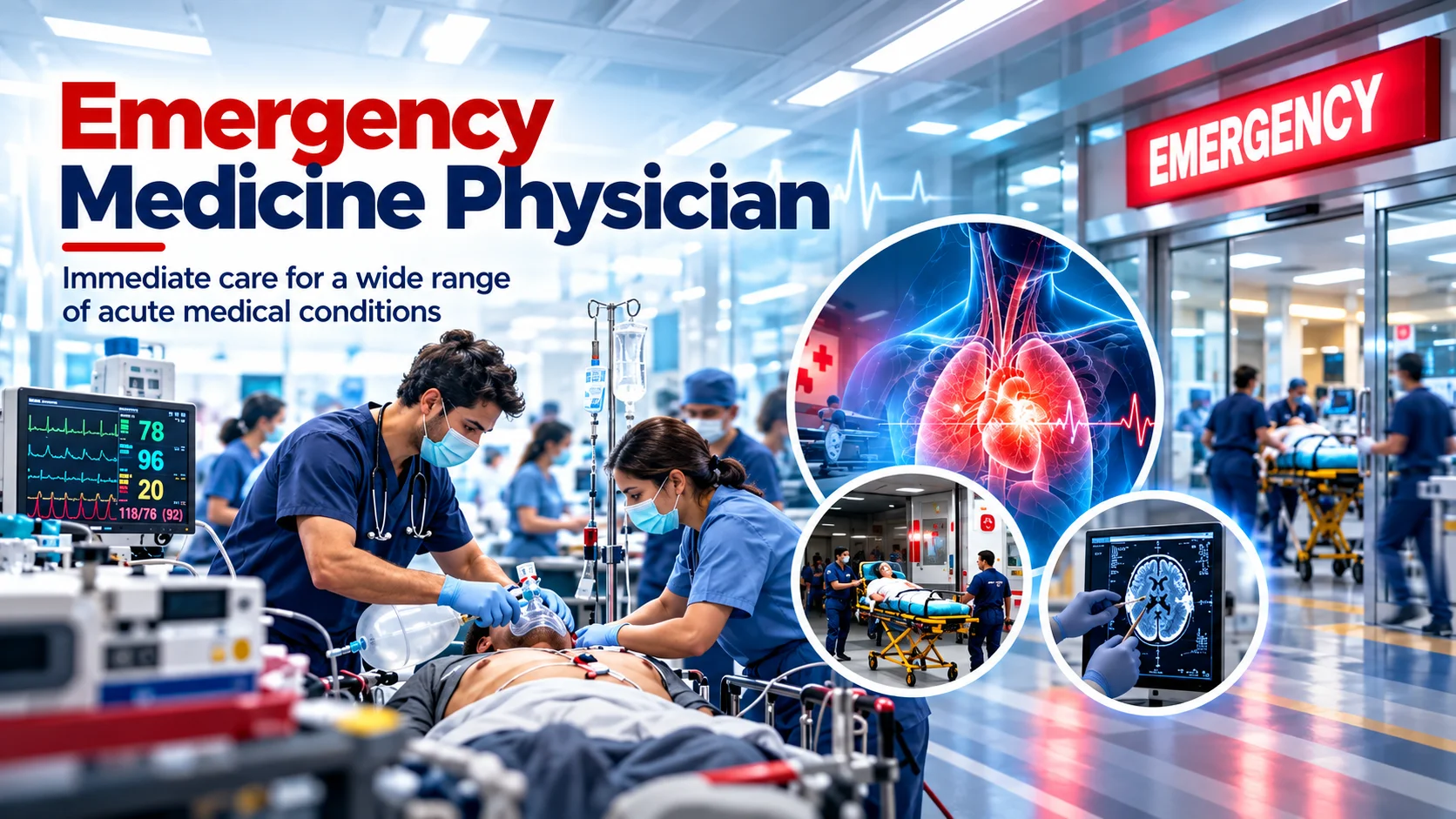
An emergency medicine physician specializes in the immediate evaluation and treatment of a wide range of acute medical conditions and injuries, typically within a hospital's emergency department. This specialty requires broad knowledge across many areas of medicine, given the unpredictable and varied nature of emergency presentations.
What They Treat
Emergency medicine physicians manage an extremely wide range of conditions, from minor injuries and illnesses to life-threatening emergencies such as heart attacks, strokes, severe trauma, and acute infections. A central part of their role involves quickly assessing the severity of a condition, stabilizing patients, and determining the appropriate next steps, whether that means treatment and discharge, or admission and referral to a relevant specialist.
Training Path
Becoming an emergency medicine physician requires completing a medical degree, followed by dedicated residency training specifically in emergency medicine, which covers a broad range of medical and surgical conditions across all age groups, along with the specific skills needed for rapid assessment and stabilization in urgent and unpredictable situations.
When to See One
People encounter an emergency medicine physician when seeking care at a hospital emergency department, typically for sudden, severe, or urgent symptoms that require immediate evaluation. Because emergency departments see such a broad range of conditions, emergency medicine physicians are trained to recognize and initially manage nearly any type of acute medical situation, before involving other specialists as needed.
Background
Emergency medicine developed as a formally recognized medical specialty in the latter half of the 20th century, as it became increasingly clear that emergency care required its own specific expertise, distinct from simply having physicians from various other specialties rotate through emergency departments. This shift led to more consistent, specifically trained emergency care and has been associated with improved outcomes for patients experiencing acute medical emergencies.