What It Is
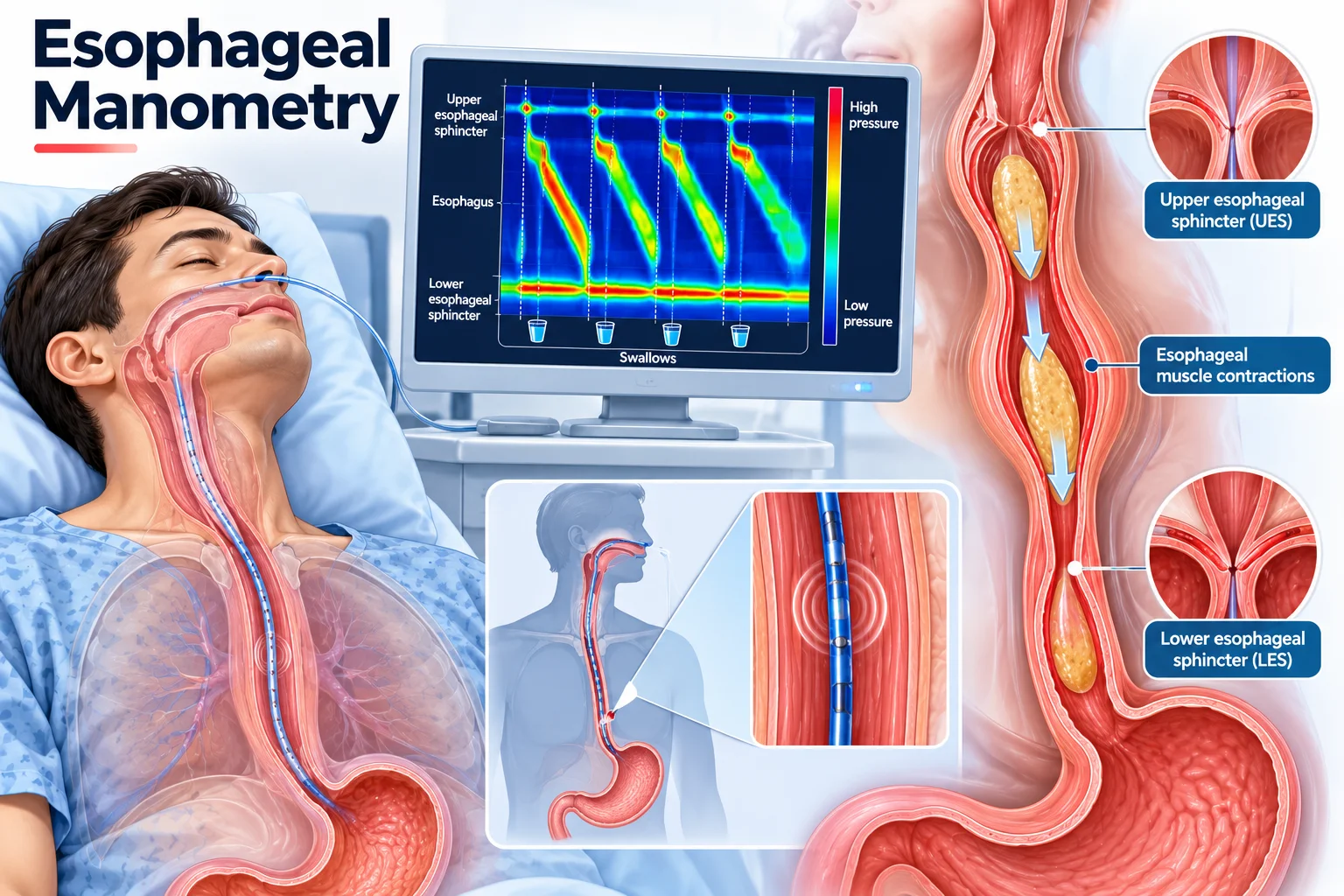
Esophageal manometry is a test that measures the pressure and pattern of muscle contractions within the esophagus as it moves food and liquid toward the stomach.
What It Checks
The esophagus moves food along its length through coordinated, wave-like muscle contractions. Esophageal manometry measures the strength, coordination, and timing of these contractions, along with the function of the muscular valves at either end of the esophagus, which can reveal abnormalities in how well the esophagus is moving material toward the stomach.
Why It's Used
Esophageal manometry is commonly used to investigate symptoms such as difficulty swallowing or chest discomfort that might relate to how the esophagus is functioning, particularly when other causes have been ruled out through different tests.
How It's Done
During esophageal manometry, a thin, flexible tube containing pressure sensors is passed through the nose and down into the esophagus, after numbing the nasal passage to minimize discomfort. The person is then asked to swallow small sips of water at intervals, while the tube's sensors record the pressure and pattern of muscle contractions along the length of the esophagus.
Background
Esophageal manometry developed as a diagnostic technique over the mid-20th century, as researchers found ways to measure pressure changes within the esophagus using increasingly sensitive equipment. The technique has been refined considerably since then, including the development of more advanced sensor technology that provides a more detailed picture of esophageal function, and it remains an important tool for diagnosing conditions affecting how the esophagus moves food and liquid.