What It Is
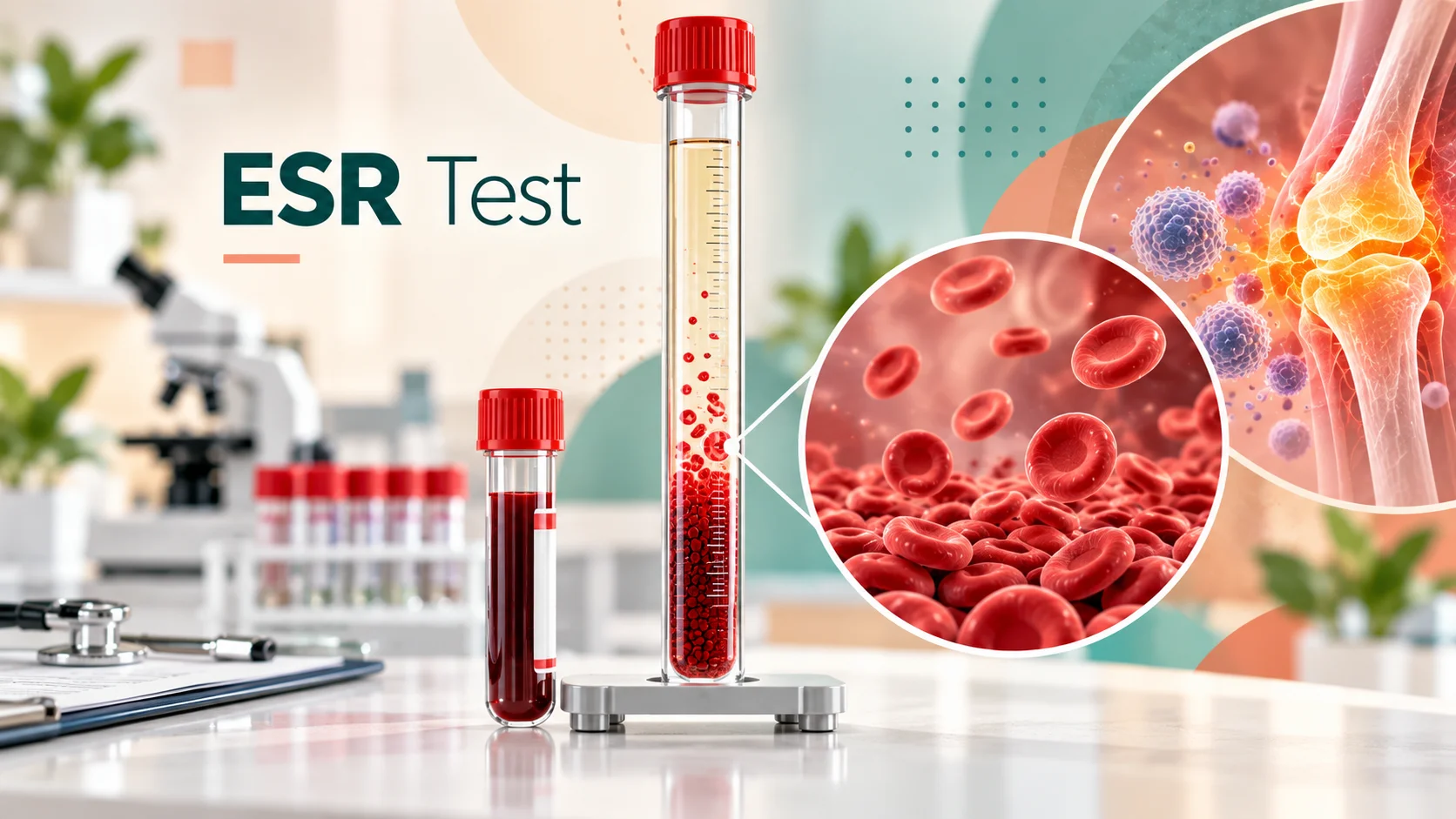
The erythrocyte sedimentation rate, commonly abbreviated as ESR, is a blood test that measures how quickly red blood cells settle to the bottom of a vertical tube over a set period of time.
What It Checks
Under normal conditions, red blood cells settle relatively slowly. When inflammation is present in the body, certain proteins increase in the blood and cause red blood cells to clump together and settle more quickly. ESR essentially measures this settling rate as an indirect, general marker of inflammation, similar in purpose to CRP, though the two tests respond somewhat differently and are sometimes used together.
Why It's Used
ESR is commonly used as a general indicator of inflammation in the body, and is often used alongside other tests and clinical findings to help build a broader picture, since an elevated ESR alone doesn't point to a specific condition.
How It's Done
ESR requires a standard blood sample, typically drawn from a vein in the arm. In the laboratory, the sample is placed in a narrow, vertical tube, and the distance the red blood cells settle downward over a set period, usually one hour, is measured and recorded.
Background
The ESR test was developed in the early 20th century, following observations that blood samples from people with certain conditions showed noticeably different settling patterns compared to healthy samples. It became a widely used, simple laboratory test for detecting general inflammation throughout much of the 20th century, and while more specific inflammatory markers have since become available, ESR remains a commonly used general screening test today.