What They Do
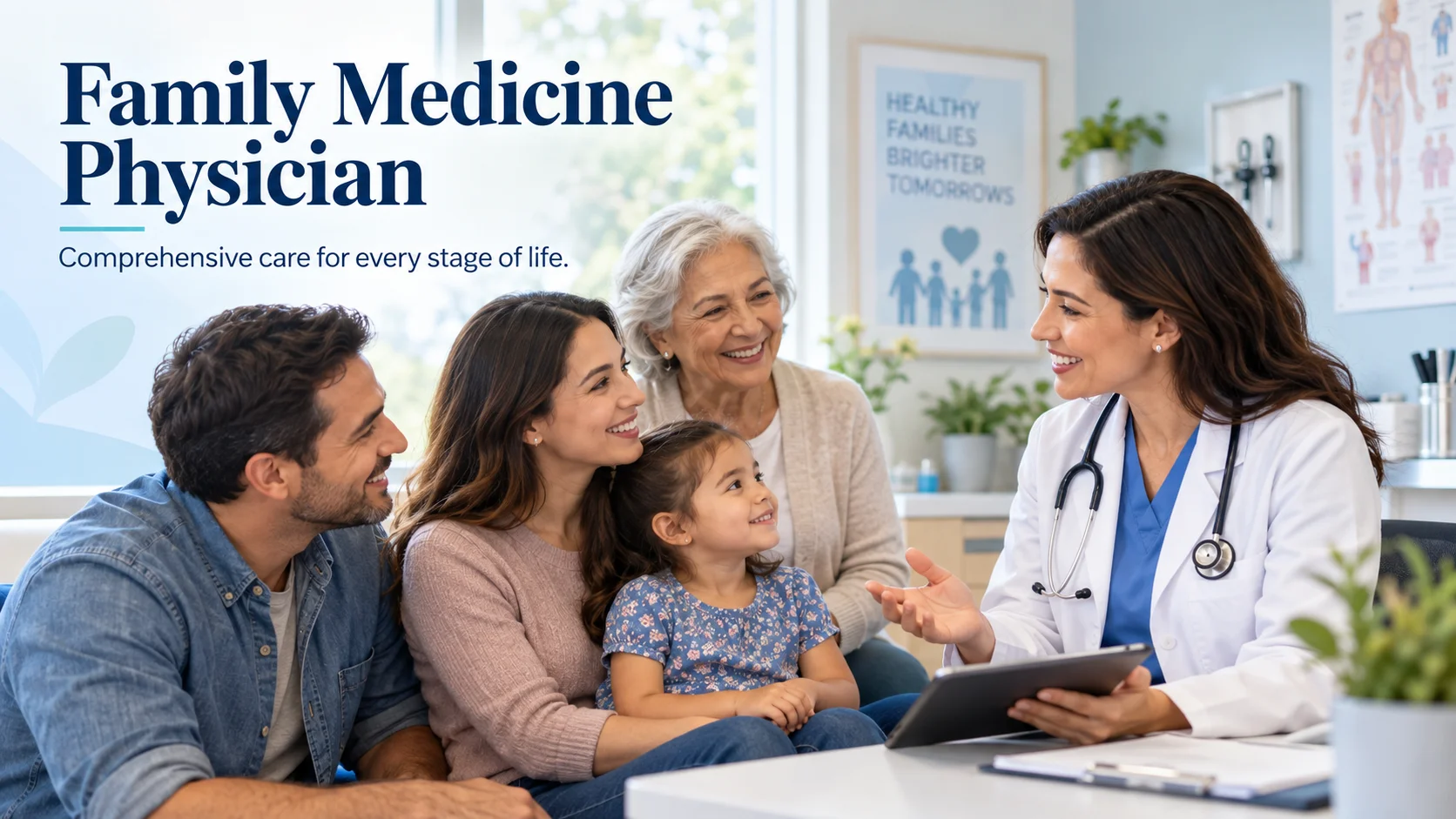
A family medicine physician provides broad, ongoing medical care for patients of all ages, from infants to older adults, often caring for multiple generations of the same family over time. This distinguishes family medicine from internal medicine, which focuses specifically on adult care.
What They Treat
Family medicine physicians manage a wide range of common health conditions across all age groups, provide preventive care such as vaccinations and health screenings, and often serve as a patient's primary, ongoing point of contact for general health needs. They also coordinate referrals to specialists when a condition requires more focused expertise.
Training Path
Becoming a family medicine physician requires completing a medical degree, followed by dedicated residency training specifically in family medicine, which covers care across the full lifespan, including pediatrics, adult medicine, and, in many training programs, a component of basic obstetric and gynecologic care as well.
When to See One
People commonly see a family medicine physician for routine checkups, general illnesses, and preventive care throughout their lives, often maintaining a relationship with the same physician over many years. Family medicine physicians are frequently the first point of contact for a new health concern, helping determine whether further specialist care is needed.
Background
Family medicine developed as a formally recognized specialty in the mid-20th century, partly in response to growing medical specialization that had led to increasingly fragmented care, with patients often seeing many different specialists rather than one physician overseeing their overall health. Family medicine was established to restore a more generalist, continuous point of contact for patients across their entire lives.