
What It Is
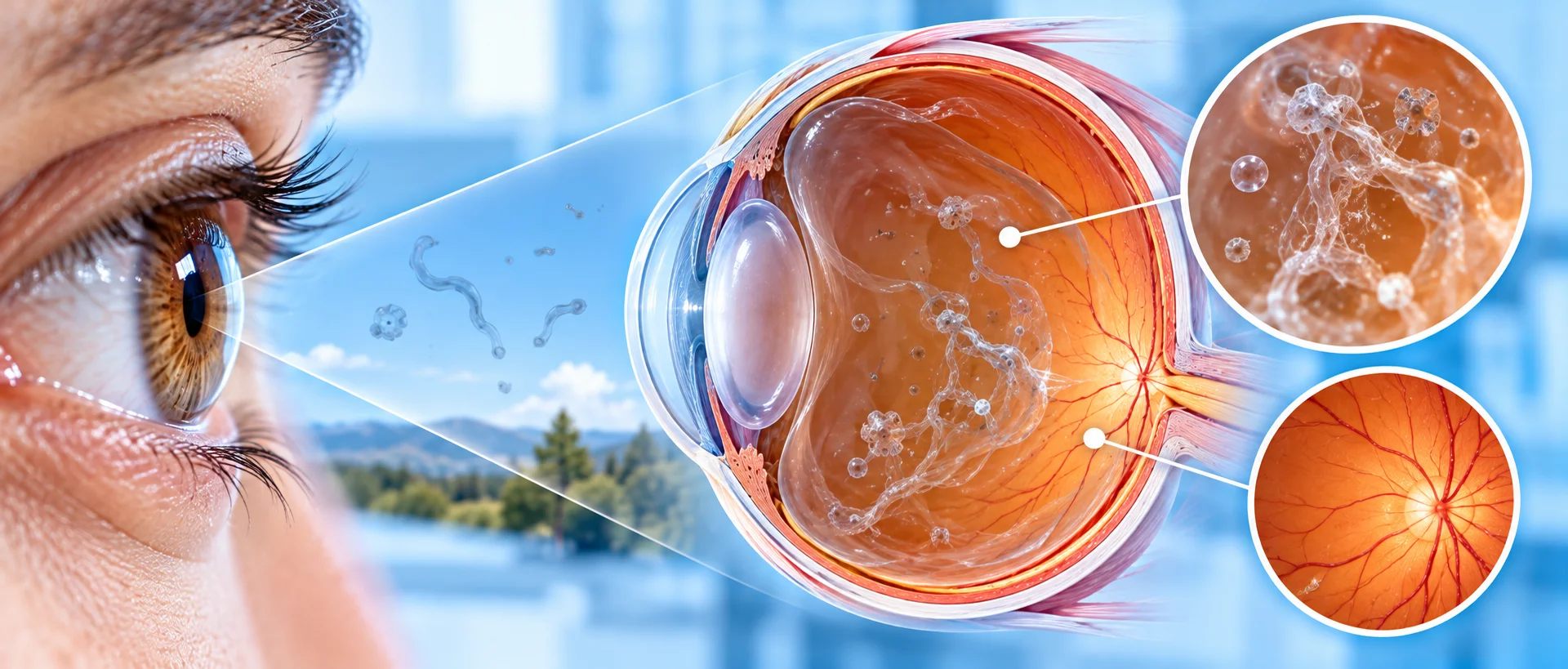
Floaters are small spots, specks, or thread-like shapes that appear to drift across a person's field of vision, particularly noticeable when looking at a plain, bright background such as a clear sky.
How It Develops
Floaters are caused by small clumps of protein or other material within the vitreous, the clear, gel-like substance that fills the inside of the eye. As we age, the vitreous naturally becomes more liquid and can shrink slightly, a process that can cause tiny fibers within it to clump together, casting small shadows on the retina, which is what's actually perceived as a floater. While most floaters are a normal part of aging, a sudden, significant increase in floaters can sometimes signal a more serious underlying issue, such as a retinal tear.
General Symptoms
The main symptom of floaters is the appearance of small moving spots, cobweb-like shapes, or squiggly lines in the visual field, which tend to drift when the eyes move and seem to dart away when someone tries to look directly at them. They're generally more noticeable against bright, plain backgrounds.
General Treatment Approaches
Most floaters don't require treatment and are simply monitored, since they're a common and usually harmless part of the natural aging process within the eye. In cases where floaters are severe enough to significantly interfere with vision, a surgical procedure to remove the vitreous gel is an option, though this is generally reserved for more significant cases given the procedure's own risks. A sudden increase in floaters, particularly alongside flashes of light, generally warrants prompt evaluation to rule out a retinal tear.
Background
Floaters have been described and recognized for centuries, though the specific understanding of their relationship to the vitreous gel's natural age-related changes developed considerably with advances in ophthalmic imaging over the 19th and 20th centuries. Understanding when floaters represent a normal finding versus a sign of a more serious underlying issue remains an important distinction emphasized in patient education today.