What It Is
A gastric emptying study is a nuclear medicine test that measures how quickly food moves out of the stomach and into the small intestine.
What It Checks
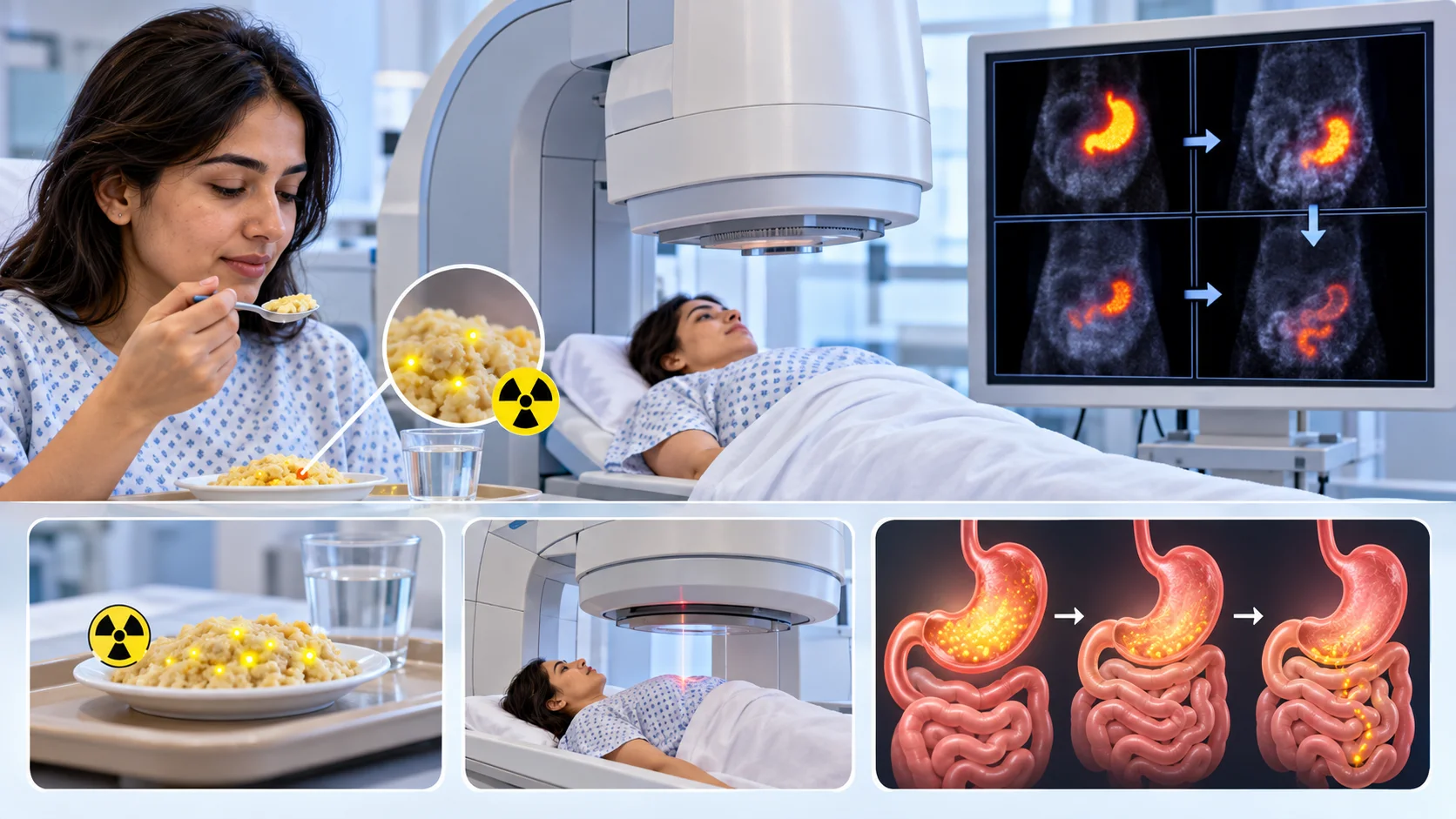
The test tracks the movement of a meal containing a small amount of radioactive tracer as it passes out of the stomach over time, providing a measurement of how quickly or slowly the stomach is emptying compared to what's generally expected.
Why It's Used
A gastric emptying study is commonly used to investigate symptoms such as persistent nausea, vomiting, or a feeling of fullness after eating only a small amount, particularly when a problem with the stomach's emptying process, rather than another digestive issue, is suspected as the underlying cause.
How It's Done
For a gastric emptying study, the person eats a meal, often something like eggs or oatmeal, that has been mixed with a small amount of radioactive tracer. A special camera then takes images at set intervals over a period of time, often a few hours, tracking how much of the tracer remains in the stomach as time passes, which reflects how quickly the stomach is emptying its contents.
Background
Gastric emptying studies developed as a nuclear medicine technique in the 1960s and 1970s, offering a way to directly measure a functional process, how quickly the stomach empties, that couldn't be assessed through structural imaging alone. Standardized protocols for performing and interpreting the test have been developed and refined since then, and gastric emptying studies remain the standard diagnostic test for evaluating suspected stomach emptying problems today.