What It Is
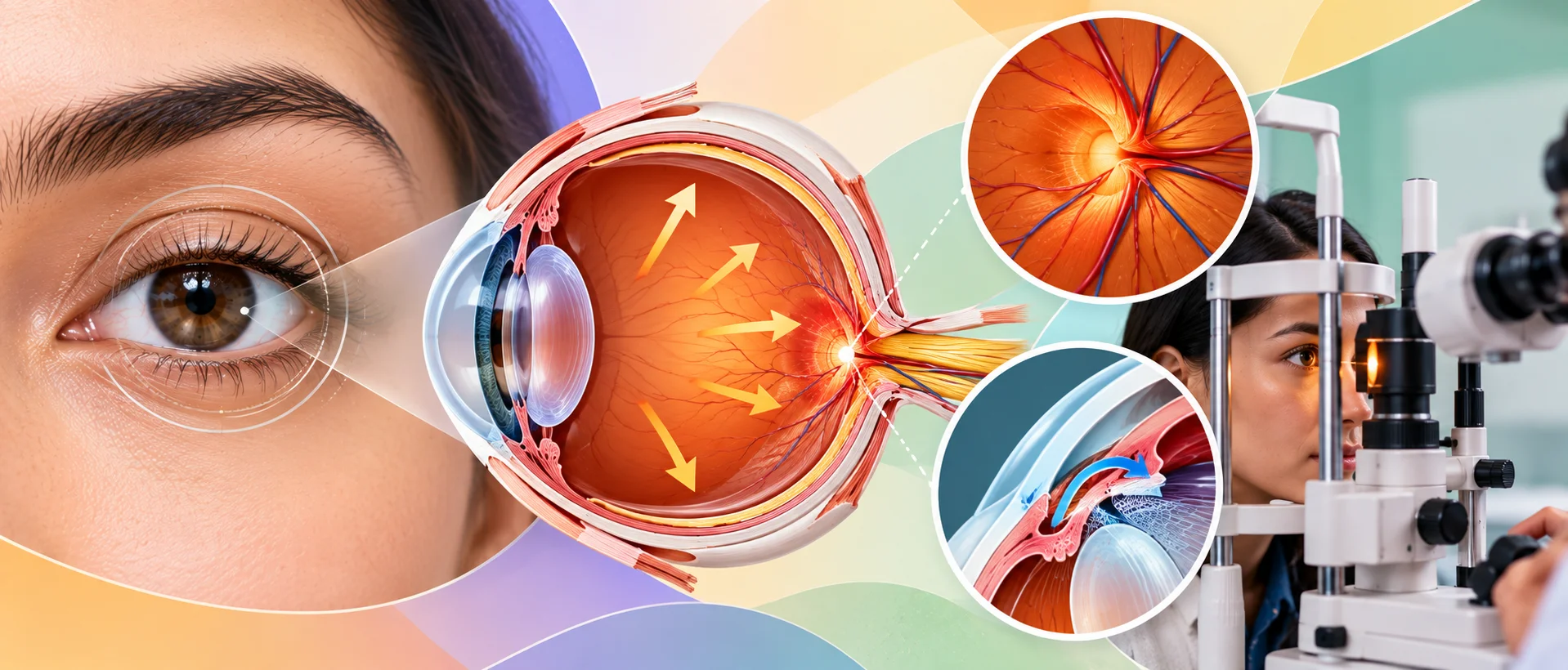
Glaucoma is a group of eye conditions that damage the optic nerve, the structure responsible for carrying visual information from the eye to the brain, often, though not always, associated with elevated pressure within the eye.
How It Develops
The eye continuously produces a small amount of fluid that helps maintain its shape and internal environment, which normally drains out at a matching rate. In many forms of glaucoma, this drainage becomes less efficient, causing fluid to build up and increase pressure within the eye. Over time, this elevated pressure can damage the optic nerve. Some forms of glaucoma, however, can cause optic nerve damage even without significantly elevated eye pressure, reflecting that other factors are also involved.
General Symptoms
Glaucoma is often described as a silent condition in its early stages, since the most common form typically causes no noticeable symptoms until significant, often irreversible, vision loss has already occurred, usually starting with peripheral vision. Some less common, more sudden forms of glaucoma can cause eye pain, redness, blurred vision, and nausea.
General Treatment Approaches
Treatment for glaucoma generally aims to lower eye pressure and slow further optic nerve damage, since damage that has already occurred generally can't be reversed. This commonly involves eye drops as a first approach, with laser treatment or surgery considered for cases that don't respond adequately to drops alone.
Background
Glaucoma has been recognized as a cause of vision loss since ancient times, though its connection to elevated eye pressure wasn't clearly established until the mid-19th century, following the invention of tonometry and the ophthalmoscope, which allowed both eye pressure and the optic nerve to be examined directly. Regular eye pressure screening has since become a standard part of comprehensive eye exams, given how effectively early detection and treatment can help preserve vision.